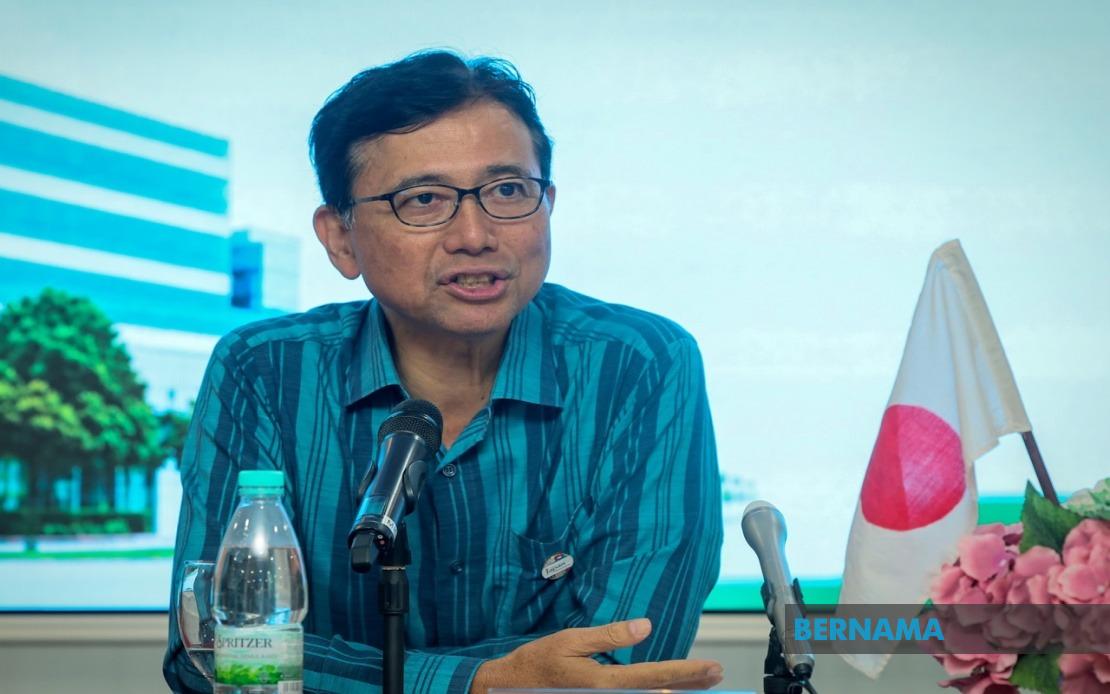
Malaysia stands to benefit significantly from Japan's newly recalibrated Indo-Pacific strategy, which represents a strategic recalibration towards economic security and technological advancement in the region. Japanese Ambassador to Malaysia Noriyuki Shikata has indicated that Prime Minister Sanae Takaichi's updated Free and Open Indo-Pacific (FOIP) framework, unveiled in May, creates substantial opportunities for deepening technological partnerships and positioning Malaysia as a premier digital and technology centre in Southeast Asia.
The FOIP itself traces its origins to 2016, when former Prime Minister Shinzo Abe first articulated the concept as a foundational pillar of Japan's regional engagement strategy. That initial framework emphasised peace, stability and economic prosperity across the Indo-Pacific region, with Japan casting itself as a stabilising force amid geopolitical uncertainties. The latest iteration, however, reflects a marked shift in emphasis, moving beyond these foundational principles towards more concrete mechanisms for technology transfer, industrial cooperation and supply chain resilience.
According to Shikata, the updated FOIP represents a substantive evolution rather than merely cosmetic adjustments. The framework now prioritises practical capacity building across several high-impact sectors including artificial intelligence, secure data flows, undersea cable infrastructure and satellite communications. This technological focus carries particular relevance for Malaysia, where digital infrastructure development and semiconductor manufacturing have become increasingly central to national economic strategy. The framework's emphasis on these domains suggests Japan sees Malaysia as a crucial partner in building a more technologically sophisticated and resilient Indo-Pacific region.
A critical dimension of the updated FOIP is its financial architecture. The POWERR Asia (Partnership on Wide Energy and Resource Resilience Asia) initiative provides US$10 billion in dedicated funding designed specifically to support ASEAN nations. This capital supports member states in fuel procurement, energy reserve expansion and securing critical materials essential for modern economies. For Malaysia, which continues to grapple with energy transition challenges and supply chain vulnerabilities, this funding represents a tangible commitment from Japan to strengthen economic resilience across multiple sectors simultaneously.
The alignment between Japan's FOIP and Malaysia's own regional vision—articulated through the ASEAN Outlook on the Indo-Pacific—indicates growing strategic convergence between the two nations. Rather than competing visions of regional order, these frameworks increasingly complement and reinforce one another. Shikata emphasised that the updated FOIP's focus on economic security and industrial resilience directly correlates with priorities articulated by ASEAN collectively, suggesting that Japan's approach now prioritises cooperation with regional organisations rather than bilateral posturing.
For Japanese businesses and expatriates operating in Malaysia, this framework potentially offers a more predictable and secure operating environment. The emphasis on economic security and supply chain resilience creates incentives for Japanese corporations to deepen their Malaysian presence. More significantly, the framework encourages Japanese enterprises to transition from traditional manufacturing into higher-value technology partnerships. This shift matters because it suggests a fundamental recalibration of Japanese investment strategy in Malaysia—moving beyond routine industrial operations towards innovation-driven collaborations that could substantially upgrade Malaysia's technological capabilities.
Malaysia's established position as a regional semiconductor hub features prominently in this partnership narrative. Shikata specifically highlighted Japanese industry interest in expanding investments across advanced semiconductor packaging, artificial intelligence infrastructure and cloud computing services. These are precisely the sectors where Malaysia aspires to develop world-class capabilities. Japanese firms possess considerable expertise in precision manufacturing and advanced materials, areas where technological transfer could meaningfully accelerate Malaysia's progress towards its own semiconductor ambitions.
The bilateral relationship between Japan and Malaysia has entered a distinctly new phase following the establishment of the Comprehensive Strategic Partnership in December 2023. This elevated framework transcends the historical Look East Policy framework that defined earlier periods of cooperation. Instead, it establishes partnership grounded in innovation, knowledge exchange and strategic co-creation—languages reflecting contemporary economic realities far removed from the manufacturing-focused relationships of previous decades. Prime Minister Datuk Seri Anwar Ibrahim's recent engagement with major Japanese industrial conglomerates including Mitsubishi Corporation, ENEOS, DENSO, IBM and Marubeni suggests serious intent to translate this partnership elevation into tangible industrial outcomes.
The convergence of Japanese technological prowess and Malaysia's expanding tech ecosystem creates realistic prospects for collaborative development of artificial intelligence and quantum computing solutions. These are genuinely frontier technologies where neither nation possesses overwhelming independent advantages, making partnership genuinely complementary rather than merely unidirectional knowledge transfer. Such collaboration could position Malaysia as a meaningful regional centre for advanced technology development rather than simply a manufacturing location.
Critical infrastructure protection and supply chain security represent additional cooperation domains where Japanese-Malaysian partnership could yield substantial benefits. As global competition intensifies and geopolitical uncertainties multiply, securing resilient supply chains becomes increasingly strategically consequential. Japan's experience navigating supply chain disruptions, combined with Malaysia's geographic positioning and existing industrial networks, creates genuine complementarities. Joint initiatives addressing these challenges could provide both nations greater confidence navigating the increasingly complex global strategic environment.
The timing of this partnership evolution matters considerably. Regional technology competition is intensifying, with multiple nations competing for dominance in semiconductor manufacturing, artificial intelligence development and digital infrastructure. Malaysia's ability to attract Japanese technological investment and expertise could meaningfully accelerate its transition from routine manufacturing towards genuine innovation-driven development. For Japanese industry, Malaysia offers a stable ASEAN entry point with existing technological capabilities and considerable growth potential.
Ambasador Shikata's reaffirmation of Japan's commitment to being Malaysia's most dependable forward-looking partner reflects recognition that the coming decades will require deepening technological integration rather than mere commercial transactions. This language suggests Japan views Malaysia not as a temporary investment location but as a long-term strategic partner in building a more resilient, innovative and prosperous Indo-Pacific region. For Malaysian policymakers and business leaders, this commitment signals that substantive technological partnerships and capability-building initiatives are genuinely on offer—contingent, of course, on Malaysian willingness to embrace the transformations required to absorb and leverage such technological inflows effectively.

