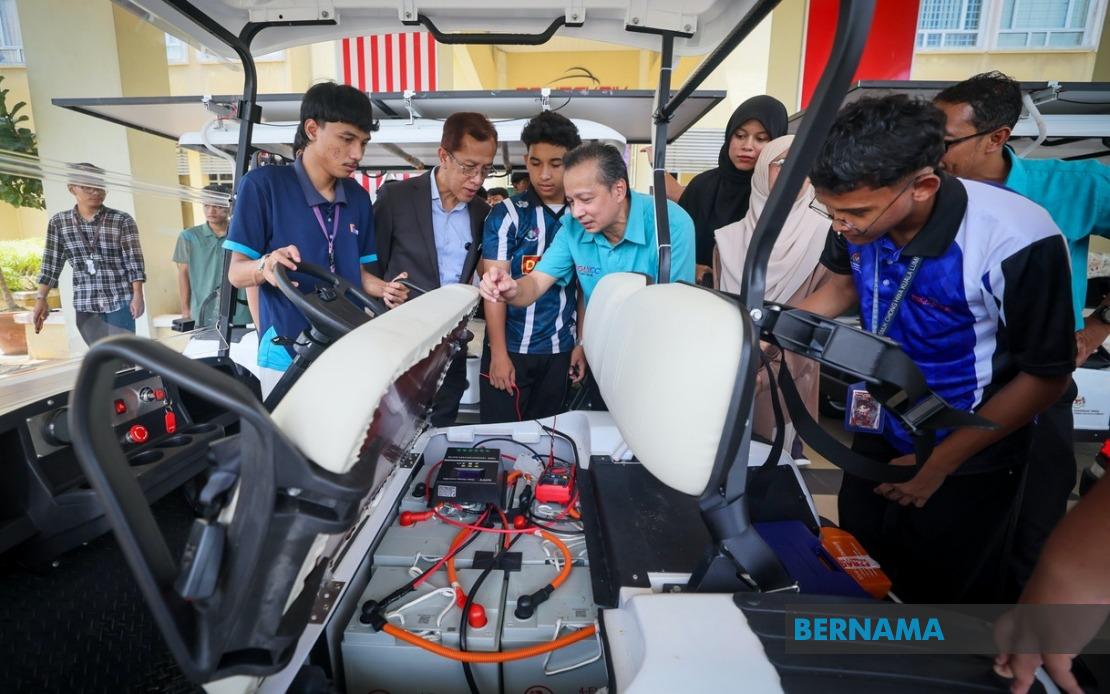
Jeli Kelantan Polytechnic has unveiled a breakthrough in renewable energy innovation with the successful development of solar-powered buggy cars, establishing a first for Kelantan through its Solar Buggy Car Technology Innovation Project. The initiative demonstrates how vocational institutions are translating green energy concepts into tangible, functional solutions that address both environmental sustainability and practical transportation needs in Malaysia's push towards cleaner energy adoption.
The project, which consumed nearly RM300,000 in resources, was conceived and executed by twenty third-semester students enrolled in the Diploma in Electrical Engineering (Green Energy) programme. Remarkably, the students accomplished this development within approximately one month, drawing upon foundational knowledge accumulated since their initial semester of study. The endeavour was guided by lecturer Chung Boon Chuan and represents a significant practical learning experience for students transitioning classroom theory into real-world engineering applications.
Polytechnic director Mohd Zamre Ab Rahman explained the core innovation at a demonstration event: students integrated solar panel systems onto buggy vehicles, enabling battery charging through solar energy rather than reliance on conventional electrical grid supply. This shift carries implications for both operational cost reduction and environmental impact mitigation, particularly relevant for institutions and organisations seeking to lower their carbon footprint whilst managing energy expenditure. The polytechnic now operates six buggy vehicles equipped with these systems—four configured as four-seater units and two as two-seater models, with each unit incurring approximately RM40,000 in development and equipment costs.
This initiative aligns directly with Jeli Kelantan Polytechnic's institutional commitment to establishing itself as a green campus. The designation reflects a broader strategic direction aimed at expanding renewable energy infrastructure throughout the institution, systematically reducing conventional electricity consumption and demonstrating to students the feasibility of sustainable technology implementation. Such campus-wide initiatives serve as living laboratories where learners witness firsthand how renewable systems function within practical operational contexts.
The Diploma in Electrical Engineering (Green Energy) programme itself represents a relatively recent institutional addition, having launched just over a year ago in July of the previous year. The response has exceeded expectations, with student intake doubling from an initial cohort of 40 to 80 places in the current academic year. This expansion reflects both strengthened student interest in green technology careers and heightened awareness of employment opportunities emerging across Malaysia's renewable energy landscape.
Kelantan's developing renewable energy infrastructure substantially underpins this programme growth. The state has witnessed expansion of solar farm developments, notably at Tok Uban and Pasir Mas, creating tangible employment pathways and amplifying local demand for skilled professionals capable of installing, maintaining, and optimising solar systems. For students completing this diploma, these emerging facilities translate into genuine career prospects rather than theoretical possibilities, providing immediate post-graduation employment corridors within their home state.
The polytechnic's expansion has received institutional support through a RM2 million allocation dispensed by the Ministry of Higher Education during the preceding year. These funds specifically targeted laboratory modernisation and acquisition of contemporary equipment necessary for delivering quality green energy instruction. Such investment signals government recognition that vocational institutions require substantial infrastructure enhancement to maintain pace with rapid technological advancement in renewable sectors.
Beyond its educational function, the polytechnic has positioned itself as a service provider available to public and governmental organisations requiring solar panel installation on buggy vehicles. This commercial dimension creates multiple benefits: students gain exposure to client interaction and project delivery workflows; the institution generates revenue supporting ongoing operations; and organisations throughout Kelantan gain access to locally-developed, student-proven renewable energy solutions. The arrangement exemplifies how vocational institutions can simultaneously educate whilst producing economically viable outputs.
Mohd Zamre articulated the broader strategic value of this approach: such projects expose students to renewable energy technology application within authentic scenarios, cultivating graduates equipped with practical competencies aligned with industry requirements. This bridges a persistent gap between academic curricula and employer expectations, ensuring that diploma holders possess not merely theoretical knowledge but demonstrated capability in deploying systems that function reliably within real operational environments.
For Malaysia's renewable energy transition, initiatives such as Jeli's solar buggy project carry broader significance. They demonstrate that renewable technology adoption need not remain concentrated in large-scale utility projects or urban centres; instead, vocational institutions throughout the country can become innovation hubs translating sustainability principles into accessible solutions. This distributed approach to green technology development strengthens Malaysia's overall renewable capacity whilst building regional expertise networks.
The timing of this innovation proves opportune as Malaysia intensifies efforts to achieve its renewable energy targets and reduce carbon emissions. By equipping vocational graduates with hands-on renewable technology experience, institutions like Jeli Polytechnic are accelerating the human capital development necessary to support Malaysia's energy transition. Each student completing this programme enters the workforce as an advocate and implementer of sustainable practices, multiplying the impact of initial institutional investments.
Looking forward, the solar buggy initiative may inspire replication across other Malaysian polytechnics, particularly those situated in regions with comparable solar potential. Should similar projects proliferate, Malaysia could develop a distributed network of renewable energy expertise concentrated within vocational institutions, positioning the country advantageously within Southeast Asia's increasingly competitive green technology sector. For Kelantan specifically, establishing itself as a hub for renewable energy education strengthens its economic diversification beyond traditional sectoral dependencies.

