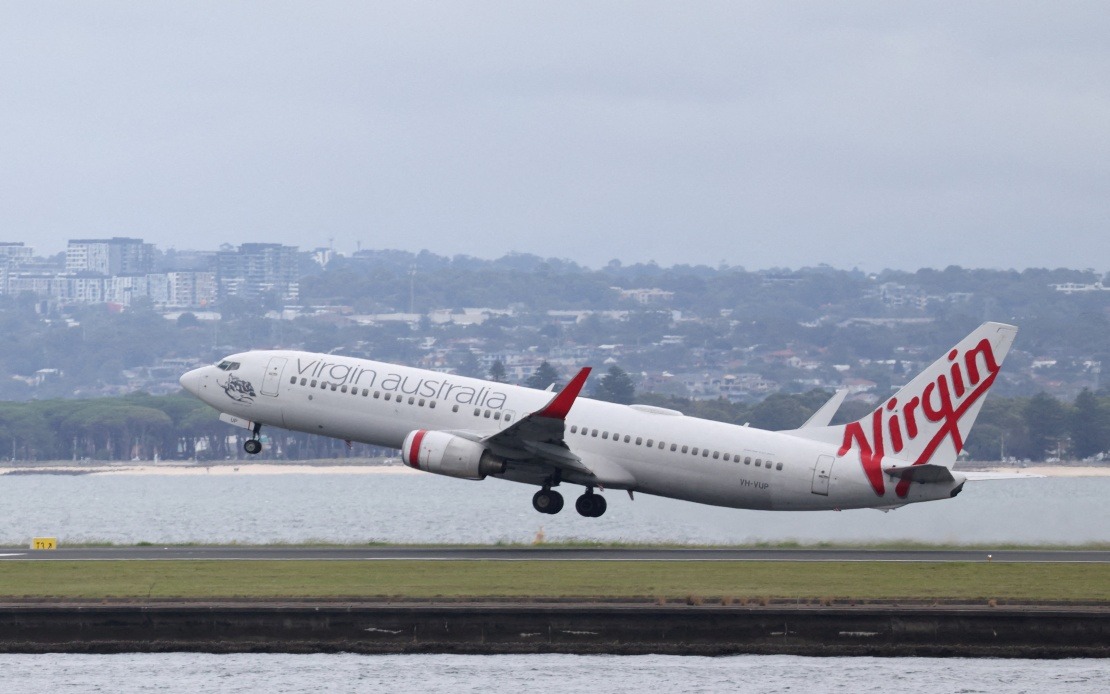
A Jetstar Airways crew member sustained injuries during a close-call incident on the runway at Sydney Airport early Sunday morning, when the aircraft was forced to execute an emergency braking manoeuvre to prevent a collision with an unmanned Qatar Airways aircraft. The incident underscores ongoing safety and operational concerns at one of Australia's busiest aviation hubs, occurring amid heightened scrutiny of air traffic management systems.
The near-miss took place around 7 am Australian Eastern Standard Time on Sunday as Jetstar flight JQ402, scheduled for the Gold Coast, was preparing for departure. The aircraft was in the process of taxiing along the runway when its pilots received an urgent instruction to apply firm braking. An uncrewed Qatar Airways Boeing 777 was being towed across the taxiway at the same time, creating an unexpected hazard in the aircraft's path. The swift action by the Jetstar flight crew averted what could have been a catastrophic aviation accident.
Among those aboard the Jetstar flight was a cabin crew member who sustained injuries as a result of the sudden deceleration. The worker received immediate medical attention from paramedics who attended the scene, treating the injuries on site. Fortunately, none of the passengers travelling on the aircraft were hurt in the incident, limiting the physical toll of what was nonetheless a serious operational failure. The nature and severity of the crew member's injuries were not disclosed in initial reports.
Jetstar Airways, which operates as a wholly-owned budget subsidiary of Qantas Group, confirmed that the aircraft had been adhering to instructions issued by Air Traffic Control at the time the emergency braking became necessary. A spokesperson for the carrier stated that pilots were compelled to apply brakes firmly only after the second aircraft came into dangerously close proximity, suggesting that the initial separation protocols may not have functioned as intended. The airline has since initiated a formal investigation into the circumstances surrounding the incident.
This safety incident gains particular significance given the broader operational challenges that have plagued Sydney Airport in recent days. The airport experienced substantial disruptions on Friday and Saturday, with more than 250 flights delayed or cancelled due to staffing shortages within Airservices Australia, the federal authority responsible for providing air traffic control and related services across Australia's major airport facilities. These systemic staffing problems at the controlling agency raise questions about whether fatigue or resource constraints among air traffic controllers may have contributed to the near-collision.
Airservices Australia manages traffic flows at some of the nation's most critical aviation infrastructure, including Sydney Airport, which serves millions of passengers annually and handles a complex web of international and domestic flights. When staffing levels fall below required thresholds, controllers must manage heavier-than-normal workloads, potentially increasing the risk of human error or lapses in attention. The timing of Sunday's incident, occurring just days after the weekend disruptions, suggests potential connections between institutional resource constraints and operational safety.
The incident reflects recurring tensions in Australian aviation between cost management and safety protocols. Budget carriers like Jetstar have transformed the regional and domestic aviation landscape, but their operations place considerable demands on shared infrastructure managed by chronically under-resourced public agencies. The convergence of budget airline operations, ground handling procedures involving multiple aircraft, and staffing pressures at air traffic control facilities creates a complex risk environment.
Sydney Airport, as Australia's largest and most internationally significant aviation facility, operates under intense pressure to maximize throughput while maintaining safety standards. The near-miss between a departing passenger aircraft and a towed freighter demonstrates how the coordination of multiple simultaneous activities on congested runways requires flawless execution across multiple organisations and layers of oversight. When any component of this system falters, the consequences can be severe.
For Malaysian and Southeast Asian aviation observers, the incident offers instructive lessons about the importance of maintaining adequate staffing and resources in air traffic management authorities. As regional airports experience rapid growth in passenger and cargo movements, the critical role of well-resourced air traffic control becomes increasingly apparent. The Sydney Airport incident serves as a cautionary reminder that cost-cutting measures affecting core safety functions can create cumulative risks that eventually manifest as dangerous near-misses or worse.
Airservices Australia and Jetstar Airways are expected to conduct thorough investigations that will likely examine not only the specific circumstances of Sunday's incident but also broader questions about workload management, communication protocols, and the adequacy of current resources. Their findings may prompt policy discussions about the appropriate level of government investment in air traffic control infrastructure and staffing across Australia's aviation system. These discussions could have implications for regional aviation authorities grappling with similar resource allocation challenges.
The incident also highlights the vulnerability of modern aviation to cascading failures when individual systems operate at or near capacity. While safety protocols, redundancies, and trained personnel prevented a disaster on Sunday, the narrow margin for error evident in this case suggests that proactive measures to address understaffing and fatigue at air traffic control facilities warrant urgent attention. Both domestic and international aviation depend fundamentally on the reliability of these ground-based systems.

