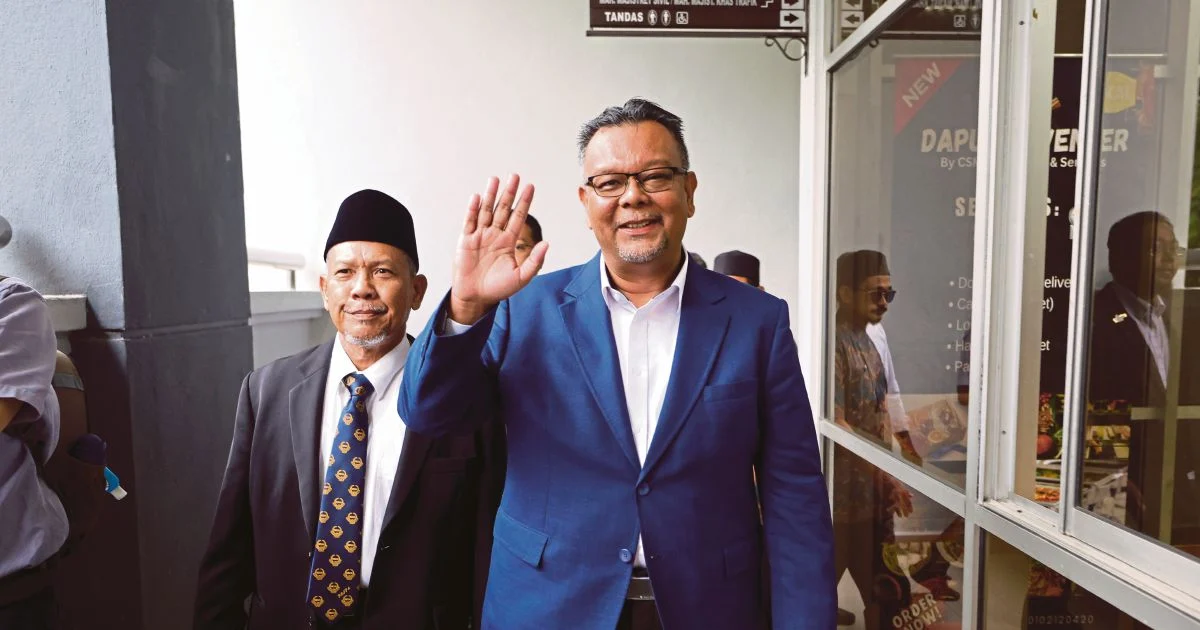
Dr Haim Hilman Abdullah, the Jitra state assemblyman, entered a not guilty plea in Seremban magistrate's court today in response to allegations that he made statements intended to stir public anxiety and concern. The formal plea marks the beginning of legal proceedings against the legislator, though specific details regarding the nature and timing of the disputed statements have not yet been disclosed by the court.
The charge falls under provisions designed to protect public order by criminalising utterances that recklessly or deliberately provoke fear, unease, or disturbance among the general population. Such legislation exists across Malaysian jurisdictions to maintain social stability, though enforcement occasionally generates debate about the boundaries between legitimate political speech and statements that cross into genuinely inflammatory territory.
Dr Haim Hilman's legal team has signalled their intention to contest the allegations, suggesting that the statements in question were either mischaracterised, taken out of context, or did not meet the legal threshold for constituting a public alarm charge. The distinction between robust political commentary and speech that incites genuine public disturbance remains a persistent area of legal and political contention in Malaysia.
As a state assemblyman representing Jitra, Dr Haim Hilman holds a position within the legislative branch that carries expectations regarding measured public communication. The charges, however, indicate that authorities determined his statements crossed beyond normal parliamentary discourse or constituent engagement into problematic territory. The specific nature of these statements will likely become clearer as the case progresses through the courts.
This development reflects the complex landscape surrounding free expression and public safety in Malaysia, where lawmakers themselves occasionally find themselves before the judiciary over their utterances. The case will likely generate interest among political observers concerned with questions of parliamentary privilege, the scope of permissible political speech, and how judicial systems balance protecting order against protecting legitimate forms of expression.
The hearing in Seremban represents the formal commencement of adversarial proceedings, with the prosecution presumably preparing its evidence to demonstrate that the statements posed a genuine risk of public disturbance. The burden will rest on authorities to establish that Dr Haim Hilman's words reasonably could be expected to incite alarm among ordinary members of the public who might encounter them.
The assemblyman's decision to contest the charge rather than seek settlement indicates confidence in his legal strategy, suggesting his legal representatives believe the evidence will not support conviction. This posture may also reflect a political calculation about maintaining public credibility within his Jitra constituency, where responding vigorously to charges carries its own strategic value.
The proceedings now enter a phase where both sides will present arguments, examine evidence, and attempt to establish whether the legal threshold has been met. Malaysian courts have in previous cases grappled with determining what constitutes statements genuinely likely to cause public alarm, rather than merely provocative, unpopular, or harsh political speech that falls short of that legal standard.
This case touches broader questions about political accountability in Malaysia, where the boundaries between legitimately holding officials to account and respecting their parliamentary functions remain contested territory. The outcome may have implications beyond Dr Haim Hilman's individual circumstances, potentially offering guidance on where courts perceive the line between protected speech and punishable utterances to exist.
For political observers in Malaysia and the broader Southeast Asian region, the case exemplifies ongoing tensions around free expression in jurisdictions where robust political competition coexists with legislation designed to prevent social destabilisation. The resolution of Dr Haim Hilman's case will contribute to an evolving body of judicial interpretation regarding these sensitive boundaries.
The magistrate's court proceedings will likely extend over multiple sessions as both prosecution and defence present their arguments. The outcome carries implications not merely for the assemblyman himself, but potentially for how other Malaysian politicians calibrate their public statements in future.

