The Department of Social Welfare (JKM) has unveiled a comprehensive development initiative in Kampung Sungai Setar Besar in Nibong Tebal, Penang, signalling a shift toward integrated approaches to rural community uplift. The MADANI Adopted Village Programme represents a departure from traditional welfare delivery, encompassing infrastructure improvements alongside human capital building and income-generating skills training. The initiative reflects growing recognition among Malaysian policymakers that sustainable poverty reduction requires simultaneous investments across multiple development dimensions rather than standalone welfare transfers.
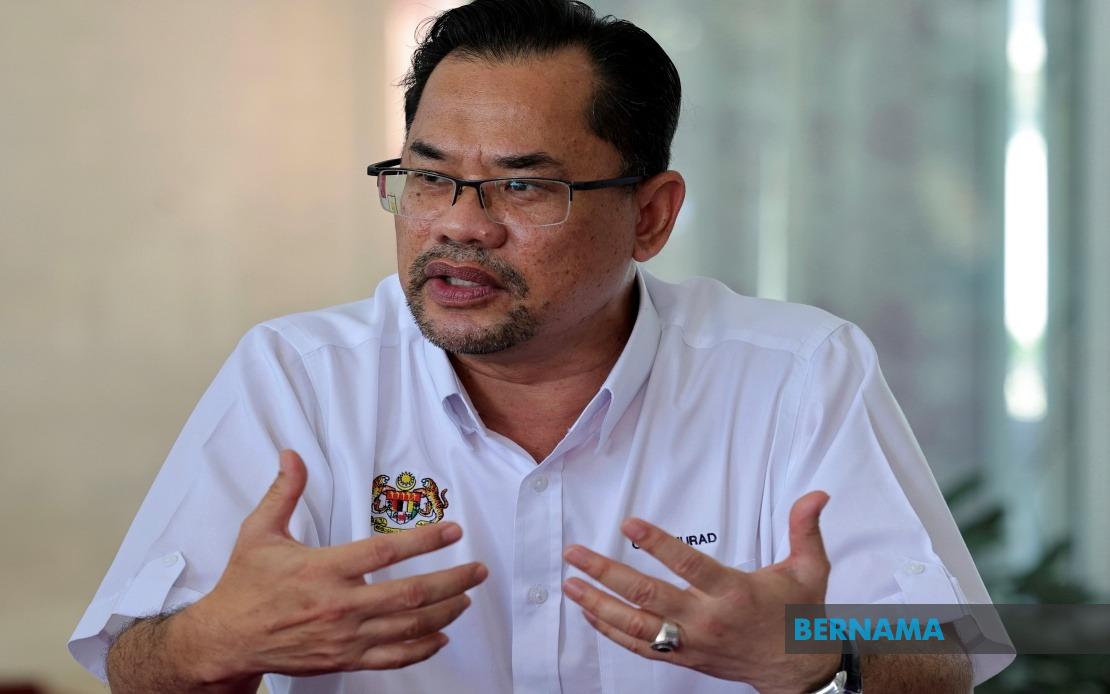
Resourced with RM600,000 in initial funding, the programme demonstrates considerable financial commitment to Kampung Sungai Setar Besar's transformation. Datuk Che Murad Sayang Ramjan, JKM's director-general, articulated the programme's philosophical foundation during the launch, emphasising that physical infrastructure alone cannot address the underlying structural challenges facing rural communities. The allocation comprises RM500,000 dedicated to village-level initiatives and RM100,000 for educational components at SMK Sungai Acheh, the adjacent secondary school serving the locality. This financial configuration acknowledges that community development requires both immediate environmental improvements and longer-term capacity building among younger populations.
The village's physical infrastructure enhancements target five specific projects that address daily quality of life concerns. Plans include renovating Masjid Al-Fatah Sungai Setar Besar, refurbishing recreational facilities across two kampungs, and establishing a distinctive village landmark intended to foster community identity. Additionally, the KEMAS kindergarten at Tanah Kebun will receive upgraded facilities, ensuring early childhood development services meet modern standards. These tangible improvements serve practical purposes whilst simultaneously conveying government attention and investment to residents, a psychological dimension often underestimated in development programming.
Educational expansion forms a critical pillar of the intervention. SMK Sungai Acheh's designation as a MADANI Adopted School unlocks RM100,000 for initiatives spanning agricultural learning infrastructure, technology provision, and character development programmes. The school's new agricultural practical learning area positions students to engage meaningfully with sector modernisation, whilst ICT equipment and digital classrooms prepare learners for knowledge economy participation. These investments acknowledge that rural educational institutions require specific infrastructure to develop context-relevant skills rather than merely replicating urban curricula unsuited to local economic realities.
Vocational and technical education receives particular emphasis through collaboration with PERDA-TECH, demonstrating strategic alignment between social welfare, skills development, and employment objectives. The TVET On-Job Training Programme allocates RM100,000 to equip 27 young people with accredited certifications in operating heavy agricultural machinery, including tractors and related equipment. This intervention addresses a specific market demand within Penang's agricultural sector whilst providing pathway employment for youth who might otherwise lack access to professional training. The dual certification and diploma structure ensures credentials possess genuine labour market value rather than representing symbolic qualification attainment.
Campung Sungai Setar Besar's welfare demographics contextualise the intervention's scope. Among Penang's 22,652 JKM aid recipients, 519 reside in this kampung, collectively receiving approximately RM65.7 million in monthly assistance across the state. This concentration suggests the village exhibits socio-economic characteristics warranting targeted intervention, though the figures also highlight that comprehensive development requires coordinated attention beyond welfare cheques. The programme implicitly acknowledges that regular assistance payments, whilst essential, cannot substitute for structural improvements enabling recipients to transition toward self-sufficiency.
The concurrent Komuniti@Heart Programme demonstrated how development initiatives can incorporate community engagement and social cohesion building. The event's diverse components—ranging from health screenings and government service booths to traditional games and community feasting—created forums for residents to access services whilst strengthening social bonds. The Ziarah Kasih outreach specifically targeted vulnerable segments, including persons receiving disability assistance and elderly support, ensuring development benefits reached those with greatest needs. This integrated approach recognises that social development encompasses both economic opportunity creation and reinforcement of community solidarity networks.
Education Minister and Nibong Tebal MP Fadhlina Sidek's involvement in programme launch officiation underscores political priority attachment to rural community development. Political visibility serves multiple functions: it signals government commitment to constituents, facilitates coordination across departmental silos, and creates accountability mechanisms. The presence of Penang Rural Development, Agrotechnology and Food Security Committee chairman Datuk Rashidi Zinol similarly reflects state-level commitment to integrating agricultural modernisation with social development objectives. This multi-level government engagement suggests the initiative extends beyond isolated JKM programming toward coordinated state and federal development strategy.
The MADANI framework itself represents broader policy evolution within Malaysia's social development architecture. Rather than compartmentalising welfare, education, and skills development as separate interventions, the MADANI approach attempts integration around community-level outcomes. This represents conceptual maturation in development policy, acknowledging that sustainable poverty reduction requires simultaneous action across interconnected domains. For other Malaysian communities facing similar socio-economic challenges, the Kampung Sungai Setar Besar initiative offers a replicable model combining immediate welfare support with catalytic investments enabling longer-term self-sufficiency.
The programme's sustainability mechanisms warrant particular attention for Malaysian and Southeast Asian policymakers. Beyond initial infrastructure investment and training provision, programme success depends on creating conditions enabling beneficiaries to utilise acquired skills and improved facilities productively. Agricultural equipment training proves valuable only if farmers can access machinery, credit, or input markets. Digital classroom infrastructure requires ongoing maintenance and teacher capacity building. Village landmarks succeed as community focal points only through sustained governance and programming. These sustainability considerations suggest that follow-on funding and coordination mechanisms should accompany initial capital investment.
For Malaysian society more broadly, the initiative illustrates how targeted regional development can address persistent rural-urban disparities without requiring massive across-the-board fiscal expansion. Strategic investment in specific underperforming communities, combined with human capital development, offers cost-efficient pathways toward inclusive growth. Penang's relatively concentrated welfare recipient population facilitates such targeted approaches, contrasting with more geographically dispersed populations elsewhere. Replicating this model nationally requires mapping socio-economic concentrations and matching investment scales to identified need intensities, moving beyond uniform per-capita allocations toward equity-based resource distribution.
As Malaysia navigates post-pandemic economic recovery and medium-term development challenges, community-level initiatives such as the MADANI Adopted Village Programme embody practical approaches to translating broad development ambitions into tangible local outcomes. The Kampung Sungai Setar Besar intervention demonstrates that comprehensive rural development remains achievable through coordinated programming combining welfare, infrastructure, education, and skills training. Whether such initiatives can be sustained, scaled, and continuously refined according to actual beneficiary outcomes will substantially influence Malaysia's capacity to build genuinely inclusive prosperity extending equitably across geographic and socio-economic boundaries.

