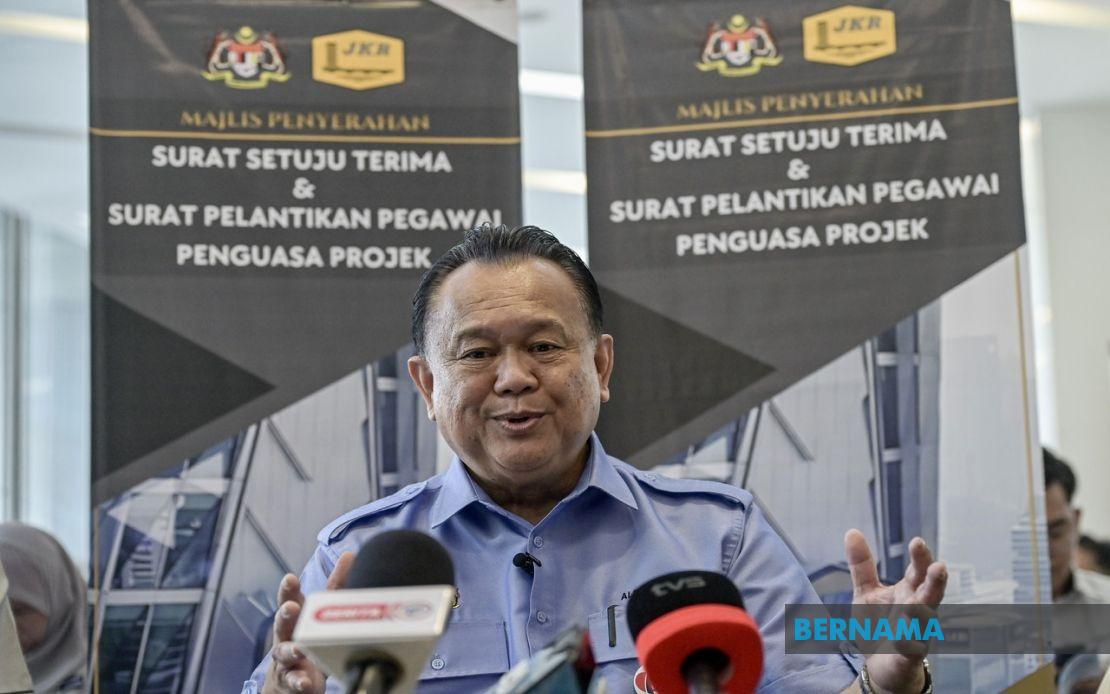
Datuk Seri Alexander Nanta Linggi, Malaysia's Works Minister, has drawn a critical distinction in how the Public Works Department (JKR) evaluates project success, cautioning contractors and stakeholders that finishing ahead of schedule means nothing if quality or cost control slip in the process. Speaking after overseeing the formal handover of a major police facility development in Perak, Nanta underscored that genuine project achievement requires simultaneous fulfilment of three interconnected benchmarks: time, cost and quality specifications. This clarification comes amid persistent concerns about project delays and cost overruns in Malaysia's infrastructure sector, a persistent drag on national development timelines and taxpayer resources.
The distinction Nanta drew is particularly significant for the Malaysian construction industry, where the perception of timely delivery often overshadows deeper questions about whether work meets engineering standards and budget parameters. When a project finishes early but exhibits structural defects or exceeds its budgeted expenditure, it ultimately represents failure rather than success, the minister explained. His comment implicitly critiques a historical tendency within some government agencies and contractors to prioritise speed over substance, a pattern that has contributed to the phenomenon of "sick projects" plaguing Malaysia's development landscape. For regional observers, this signals a potential shift toward more rigorous accountability in how Southeast Asian infrastructure programmes are assessed and managed.
To operationalise this philosophy, the Ministry of Works (KKR) and JKR have established formal key performance indicators specifically designed to eliminate or reduce sick and abandoned projects. These metrics, supported by standardised operating procedures and implementation guidelines, create a framework for systematic project monitoring. The strategy reflects lessons learned from years of underperforming infrastructure ventures across Malaysia. By establishing measurable targets rather than relying on anecdotal reports or ad-hoc reviews, the ministry aims to catch problems early and implement corrective measures before projects deteriorate into the "sick" category that consumes resources without delivering tangible benefits.
Recent data suggests this approach may be gaining traction. According to Deputy Minister Datuk Seri Dr Ahmad Maslan, the percentage of sick projects under JKR supervision has declined to 4.13 per cent from a previous five per cent, affecting 36 out of 871 projects currently under construction. While this improvement is meaningful, it indicates that roughly one in 24 projects still faces significant difficulties, underscoring the scale of the challenge. For Malaysian taxpayers and policymakers, this trend is encouraging but not yet satisfactory, particularly given the substantial national budget devoted to infrastructure development annually. The downward trajectory, however, validates the effectiveness of enhanced oversight mechanisms and suggests that continued investment in monitoring infrastructure could yield further improvements.
The immediate catalyst for Nanta's remarks was the formal handover of the Perak police contingent headquarters and housing construction project, a substantial initiative valued at approximately RM366 million. Located in Bandar Meru, Ipoh, adjacent to Bulatan Sultan Azlan Shah, the development will occupy a 25-hectare site and be implemented by Serada Realty Sdn Bhd over a 42-month construction period, with completion targeted for February 2030. This strategic project, under the purview of the Ministry of Home Affairs (KDN), represents the type of major infrastructure undertaking where the integration of time, cost and quality considerations becomes operationally complex and financially consequential. The scale alone—spanning four decades and hundreds of millions of ringgit—makes rigorous project management essential to ensure taxpayer resources are deployed effectively.
The replacement of the existing Perak IPK complex forms the practical rationale for this substantial investment. The current facility, now 58 years old, has deteriorated to a point where comprehensive renovation would be economically inefficient compared to rebuilding. Rather than prolonging the life of aging infrastructure through expensive repairs, KKR's decision to construct an entirely new complex addresses both immediate operational shortcomings and long-term strategic needs. This approach, while requiring significant upfront capital expenditure, ultimately represents sounder financial stewardship than repeatedly patching deteriorating facilities. For Malaysian and regional policymakers, this reflects a growing recognition that some infrastructure simply reaches a natural point of obsolescence where reinvestment must give way to replacement.
Beyond the immediate construction project, the new Perak IPK facility carries implications for public security and operational efficiency across the state. KKR projects that the modernised complex will enhance the effectiveness of Perak PDRM's security duties and command functions, potentially reducing the crime index by five per cent annually while improving police response times from the current 15 minutes to 10 minutes. These operational targets, while ambitious, reflect the broader connection between infrastructure quality and public service delivery. Better-equipped facilities and improved response capabilities can tangibly affect citizen safety and public confidence in law enforcement. For Perak residents and stakeholders, therefore, the project's successful completion within specified parameters becomes not merely an exercise in bureaucratic efficiency but a matter directly affecting community security outcomes.
In his address to the contractors formally appointed to undertake the construction, Nanta emphasised the obligation to execute their responsibilities with integrity, commitment and technical excellence. The tone and substance of his remarks suggest recognition that contractor behaviour fundamentally determines whether projects ultimately succeed or fail. No amount of government oversight can compensate for dishonest procurement practices, cutting corners on materials or workmanship, or deliberate misrepresentation of progress. By placing explicit emphasis on contractor accountability at the moment of formal appointment, Nanta signalled that the ministry intends to actively enforce contractual obligations rather than passively accepting whatever is delivered. This shift toward more assertive client-side project management mirrors international best practices in large-scale construction procurement.
The role of the Superintendent Officer emerges as equally critical in Nanta's framework. These officials must move beyond passive documentation of construction progress to proactive identification of emerging issues and rapid implementation of corrective measures. By positioning the Superintendent Officer as an active problem-solver rather than a passive observer, the ministry recognises that real-time intervention often prevents minor issues from escalating into project-threatening crises. This represents a departure from earlier practices where supervision sometimes amounted to little more than periodic site inspections. For construction professionals and supervisory staff across Malaysia's infrastructure sector, Nanta's remarks effectively redefine their professional responsibilities and expectations.
The Perak IPK project announcement also carries regional significance. As ASEAN nations continue investing heavily in infrastructure and institutional development, the approaches adopted by Malaysia—particularly around project governance, quality assurance and accountability—influence practices across the region. Thailand, Indonesia, Vietnam and the Philippines all grapple with similar challenges around project delivery efficiency and quality maintenance. Malaysia's increasingly systematic approach to managing these variables could serve as a model for regional peers, provided implementation remains consistent and transparent. The extent to which Malaysia's enhanced JKR oversight mechanisms succeed will likely attract attention from other developing economies seeking to improve infrastructure project outcomes.
Looking forward, the sustainability of JKR's improvement trajectory depends on institutional consistency and political commitment. Ministry leadership changes, budget constraints or competing policy priorities could easily undermine the systematic approach Nanta has articulated. Malaysian observers will watch whether the emphasis on balanced time-cost-quality metrics becomes genuinely embedded in JKR culture or remains a temporary rhetorical initiative. The decline in sick projects from five per cent to 4.13 per cent represents progress, but the ultimate test comes from maintaining and accelerating this trend over multiple years and across projects of varying complexity and geographic distribution.
For Malaysian citizens and businesses, the implications are substantial. Better-managed government infrastructure projects translate to more reliable public services, reduced taxpayer burden from abandoned or defective work, and demonstrated government competence. The Perak IPK project will serve thousands of police personnel and, indirectly, millions of Perak residents whose security depends on effective law enforcement. Successful completion within time, cost and quality parameters validates the systematic approach Nanta has outlined; failure to achieve any of these metrics would undermine confidence in the ministry's capacity to manage major undertakings. As Malaysia positions itself as a regional leader in infrastructure development and institutional excellence, how effectively it executes projects like the Perak IPK will significantly influence international investment confidence and regional competitive standing.

