Malaysia's upcoming state elections in Johor and Negeri Sembilan will serve as a testing ground for a bold new initiative designed to protect voters from fabricated media content and restore confidence in election-period information flows. The Malaysian Media Council's Rapid Response Election Initiative represents a coordinated effort across government agencies, news organisations, and digital platforms to identify and neutralise false claims attributed to legitimate media outlets before they gain dangerous traction among the electorate. With Johor scheduled for July 11 and Negeri Sembilan following on August 1, the close succession of these polls offers an unusual advantage: lessons learned and mechanisms refined in the first election can be immediately applied and improved in the second.
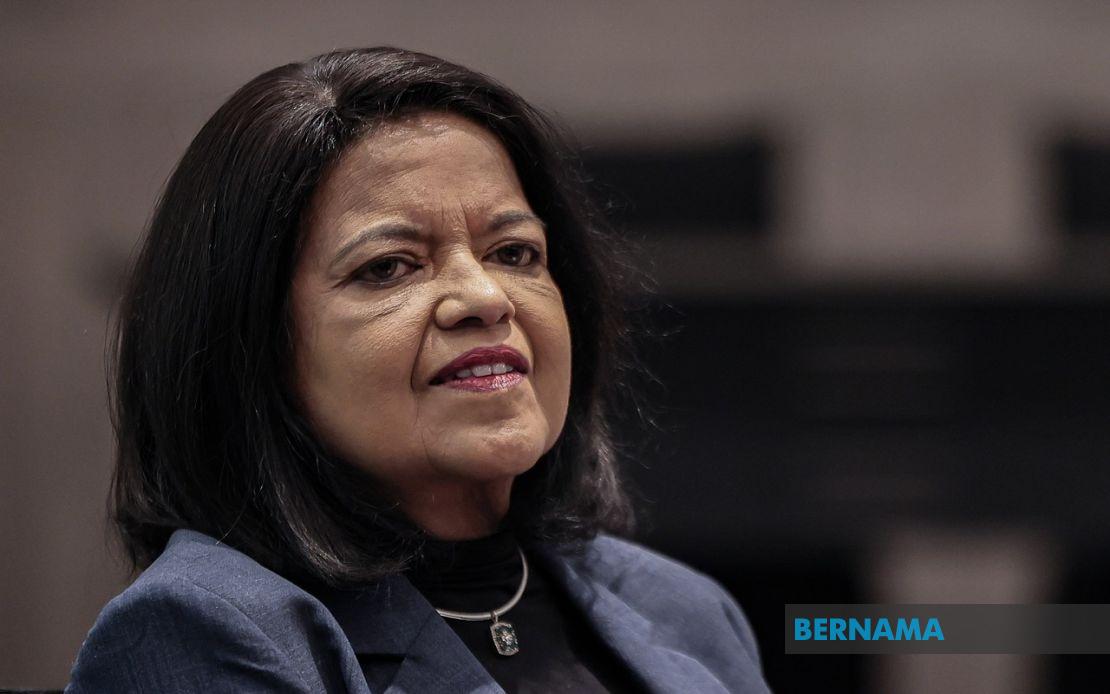
MMC chairperson Tan Sri Nallini Pathmanathan outlined the initiative at a Media Dialogue Session alongside Communications Minister Datuk Fahmi Fadzil during National Journalists' Day celebrations. She emphasised that the timing creates a genuine opportunity for adaptive refinement. "What we learn in Johor, we can carry directly into Negeri Sembilan, refining the mechanism in real time," Nallini explained, suggesting that this sequential structure transforms what might otherwise be a straightforward pilot programme into a dynamic learning environment where early successes and identified weaknesses can be addressed before the second election cycle begins.
The initiative's scope is deliberately focused and narrow, concentrating specifically on content falsely attributed to media organisations rather than attempting the much broader and more contentious task of fact-checking political claims or manifesto promises. The system targets forged graphics, manipulated screenshots, fabricated news reports bearing fake media logos, and other deceptive content designed to mislead voters by masquerading as legitimate journalism. This strategic limitation prevents the mechanism from becoming entangled in disputes about political messaging or electoral claims, where accusations of bias could undermine public trust in the entire verification process. Instead, it addresses a discrete technical problem: determining whether specific content genuinely originated from the news organisations whose names and branding it bears.
The operational structure distributes responsibilities among multiple agencies, each playing a defined role aligned with their existing mandates and expertise. The MMC functions as coordinator rather than arbiter, ensuring that media organisations themselves make the crucial determination of whether disputed content came from their platforms—a decision only they possess the technical capacity to make definitively. The Election Commission serves as the authoritative reference for election-related procedural questions, while Bernama takes responsibility for disseminating verified information through its established news networks. Content Forum Malaysia handles digital engagement and media literacy components, while the Department of Community Communications and National Information Dissemination Centres will carry verified corrections into neighbourhoods and communities where misinformation may have already circulated.
The involvement of the Malaysian Communications and Multimedia Commission rounds out the framework, providing regulatory backup and technical assistance when matters require intervention at the platform level or necessitate escalation through formal channels. This distributed model deliberately avoids concentrating power in any single agency, instead creating what amounts to a de-facto consortium of truth-telling institutions. The assumption underpinning this approach is that misinformation thrives in environments where no clear mechanism exists for rapid verification, and that speed matters enormously—a viral fabrication bearing a media logo can poison public discourse within hours if left unchallenged, but can be contained if authoritative correction reaches audiences almost as quickly as the false claim itself.
Nallini provided a concrete illustration of how the mechanism would function in practice. Consider a graphic circulating widely on social media falsely bearing a news organisation's logo, claiming that a particular candidate has withdrawn from the race. Under the new system, that media organisation could verify within minutes whether the graphic actually came from their newsroom, issue an immediate public correction, and thus arrest the spread of falsehood before it becomes embedded in voter consciousness. The same logic applies to electoral procedure claims—if false information spreads about voting locations, registration requirements, or ballot procedures, the Election Commission can rapidly verify the facts and issue authoritative clarification through the coordinated network.
The initiative addresses a particularly acute vulnerability in modern political campaigns: the capacity to generate synthetic and AI-manipulated content at scale and speed that far exceeds the ability of traditional fact-checking to keep pace. A single bad actor armed with image-generation tools and platform access can create dozens of plausible-seeming but entirely fabricated news graphics in hours, each potentially reaching millions of people before anyone notices. The traditional journalistic response—investigating the claim, contacting sources, writing a lengthy debunking article—unfolds over days or weeks, long after the damage is done. By positioning trusted news organisations as rapid validators at the front line, the new system inverts this timeline, making verification faster than fabrication.
Accompanying the technical mechanism is a public awareness campaign built around the slogan "Who Said It? What's The Source?" and its Malay-language equivalent "Siapa kata? Sos mana?" This messaging strategy operates at the psychological level, aiming to cultivate voter scepticism and critical thinking rather than simply removing false content from circulation. Rather than attempting to police what citizens can read, share, or debate, the campaign invites voters to pause before accepting information uncritically. Nallini characterised this not as an instruction to remain silent but as an invitation to think—an implicit acknowledgement that heavy-handed censorship tends to backfire, whereas cultivating habits of verification tends to produce more resilient and discerning electorates.
The initiative has particular resonance for Malaysia and Southeast Asian democracies more broadly, where rapid digitalisation has created substantial populations of internet users but media literacy remains inconsistently developed across age groups and educational backgrounds. The region has experienced multiple instances where election-period misinformation campaigns caused measurable political damage, from border disputes to communal tensions to confusion about voting procedures. By establishing practical mechanisms for rapid response and pairing these with public education campaigns, Malaysia positions itself ahead of many comparable democracies in developing systematic defences against election-period information warfare.
The mechanism also reflects a notable shift in how Malaysian governance approaches online misinformation: away from purely regulatory or prohibitionist approaches and toward collaborative frameworks that harness the capacity of media organisations themselves. Rather than relying on government agencies or platforms to determine truth, the system delegates that function to the institutions most qualified to make such determinations—professional news organisations—while government provides coordination, procedural authority, and implementation support. This distributes responsibility in ways that are harder to characterise as censorship and more likely to gain the voluntary cooperation of media outlets and platforms.
The success of this initiative will depend partly on technical factors—how quickly media organisations can verify disputed claims, whether the interconnected agencies can maintain real-time coordination under pressure—but also on adoption and user behaviour. If voters and social media users become accustomed to using the verification mechanisms and treating "Siapa kata? Sos mana?" as a reflexive critical question, the system can significantly reduce misinformation's electoral impact. If citizens continue sharing unverified content reflexively, even knowing verification systems exist, the technical infrastructure becomes less consequential. The Johor and Negeri Sembilan elections will reveal not only whether the mechanism functions logistically, but whether Malaysians embrace the habits of information verification the system is designed to encourage.

