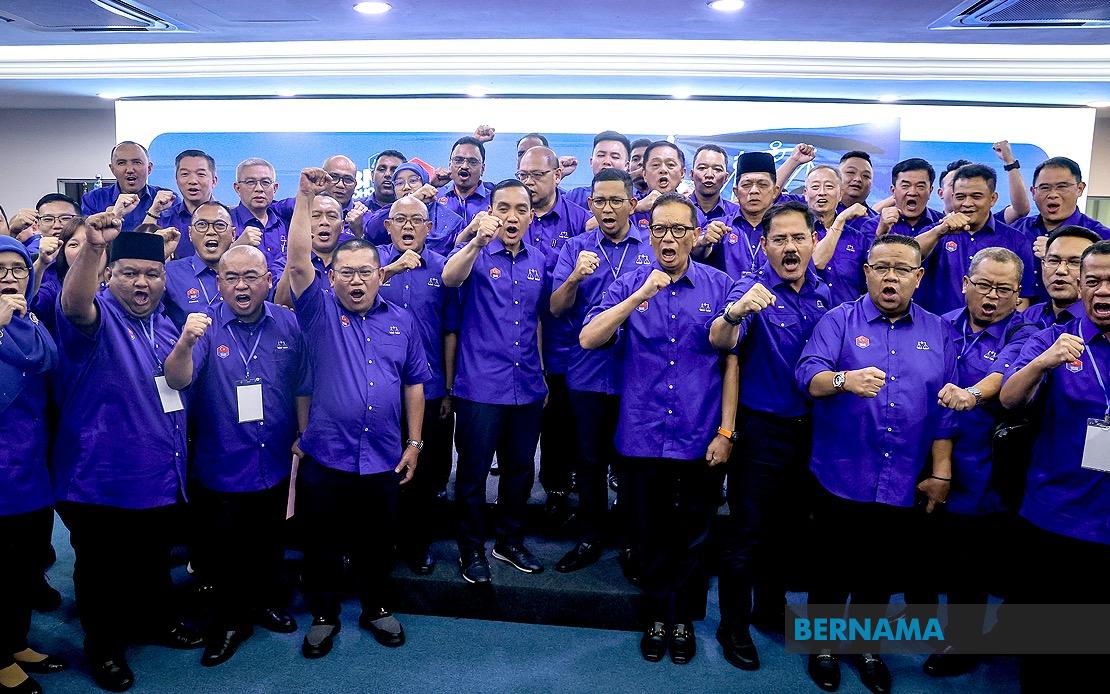
Johor's Barisan Nasional coalition has released its comprehensive candidate roster for the upcoming 16th state election, presenting a blend of seasoned political operatives and fresh contenders to contest all 56 state legislative seats. The coalition's leadership presented the line-up during a formal candidate announcement ceremony in Johor Bahru, with the slate comprising 37 UMNO candidates, 15 representatives from MCA, and four from MIC. Johor BN chairman Datuk Onn Hafiz Ghazi oversaw the announcement, which came with explicit endorsement from BN's national chairman Datuk Seri Dr Ahmad Zahid Hamidi, signalling consensus at both state and federal levels of the coalition's direction.
The selection process reflects BN's strategy of balancing continuity with renewal in the state legislature. Among the most prominent returnees is former health minister Datuk Seri Dr Adham Baba, who will contest the Pasir Raja seat—a constituency he previously held for two consecutive terms spanning 2008 to 2018. His political trajectory has been notable at multiple levels; beyond his state assembly record in Pasir Raja, Adham represented Tenggara in Parliament across two separate stints, first from 2004 to 2008 and again from 2018 to 2022. His appointment as Tenggara UMNO division chief reflects his continuing influence within the party structure. The decision to field him again suggests confidence in his organisational capabilities and established grassroots networks within the southern Johor district.
Menteri Besar Onn Hafiz is defending his Machap constituency, where he secured victory in the 2022 state election. His retention as BN's chief ministerial candidate underscores the coalition's commitment to maintaining continuity in the state's executive leadership. The Machap seat has remained a stronghold for Onn Hafiz's political interests, and his candidacy there signals that BN intends to project stability in its governance narrative heading into this election cycle. The emphasis on his leadership role throughout the candidate announcement ceremony reinforced the coalition's confidence in his stewardship of Johor's affairs.
While most senior figures have been retained, the announcement also reflected some strategic shifts. In Benut, former Menteri Besar Datuk Seri Hasni Mohammad, who successfully held the seat in the previous election, was notably excluded from BN's candidate list for this contest. His replacement with UMNO working secretary Datuk Mohd Sumali Reduan suggests a deliberate repositioning of political forces in the constituency. Such transitions at the executive level occasionally occur as parties recalibrate their bench strength and allocate experienced figures to constituencies deemed more competitive or strategically significant in the overall electoral calculus.
The broader retention strategy reveals BN's confidence in its incumbent base. Of the ten former state executive councillors who contested during the 2022 state election, nine have been renominated as candidates, indicating substantial continuity among the administrative apparatus that governs the state. The sole exception involves Khairin-Nisa Ismail @ Md On, the former State Women, Family and Community Development Committee chairman, who will not defend the Serom seat. Her exclusion represents a minor adjustment within the overall retention narrative, though it may signal shifts in how BN prioritises certain constituencies or demographic appeals.
Onn Hafiz's remarks during the announcement ceremony underscored the coalition's messaging framework for the election campaign. He characterised nomination itself not as a prize or competitive achievement, but rather as an assignment carrying weight and accountability. This framing attempts to position BN candidates as public servants entrusted with responsibility rather than beneficiaries of party patronage—a distinction that matters in how Malaysian voters assess political integrity and seriousness of purpose. His emphasis on conducting campaigns with courtesy, respect, and judiciousness reflected alignment with broader values narratives that Johor society purportedly prioritises, suggesting BN plans to campaign on behavioural and ethical grounds alongside policy platforms.
The composition of the candidate slate across party components reveals the coalition's internal balance of power. UMNO's 37 candidates constitute roughly two-thirds of the total, reflecting its dominant position within BN's Johor machinery. MCA's 15 candidates and MIC's four placements maintain the conventional proportionality that has characterised BN's multi-ethnic coalition structure for decades. This distribution ensures that all three major components retain meaningful representation in the legislature whilst preserving UMNO's structural advantage, a balance that has historically proven durable in managing intra-coalition dynamics and distributing ministerial and other state-level portfolios.
For Malaysian and Southeast Asian observers, Johor's electoral dynamics carry significance beyond the state's boundaries. As Malaysia's southernmost peninsular state and the second most populous, Johor's political direction influences national coalition stability and serves as a barometer for grassroots sentiment toward BN governance. The level of experienced personnel retained suggests the coalition's confidence in its record over the past term, yet the selective replacements indicate awareness that complacency poses risks. The election will test whether BN's stewardship in Johor—encompassing economic development, administrative competence, and social cohesion—has sufficiently convinced voters to maintain the coalition's control of the state assembly.
The candidate announcement also reflects broader patterns within Malaysian politics concerning the management of political succession and generational renewal. BN's strategy of retaining nine of ten former executive councillors suggests caution about introducing too many untested figures into positions of influence, particularly given the complexity of state governance and the diverse constituencies that comprise modern Johor. Yet the inclusion of several new faces indicates recognition that political vitality requires occasional infusion of fresh perspectives and younger representatives who can connect with evolving voter demographics and emerging policy concerns. The balance between these imperatives will likely influence campaign effectiveness and, ultimately, electoral outcomes.

