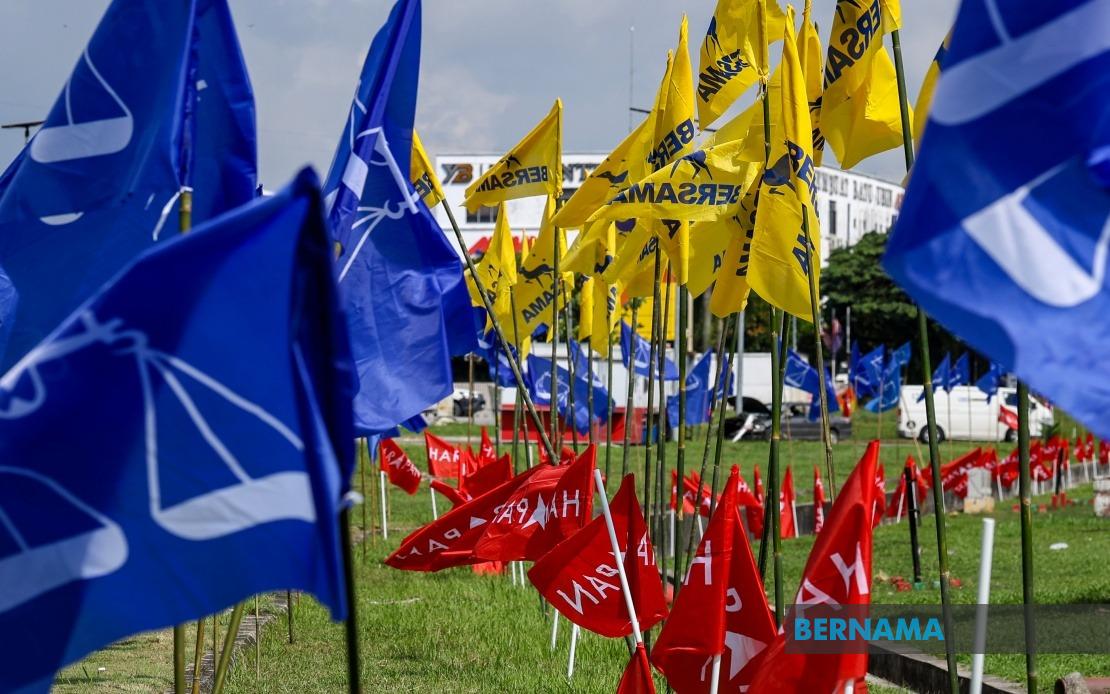
The first week of campaigning for Johor's 16th state election has proceeded with measured momentum as political parties adopt grassroots strategies over spectacle. Rather than deploying their full machinery in headline-grabbing rallies, contestants across all coalitions have concentrated on intimate voter engagement, including door-to-door visits, small focus group discussions, and localised community initiatives. This methodical approach signals a deliberate recalibration of electoral tactics suited to contemporary voter expectations and resource constraints.
Political analysts attribute this shift to changing campaign dynamics in Malaysia's electoral landscape. Prof Datuk Dr Sivamurugan Pandian, Senior Lecturer in Political Sociology at Universiti Sains Malaysia, explains that parties are calibrating their outreach to current conditions through high-contact, low-spectacle strategies. These methods serve multiple purposes: they enable candidates to understand constituent grievances directly, strengthen party organisation at the grassroots level, and distribute campaign budgets more efficiently before momentum escalates. The inaugural phase, according to Sivamurugan, functions essentially as foundation-building, positioning candidates to consolidate support within their constituencies whilst preserving resources for the campaign's critical later phases.
The strategic calculation extends beyond mere cost-cutting. Sivamurugan notes that party machinery has deliberately held back its full strength during week one, with senior leaders and coordinated digital campaigns expected to intensify from the second week onwards. This staged approach allows parties to target floating voters more precisely once initial outreach mapping is complete. The understated opening reflects confidence that momentum can be rapidly accelerated when conditions favour it, rather than exhausting campaign energy immediately.
Contemporary Malaysian elections increasingly incorporate data-driven methodologies that differ markedly from traditional campaign formats. Dr Azmi Hassan, Senior Fellow at the Nusantara Academy for Strategic Research, observes that modern campaigns employ hybrid strategies combining ground deployment with sophisticated social media targeting. Rather than assembling crowds in public spaces, campaign teams now categorise voters into distinct groups—supporters, undecided voters, and opposition-leaning citizens—and tailor messaging accordingly. This precision targeting allows parties to maximise persuasion effectiveness by addressing each voter segment's particular concerns rather than broadcasting generic messaging to mass audiences.
Theme development during Johor's opening week has remained relatively modest. Mujibu Abd Muis, researcher at the Ilham Centre and UiTM political science lecturer, identifies three prevailing campaign narratives: each party emphasises its track record, announces future development pledges, and asserts its capacity to deliver political stability. However, these framings have not yet crystallised into dominant themes sufficiently powerful to reshape the overall campaign landscape. Mujibu emphasises that narrative impact depends ultimately on whether messages connect to voters' tangible daily concerns—cost of living pressures, employment opportunities, infrastructure development, and public service quality. Without this resonance, campaign messaging remains abstract rather than mobilising.
Geographic campaign concentration reveals strategic prioritisation by competing parties. During week one, most party machinery concentrated activity in northern Johor districts including Muar, Tangkak, and Segamat, with spillover into portions of Batu Pahat and Kluang. This pattern does not reflect random deployment but rather reflects calculated identification of competitive constituencies likely to determine overall electoral outcomes. Northern Johor contains several marginal seats where elections genuinely remain undecided, explaining why national leaders have already been deployed there. Their presence signals to party activists and voters alike that these constituencies warrant special attention and investment.
Coalition dynamics structure campaign geography meaningfully. Associate Professor Dr Mazlan Ali, Director of the Faculty of Social Sciences and Humanities at Universiti Teknologi Malaysia, characterises the contest as primarily involving Barisan Nasional and Pakatan Harapan, with their respective campaign mobilisation reflecting confidence levels in different regions. Pakatan Harapan campaigns assertively in southern and western Johor where the coalition holds stronger voter affinity, whilst Barisan Nasional concentrates efforts on eastern coastal districts where it maintains traditional support strongholds, notably Mersing and Kota Tinggi. This spatial division of campaign labour allows each coalition to maximise efficiency by concentrating resources where electoral probabilities favour them.
Voter turnout emerges as the critical variable analysts across all perspectives emphasise. Despite convergence on other analytical points, political experts unanimously stress that mobilising actual voter participation will substantially determine final outcomes. In Malaysian state elections, turnout variation across constituencies can swing marginal seats decisively, making voter motivation campaigns potentially as important as persuasion messaging. Parties must therefore balance efforts between converting undecided voters and activating existing sympathisers to ensure polling day participation.
The 16th Johor state election involves 172 candidates competing for 56 state assembly seats, with voting scheduled for July 11 and early voting commencing July 7. This compressed timeframe between campaign opening and polling day explains why analysts expected campaigns to escalate rapidly from the measured opening week into more intensive second-phase efforts. The election represents a significant political contest within Malaysia's context, as Johor's results traditionally influence broader national political momentum and coalition viability assessments.

