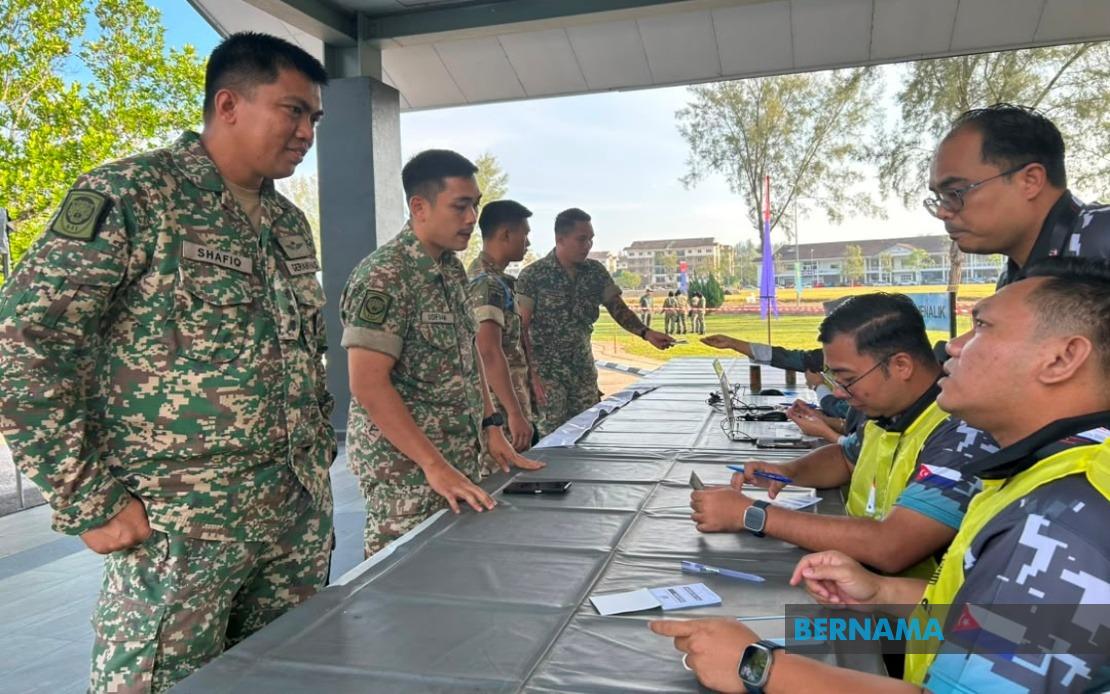
The Johor state election's early voting phase began on favourable terms on July 7, with clear skies facilitating an orderly opening of polling centres across the state. Security personnel arrived from as early as 7.30 am, well ahead of the 8 am official commencement, demonstrating strong participation in the preliminary voting window designated for those unable to vote on the main polling day.
Operations unfolded without significant disruption at the 64 early voting centres established throughout Johor, where comprehensive preparations by Election Commission staff ensured smooth logistics. The meteorological outlook, however, presents a potential complication for the remainder of the voting window, with the Malaysian Meteorological Department forecasting thunderstorms across the state during afternoon hours—a factor that may influence voter turnout in later sessions.
The early voting contingent reflected Johor's substantial security establishment. Among the 24,751 registered early voters, 12,041 comprised Malaysian Armed Forces personnel and their immediate families, whilst the remaining 12,710 encompassed Royal Malaysia Police officers and General Operations Force members alongside their spouses. This structural accommodation underscores the electoral framework's recognition of security sector operational demands, allowing deployed and stationed personnel to participate without compromising deployment requirements.
Field observations from strategic polling locations, including the 5th Battalion GOF Camp in Simpang Renggam, Johor Contingent Police Headquarters, and Mahkota Kluang Camp, indicated that voting procedures adhered to established protocols with minimal complications. The Election Commission's pre-opening verification processes appeared effective in establishing orderly, secure environments conducive to accessible voting, demonstrating institutional preparedness for the broader electoral exercise.
The early voting arrangement forms part of a significantly larger electoral undertaking consuming Johor's political landscape. The state's 16th general election will ultimately involve 2,727,926 registered voters dispersed across 1,140 polling centres throughout the jurisdiction. This scale necessitates sophisticated logistical coordination and extensive poll worker deployment, making the early voting phase a critical stress-test of administrative capacity and operational frameworks.
The election itself contests 56 state assembly seats across Johor's territorial span, with 172 candidates presenting themselves for voter consideration. This candidate density—approximately 3.1 candidates per seat on average—suggests competitive contests in numerous constituencies, potentially indicating meaningful electoral choices for voters and reflecting varied political mobilisation across the state.
Early voting centres operated on a staggered closure schedule, with individual locations shuttering between noon and 6 pm based on voter registration density and geographic considerations. This phased approach prevents logistical bottlenecks whilst accommodating the varied operational schedules of security personnel across different postings and units throughout Johor. The flexibility embedded in the timeline demonstrates administrative responsiveness to the practical constraints facing uniformed personnel.
The significance of early voting mechanisms extends beyond procedural convenience. Security force participation in elections constitutes an important democratic principle—ensuring that those stationed and deployed on national service retain electoral agency without compromising operational readiness. The dedicated early voting infrastructure therefore represents institutional commitment to inclusive political participation across all population segments.
As Johor's electoral calendar progresses toward the Saturday main polling day, the early voting phase establishes momentum and public awareness surrounding the exercise. Initial turnout levels and operational smoothness serve as indicators for anticipated Saturday participation rates and reveal any systemic vulnerabilities requiring urgent remediation before the main electoral exercise. The weather forecast, conversely, may dampen Saturday turnout if thunderstorms materialise with severity, potentially affecting elderly voters and those in rural or less accessible constituencies.
The scale and complexity of Johor's state election reflect the state's demographic weight and political significance within Malaysia's broader electoral landscape. As a major economic and population centre, Johor state results carry implications extending beyond regional governance, potentially influencing national political calculations and coalition mathematics at the federal level. The election therefore merits close regional and national scrutiny regarding voting patterns, campaign effectiveness, and the broader trajectory of Malaysian electoral politics.

