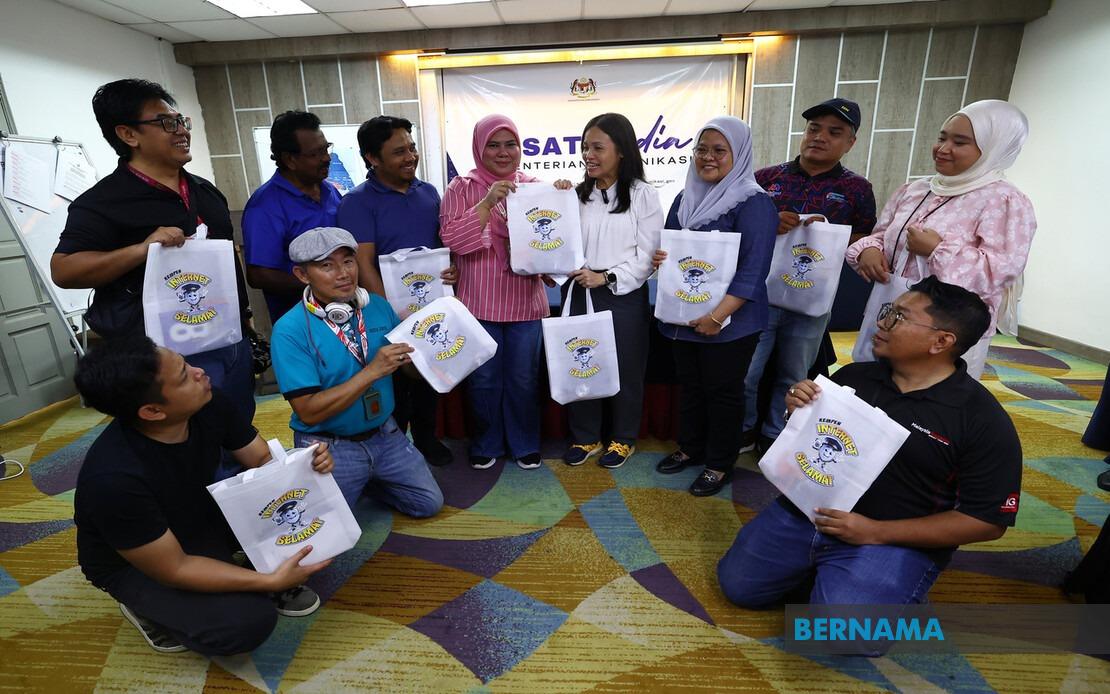
Malaysia's Communications Ministry has mobilised significant infrastructure to support media operations during the 16th Johor state election, deploying two main media centres and expanding to 100 National Information Dissemination Centres (NADI) across the state. Deputy Communications Minister Teo Nie Ching announced the arrangements in Johor Bahru on June 28, highlighting the government's commitment to ensuring journalists can perform their roles effectively throughout the electoral process.
The two primary media hubs are strategically positioned at Hotel Seri Malaysia in the state capital and at NADI Kampung Sawah Awok in Muar, providing regional coverage of the state. Both facilities will operate extended hours from 9 am to 9 pm daily, beginning June 26 and continuing through polling day on July 11. This extended operational schedule recognises the demanding nature of election coverage, allowing media personnel flexibility to gather information and file reports during peak campaign activities.
Interconnectivity forms a cornerstone of the infrastructure provision. The ministry has committed to maintaining minimum internet speeds of 100 Mbps across all facilities, a specification designed to accommodate modern news production workflows involving video transmission and high-resolution photography. Teo explicitly stated that journalists should encounter no technical barriers when uploading multimedia content to newsrooms and online platforms, addressing a common constraint in previous Malaysian elections where bandwidth limitations occasionally impeded reporting.
Beyond digital connectivity, the media centres are comprehensively equipped with hardware and office amenities. Laptops, desktop computers, photocopiers, and printers have been installed to create fully functional newsrooms where journalists can conduct interviews, process footage, and produce written reports without requiring external resources. This physical infrastructure matters particularly for freelance journalists and smaller news organisations that may lack mobile satellite trucks or independent technical support.
The Malaysian Communications and Multimedia Commission (MCMC) will serve an oversight function, monitoring telecommunications service providers to verify that internet speeds remain within optimal parameters throughout the campaign period. This regulatory monitoring extends beyond the media centres themselves; the commission has launched the MCMC Nexus application, inviting public participation in real-time signal strength assessment. The tool enables citizens to report connectivity quality at specific locations, generating crowd-sourced data that telecommunications companies can use to identify infrastructure gaps and improve service delivery in underserved areas.
Data privacy protections accompany the monitoring initiative. Teo clarified that MCMC will not retain or disseminate personal information from application users; only technical parameters such as geographic location and signal strength will be transmitted to telecommunications companies. This delineation attempts to balance the public interest in reliable communications infrastructure with individual privacy rights, though the distinction between technical and personal data remains contested in digital governance debates.
The election environment in Johor carries particular significance for Malaysian politics. As one of the nation's largest states and a traditional stronghold of the ruling coalition, electoral dynamics here often signal broader national trends. Ensuring robust media infrastructure and communications capacity becomes essential for maintaining democratic accountability and enabling voters to access diverse information sources. The deployment reflects lessons learned from previous state elections, where inadequate facilities sometimes hampered independent journalism and fact-checking efforts.
Campaign conduct standards form another element of the election framework. Teo reminded political parties and their supporters to maintain campaign civility and refrain from raising divisive issues involving race, religion, and royalty—Malaysia's constitutional sensitivities collectively known as 3R. The MCMC will coordinate with police authorities to monitor social media platforms, removing content deemed to contain extreme provocative elements that could incite communal tensions. This dual-track approach seeks to balance free expression with protective measures against coordinated disinformation or hate speech.
Fact-checking capacity has become increasingly prominent in Malaysian electoral discourse. The Malaysian Media Council has established a dedicated fact-checking platform for the Johor election, and the government actively encourages public engagement with verification processes before sharing information online. This institutional recognition of misinformation risks reflects evolving global democratic practices, though questions persist regarding resource allocation and verification methodology across Malaysia's diverse information ecosystem.
The electoral timetable structures the campaign period. Early voting will occur on July 7, providing an advance opportunity for eligible voters unable to participate on the main polling date of July 11. Media organisations must coordinate coverage planning across both dates, and the extended operational windows of the information centres accommodate this extended voting cycle. The concentration of campaign activity in the two-week window between June 26 and July 11 creates compressed deadlines for comprehensive electoral reporting.
From a Southeast Asian perspective, Malaysia's approach to election-era communications infrastructure offers instructive lessons. Several neighbouring countries grapple with comparable challenges of ensuring media access and information quality during electoral periods, particularly across geographically dispersed populations and amid competing digital platforms. The Johor model, emphasising both physical infrastructure and digital connectivity standards, addresses practical constraints while attempting to maintain editorial independence through facility provision rather than content control.
The initiative ultimately reflects broader recognition that contemporary elections depend substantially on functional communications systems and reliable information access. By concentrating resources on enabling journalistic work rather than constraining editorial judgement, Malaysia's approach preserves space for the independent scrutiny essential to democratic legitimacy. Whether the infrastructure fully supports diverse news production—particularly for smaller outlets and alternative media—remains to be assessed through on-the-ground reporting during the campaign.

