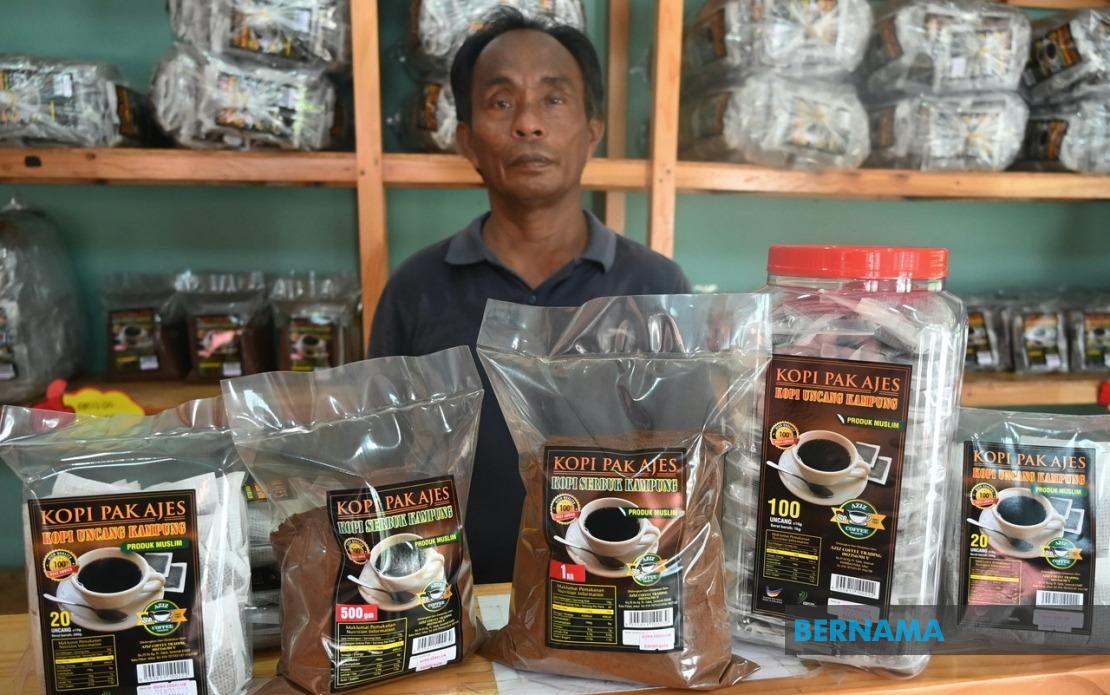
The buzz of election season in Johor has created unexpected prosperity for small-scale entrepreneurs, with Aziz Mohd discovering that political campaigns can be remarkably lucrative for those in the right business at the right time. Better known locally as Pak Ajes, the 65-year-old chairman of Aziz Coffee Trading in Kampung Parit Sidek, Semerah, has found his coffee operation inundated with orders from candidate teams and election workers throughout the campaigning period for the 16th Johor state polls. With 172 candidates competing for 56 state seats and polling day set for Saturday, his modest enterprise has become an unexpected beneficiary of the electoral machinery's appetite for beverages and sustenance.
The surge in demand has forced Pak Ajes to fundamentally restructure his production capacity, effectively doubling output to satisfy orders flooding in from across several state constituencies including Semerah, Sungai Balang and Bukit Naning. Rather than viewing this as merely a temporary spike, he approached the anticipated surge strategically, making advance preparations after receiving early inquiries from representatives associated with various political camps. His willingness to anticipate and plan for the seasonal demand demonstrates the kind of entrepreneurial agility that characterises many small Malaysian businesses attempting to navigate unpredictable revenue streams.
Procuring sufficient raw materials to sustain this expanded production has required Pak Ajes to extend his supply networks beyond his usual sources, venturing as far as Rengit and Kluang to secure adequate coffee bean stocks. This expansion of the supply chain, though logistically challenging, underscores how electoral activity can create ripple effects throughout local economies, connecting businesses across multiple municipalities and creating temporary boosts for suppliers and transportation networks throughout the region. The decision to source from distant locations rather than disappoint customers reveals a commitment to service that has likely contributed to the longevity of his operation.
Pak Ajes' entrepreneurial journey reflects a broader pattern of resourcefulness among Malaysian small business owners. His entry into coffee production was born from necessity and opportunity rather than grand ambition. Beginning in 1991 after observing surplus coffee bean supplies in a nearby village, he initially processed beans for personal consumption and to support acquaintances operating beverage stalls. Prior to establishing his coffee operation, he had pursued diverse agricultural ventures including quail farming for egg production and mushroom cultivation, selling his outputs to suppliers and local markets. This diversified approach to small-scale agriculture typifies how rural entrepreneurs build resilience through portfolio approaches to income generation.
With modest initial capital of approximately RM200 derived from quail egg and mushroom sales, Pak Ajes began packaging and selling coffee powder in 100-gram portions according to customer demand. This bootstrap approach, relying on reinvestment of profits rather than external financing, has enabled him to build a sustainable operation over three decades. The enterprise has evolved substantially from those humble beginnings, now producing more than five tonnes of coffee powder monthly and maintaining regular supply relationships with multiple coffee shops throughout the Muar and Batu Pahat areas. The scale of his current operation represents a remarkable expansion from a single entrepreneur to a business capable of responding to significant demand fluctuations.
The production process itself demands considerable expertise and discipline, characteristics that Pak Ajes has clearly developed through decades of hands-on engagement. Manufacturing quality coffee powder requires meticulous attention throughout multiple stages beginning with separation of beans from stems and husks, followed by approximately fifteen days of sun-drying to achieve optimal moisture levels. The transformation continues through roasting, grinding, and packaging phases, each demanding technical knowledge and quality control. Packaging particularly requires care since the finished product is susceptible to spillage and degradation if exposed to air for extended periods, with moisture and oxidation potentially causing hardening and clumping that compromises product quality and marketability.
Recognizing that production capacity alone cannot sustain indefinite growth, Pak Ajes diversified into retail operations by establishing Kupi Nang Ajes Cafe in 2022 in front of his residence, a venture undertaken in partnership with his son Muhammad Fitri, aged 22. The café provides a commercial touchpoint offering various coffee preparations including Americano and latte at competitive pricing, effectively extending his business model from wholesale supply to direct consumer engagement. This vertical integration strategy, combining manufacturing with retail distribution, positions the business to capture greater margins and develop brand recognition within the local community.
The expansion ambitions articulated by Pak Ajes and his son extend well beyond their current footprint. They envision establishing a second outlet in a high-traffic commercial location, with Batu Pahat town centre or Muar identified as potential sites. More ambitiously, they aspire to develop a multi-state franchise model with branches distributed across Malaysia, a goal reflecting genuine entrepreneurial confidence despite the challenges inherent in rapid expansion. Such aspirations, grounded in demonstrated operational success and family involvement, represent the kind of measured growth trajectory that characterizes sustainable small business development in Malaysia.
Government support has played a measurable role in facilitating Pak Ajes' business development. The Department of Agriculture has provided substantive assistance through equipment contributions including a coffee grinder and bagging machine, alongside educational programming covering packaging best practices and product labelling standards. This institutional support, though not widely publicized, represents an important mechanism through which government agencies enable agricultural entrepreneurs to achieve operational efficiency and meet commercial standards. Such interventions can meaningfully reduce capital barriers facing small producers seeking to professionalize their operations and access broader markets.
The election windfall experienced by Pak Ajes illuminates broader economic dynamics within rural Malaysia where small enterprises depend substantially on seasonal and episodic demand surges. Political campaigns, though predictable in their occurrence, create temporary but significant consumption patterns that benefit vendors positioned to capitalize on concentrated spending. This temporary prosperity, while welcome and financially meaningful for businesses like Aziz Coffee Trading, also highlights the precariousness of revenue streams dependent on irregular events. Entrepreneurs navigating such volatility require the adaptability and reserves that Pak Ajes has evidently cultivated through three decades of reinvestment and diversification, offering lessons for the broader ecosystem of Malaysian small business operators seeking to build resilience against unpredictable market conditions.

