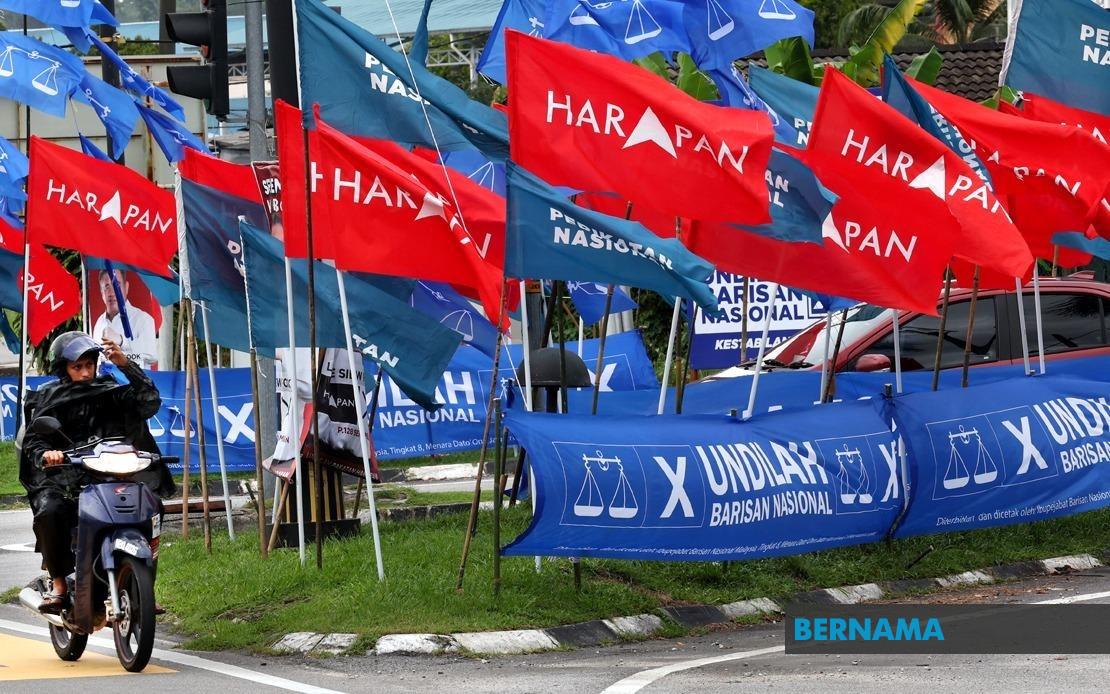
Johor's electoral battleground has reached fever pitch as the countdown to Saturday's state election accelerates, with less than two days remaining for campaigning to formally conclude. The 13-day campaign cycle has seen candidates from all quarters reject any inclination to ease off the accelerator, instead channelling their remaining energy into a coordinated final assault of public rallies, intimate community meetings, and one-to-one voter contact designed to capture undecided voters and consolidate party support. Across the state's 56 constituencies, the urgency is palpable, reflecting both the competitive nature of this election and the high stakes involved for Malaysia's second-largest state by economic output.
Pakatan Harapan has leveraged the appearance of national figures to generate momentum in the closing phase. Prime Minister Datuk Seri Anwar Ibrahim is scheduled to address supporters at three key locations on the final night of campaigning, with particular emphasis placed on the Puteri Wangsa seat, historically a significant bellwether for broader electoral sentiment in southern Johor. The coalition's candidate for that constituency, Maszlee Malik, has actively promoted attendance at the "Grand Finale Harapan Johor Selatan" rally through social media, framing participation as a demonstration of voter enthusiasm and attempting to create a sense of collective momentum among PH supporters. This high-profile involvement from the Prime Minister signals the national government's recognition of how the outcome in Johor could shape perceptions of its broader political mandate and administrative competence heading into the coming year.
The coalition has maintained consistent presence across marginal and stronghold constituencies alike. In Paloh, PH candidate Dr A. Ruban cut short a medical absence to resume campaigning, signalling his determination to personally drive the electoral push in a seat his party is defending. Similarly, Johor PKR chairperson Datuk Seri Dr Zaliha Mustafa demonstrated institutional commitment by participating in a mechanised convoy involving 120 motorcyclists in support of Kemelah candidate Mohd Afif Abd Hamid, a format that allows campaigns to reach dispersed rural voters across wider geographical areas within compressed timeframes. These efforts underscore how electoral competition in Malaysian state elections now routinely demands that candidates maintain near-constant visibility and accessibility throughout the campaign period.
Barisan Nasional has pursued an equally intensive schedule, with coalition chairman Datuk Seri Dr Ahmad Zahid Hamidi making strategic visits to Endau and Kempas constituencies to energise party machinery and candidate morale. As the incumbent administration, BN's campaign has concentrated on reinforcing the state government's track record on development. Johor Menteri Besar Datuk Onn Hafiz Ghazi, who is contesting the Machap seat, has maintained a robust personal campaign presence while using digital platforms to directly address voters about the coalition's governance agenda. Concurrently, BN candidates in tight races such as Larkin have employed sophisticated voter engagement strategies, with candidate Mohd Hairi Mad Shah implementing a sustained "Ziarah Kasih" (compassion visit) programme that emphasises personal interaction and one-on-one relationship-building over mass rallies. This methodical approach acknowledges that in Malaysian electoral contests, personal connections and direct communication often prove more influential than high-profile public events in determining voter behaviour.
Perikatan Nasional has simultaneously mounted substantial campaign operations, indicating that the three-cornered contest remains genuinely competitive across multiple constituencies. The coalition is hosting a major rally in Endau tonight, featuring both its chairman Datuk Seri Ir Dr Ahmad Samsuri Mokhtar and PAS president Tan Sri Abdul Hadi Awang in support of the Endau candidate. This coordinated display of national leadership reflects PN's ambition to present itself as a viable alternative to both PH and BN in key battlegrounds. Individual PN candidates have maintained consistent ground presence, with Kahang's Mazlan Bujang declaring his intention to campaign continuously until the official deadline, underscoring how the final 48 hours remain contested territory where marginal gains in voter contact can prove decisive.
Smaller political forces have not abandoned their electoral participation despite facing structural disadvantages in resource and organisation. Parti Bersama Malaysia has launched a "Bersama Tour Truck" campaign initiative incorporating its Kota Iskandar candidate, attempting to generate visibility through mobile campaigning tactics. Simultaneously, independent and smaller-party candidates in constituencies such as Larkin have pivoted toward intimate small-group dialogues, a more resource-efficient approach that allows sustained voter engagement without the financial burden of large-scale events. These varied campaign methodologies reflect the diverse strategies parties employ based on their organisational capacity, financial resources, and electoral prospects in individual constituencies.
The scale of this electoral contest remains substantial, with 172 candidates competing across 56 state assembly seats, ensuring that campaign intensity pervades all corners of Johor despite the concentration of media attention on marginal constituencies and high-profile candidates. The geographic dispersion of seats across urban, peri-urban, and rural areas means that effective campaigning demands substantial logistical coordination and resource deployment, explaining why all significant parties have mobilised extensive machinery during these final days. The Saturday polling date creates genuine urgency, as any late-stage campaign activities must conclude before the official campaign blackout period begins, making Friday the de facto final day for organised political activity.
For Malaysian observers and regional analysts, this election carries significance beyond Johor itself. As a state that has alternated between major coalitions in recent decades, Johor's electoral outcome influences national political narratives about government performance, coalition viability, and voter sentiment toward current administrations. The intensity of campaign activity in these final hours reflects all parties' recognition that outcomes remain genuinely uncertain in numerous constituencies, resisting any assumption of predetermined results. The deployment of national leadership figures, the sustained grassroots activity, and the continued competition from PN all suggest that the Anwar Ibrahim-led government cannot assume automatic retention of Johor, while BN cannot presume inevitable return to dominance despite incumbent advantages. This genuine competitiveness explains the frenetic pace visible across all campaign headquarters and constituency operations during this final campaign sprint.

