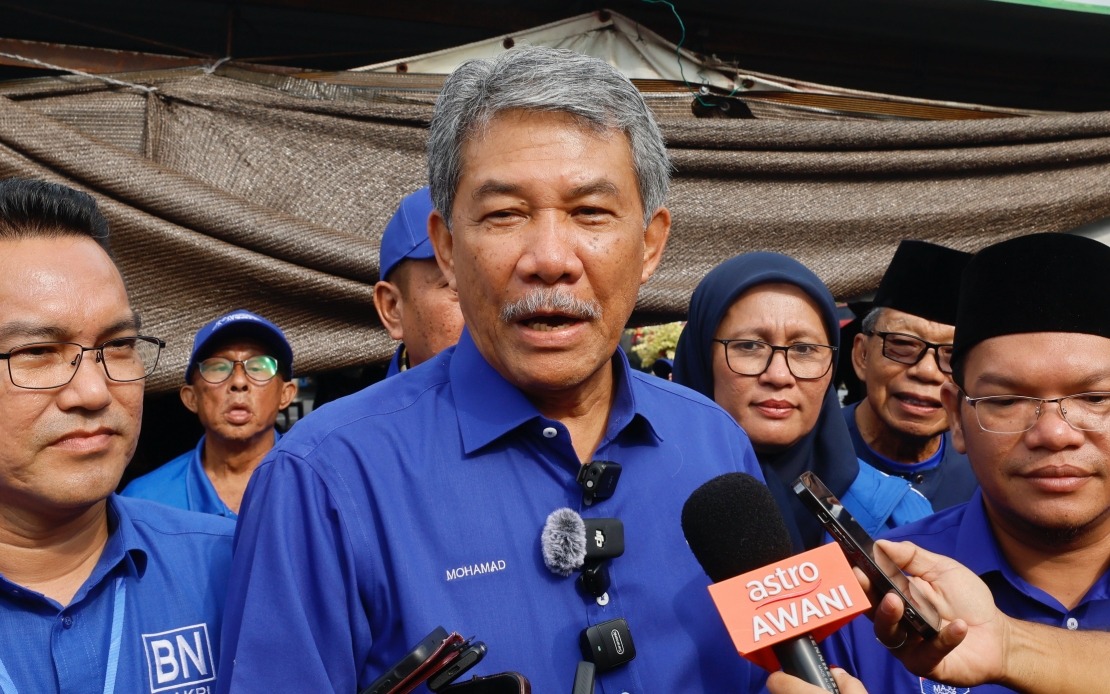
With polling day for Johor's state election just days away, the country's political leadership is emphasising the need for restraint and professionalism during the campaign period. Datuk Seri Mohamad Hasan, who holds dual positions as UMNO deputy president and Foreign Minister, delivered this cautionary message during engagement with voters in the Tiram state constituency on July 6, underscoring a delicate balance that Malaysia's ruling coalition must maintain as its component parties contest for state-level mandates.
The appeal for measured discourse reflects broader concerns about how state-level political rivalries can destabilise relationships within the Unity Government structure at the Federal level. Although individual parties retain the right to campaign vigorously on their respective policy platforms and development plans, Mohamad argued that such contests must not become vehicles for undermining the broader coalition framework that has governed Malaysia since 2022. This tension between competitive federalism and coalition maintenance represents a fundamental challenge facing Malaysia's current political architecture.
Mohamad articulated a distinction between robust political competition and personal antagonism that warrants deeper consideration. Friendly ribbing between politicians and their parties, he suggested, remains acceptable and even inevitable in a democratic system. However, crossing into personal attacks risks poisoning working relationships required for governance at the Federal level, where UMNO, Parti Pribumi Bersatu Malaysia, and other coalition partners must cooperate on national economic management, foreign policy, and security matters. This framework acknowledges that Malaysian democracy functions across multiple tiers, with state elections serving legitimately separate purposes from national power struggles.
A particularly sensitive issue in Johor's political environment concerns the status of former Prime Minister Datuk Seri Najib Tun Razak, whose legal situation has become intertwined with speculation about electoral outcomes and potential pardons. Mohamad directly addressed allegations that the Johor state election constitutes an effort to secure Najib's freedom, dismissing such claims as fundamentally misunderstanding Malaysia's constitutional framework. His reasoning carries constitutional weight: a Menteri Besar commanding only state-level executive authority cannot influence federal judicial processes or pardon decisions, which rest with the Yang di-Pertuan Agong and Federal Government respectively.
The Foreign Minister's emphasis on the supremacy of law and constitutional constraints reflects UMNO's broader political strategy in the current period. By publicly reaffirming that state-level political outcomes cannot alter Najib's legal trajectory, party leadership seeks to deflect narratives linking the election to personal redemption efforts rather than substantive governance platforms. This defensive posture suggests concern that opposition parties may weaponise such allegations to undermine UMNO's campaign message and mobilise voters around anti-corruption sentiment.
Constitutionally, Mohamad's assertions align with Malaysia's system, where the Yang di-Pertuan Agong possesses absolute prerogative in granting pardons. However, his warning against "usurping" or "undermining" the Agong's authority carries implicit political warnings to coalition partners and the broader political system. The phrasing suggests that any perception of state-level political actors attempting to influence the Agong's constitutional prerogatives would be viewed as transgressive, establishing a clear boundary that competitive federalism must respect.
The logistics of the Johor state election underscore its significance within Malaysia's political calendar. The contest encompasses 172 candidates competing for 56 seats in the State Legislative Assembly, with early voting scheduled to commence July 7 and main polling occurring July 11. This substantial electoral exercise will provide early indicators of voter sentiment regarding the Unity Government's performance, particularly given Johor's status as a traditionally UMNO stronghold and bellwether for broader peninsular political trends. Results may influence the trajectory of other planned state elections and shape momentum toward potential early Federal elections.
For Malaysian readers and regional observers, this election illuminates the structural tensions within Malaysia's current governing arrangement. Component parties maintain electoral autonomy and must contest to retain voter mandates and demonstrate distinct contributions to governance. Simultaneously, the Unity Government framework requires sufficient institutional cohesion to deliver policy outcomes and present unified leadership on national issues. Mohamad's intervention suggests this balance remains precarious and requires constant calibration through leadership messaging.
The Foreign Minister's commentary also carries implications for Malaysia's international standing and diplomatic effectiveness. A government perceived as internally fractious or consumed by personal rivalries faces reduced credibility in foreign policy deliberations, particularly in a region where Southeast Asian nations view political stability as integral to economic confidence and security cooperation. By emphasising prudent campaign conduct, Mohamad signals to international partners that Malaysia's political system remains capable of managing internal competition without jeopardising its functional capacity to conduct foreign affairs and regional diplomacy.
Mohamad's intervention represents a form of political consensus-building through public advocacy. Rather than imposing formal restrictions, which would appear authoritarian, UMNO's deputy president appeals to contesting parties' sense of responsibility and shared interest in preserving institutional functionality. This softer approach requires voluntary compliance and relies on political actors' recognition that short-term campaign advantages gained through personal attacks risk longer-term coalition stability from which all components derive governmental legitimacy and access to state resources.
Looking forward, the Johor election results will test whether this appeal for responsible campaign conduct took hold among the broader political ecosystem. Voter response will indicate whether such campaigns resonated or whether personality-focused contestation mobilised electorate support more effectively. The outcome will also reveal whether the Unity Government's structural tension between competitive federalism and coalition maintenance remains sustainable or requires institutional recalibration as Malaysia's political landscape continues evolving.

