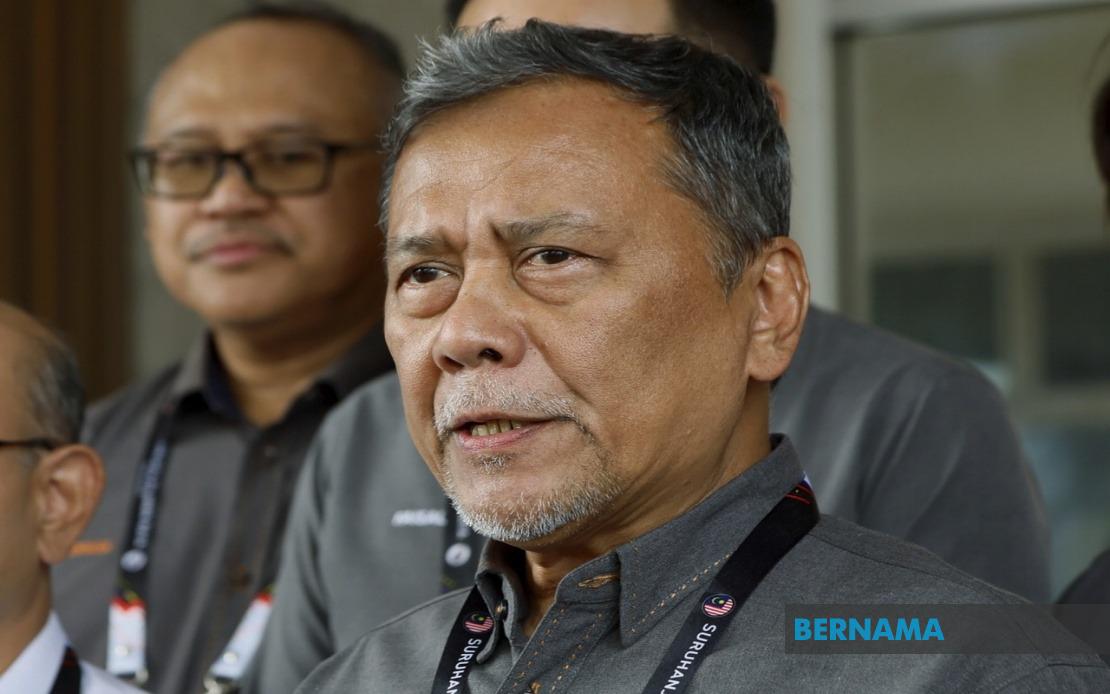
The scale of alleged electoral misconduct in the Johor state election has reached significant proportions, with the Election Commission documenting 588 complaints spanning various categories of campaign law violations as polling day neared. Election Commission chairman Datuk Seri Ramlan Harun disclosed the extent of the alleged infractions during a press conference at Dewan Mahkota, Kem Mahkota in Kluang, emphasising the commission's active monitoring of compliance throughout the campaign period leading up to Saturday's poll.
The complaints represent a substantial volume of allegations that warranted formal action, reflecting the level of scrutiny applied to the 16th Johor State Election. Among the 588 cases, 44 had already culminated in police reports being filed, indicating that authorities had determined sufficient grounds existed to pursue criminal investigations into specific matters. The threshold for lodging police reports suggests these cases involved more serious or substantiated allegations than the broader complaint category, potentially encompassing vote-buying, electoral fraud, or campaign finance violations.
Beyond the criminal sphere, the Election Commission directed three separate matters to the Malaysian Anti-Corruption Commission for investigation, signalling that certain allegations fell within the corruption investigation authority's remit. This referral pathway typically involves suspicions of bribery, abuse of public office, or illicit financial transactions tied to the electoral process. The involvement of MACC underscores that some alleged infractions carried implications beyond simple election rule breaches and potentially touched on broader integrity concerns.
The electoral process for the Johor state election involved 172 candidates competing for 56 seats across the state. This competitive field encompassed representatives from multiple political parties vying for voter support through campaign activities that, in numerous instances, apparently breached electoral regulations. The breadth of candidacy combined with the scale of violations suggests that election law breaches occurred across multiple constituencies and potentially among competitors from various political affiliations.
Election Commission chairman Ramlan, during his visit to Kluang, personally monitored the early voting process alongside Army Chief General Tan Sri Azhan Md Othman. This high-level presence indicated the commission's emphasis on ensuring the integrity of the voting mechanism itself, particularly during the early voting phase that accommodates military and police personnel. The direct involvement of senior election officials in observing voting procedures at multiple early voting centres, including the Kluang District Police Headquarters and Kem Mahkota, reflected the commission's commitment to transparent and lawful electoral conduct.
The early voting process attracted substantial participation, with 20,607 individuals casting ballots across designated centres. This cohort comprised 8,544 members of the Malaysian Armed Forces alongside their spouses, and 12,063 police personnel with their spouses. The sizeable early voter turnout among uniformed services personnel demonstrated significant engagement within these communities, while also underscoring the logistical complexity of managing widespread voting across geographically dispersed military and police installations.
The early voting mechanism represents a practical accommodation within Malaysia's electoral system, enabling military and police personnel whose duties may conflict with standard polling day schedules to exercise their franchise. However, the process simultaneously requires enhanced scrutiny to prevent irregularities, given the concentrated voting environment and the involvement of individuals with law enforcement responsibilities. The Election Commission's emphasis on monitoring these centres reflects acknowledgment of this heightened sensitivity.
The documentation of 588 complaints before election day illustrated the Election Commission's proactive complaint management system during the campaign period. Rather than complaints emerging predominantly after voting, the commission received allegations throughout the campaign, enabling authorities to investigate and potentially address violations before they could influence voter behaviour. This real-time monitoring approach represents a substantive enforcement mechanism rather than a purely post-election retrospective review.
For Malaysian voters and election observers, the magnitude of complaints filed carries implications regarding electoral integrity and public confidence. The volume of violations alleged suggests that campaign conduct standards faced considerable testing during the Johor election period, with multiple instances of questionable behaviour across the political landscape. However, the commission's documented response through police referrals and MACC investigations demonstrates institutional mechanisms responding to alleged infractions, even if questions persist regarding enforcement consistency and deterrent effectiveness.
The regional context further illuminates these developments. Southeast Asia has witnessed increased scrutiny of electoral processes and campaign conduct across multiple jurisdictions, reflecting growing public expectations regarding democratic standards. Malaysia's management of the Johor election violations, through formal documentation and institutional referrals, positions the country within broader regional conversations about election integrity and regulatory effectiveness. The transparency with which the Election Commission disclosed complaint statistics contributes to public discourse surrounding electoral governance, though sustained attention to investigation outcomes and enforcement consequences remains essential for maintaining democratic credibility.

