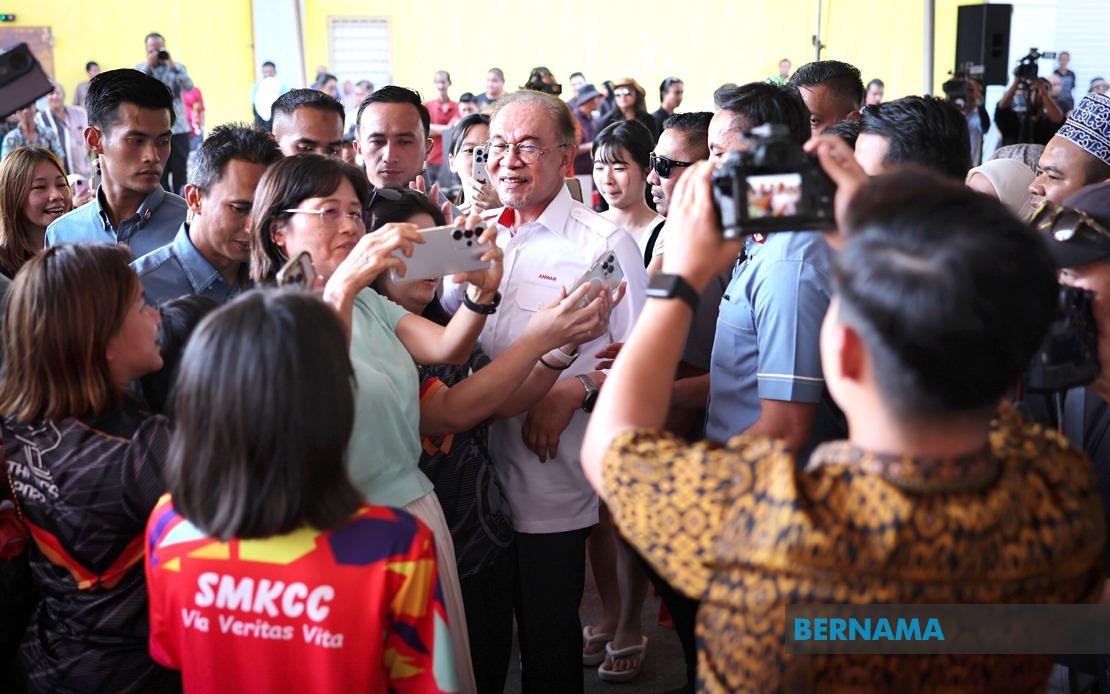
The 16th Johor State Election campaign officially draws to a close tonight at 11:59 pm, with all major political coalitions and their candidate roster engaged in a frantic final phase of voter outreach. Tomorrow's polling day will determine which party controls the state legislature through 56 contested seats, with a total of 172 candidates vying for these positions. The competitive landscape has seen multiple coalitions mount parallel campaign machines, each deploying distinct strategies to persuade the crucial Johor electorate in this consequential ballot.
Pakatan Harapan's nationwide leadership has taken direct command of the coalition's closing offensive in the southern state. Prime Minister Datuk Seri Anwar Ibrahim personally conducted a tour spanning five pivotal constituencies, beginning with a mobilisation event in Bukit Gambir state assembly territory and extending through Bukit Batu and Layang-Layang before culminating in a major gathering titled 'Johor Ke Depan, Undi Harapan Grand Finale Programme' scheduled for tonight in Pasir Gudang. This high-profile personal intervention signals the coalition's determination to maintain momentum in a state where PH's electoral fortunes have fluctuated considerably. Through social media, Anwar issued a spiritual appeal to supporters, requesting divine assistance for his team's performance in tomorrow's crucial contest.
The PH campaign apparatus reflects broader coalition dynamics, with component parties working independently within the larger umbrella. In the Larkin state seat contest, Suhaizan Kaiat, representing PH's slate, adopted a grassroots engagement method by conducting an unscripted walkabout through a major shopping complex, accompanied by Parti Amanah Negara Vice President Datuk Seri Dr Dzulkefly Ahmad. This localised approach permits individual candidates to establish direct voter connections while aggregating feedback that will guide their potential governance. Suhaizan characterised the accumulated voter input throughout the two-week campaign period as a collective mandate requiring conscientious stewardship.
Barisan Nasional's closing strategy emphasises spiritual and moral dimensions alongside partisan appeals. Coalition chairman Datuk Seri Dr Ahmad Zahid Hamidi, who also serves as Deputy Prime Minister, selected a prayer gathering in Kulai district as his platform for the election's final evening, hosting what organisers termed the 'BN Grand Supplication & Doa Selamat' event. This choice reflects recognition among BN strategists that voter sentiment extends beyond material considerations to encompass ethical and religious dimensions. Separately, incumbent Johor Menteri Besar Datuk Onn Hafiz Ghazi, contesting the Machap seat, released a recorded message expressing unreserved apology for administrative shortcomings during his tenure, demonstrating acknowledgement that accountability resonates with voters evaluating continued BN stewardship.
Within the broader BN coalition, Bersatu has positioned itself as a distinct voice advocating for thoughtful voter deliberation. Party President Tan Sri Muhyiddin Yassin urged Johoreans to exercise discernment in their electoral choice, suggesting that the two-week campaign window has furnished sufficient information for citizens to evaluate competing parties' platforms and performance records. This appeal to rational assessment stands in contrast to more emotionally charged campaign messaging, potentially reflecting Bersatu's positioning as a non-traditional BN component with its own political identity.
Opposition coalitions have similarly accelerated their closing momentum heading into tomorrow's vote. Bersama, a newer political force, scheduled their finale ceramah featuring senior leadership figures Datuk Seri Rafizi Ramli and Nik Nazmi Nik Ahmad, with Rafizi promising a comprehensive summary and rebuttal of issues raised throughout the campaign. Meanwhile, MUDA, the youth-oriented party, organised their pinnacle event styled 'Puteri Wangsa Grand Finale Lecture', with party president Amira Aisya Abd Aziz using the platform to emphasise voters' ultimate authority in determining electoral outcomes. These divergent campaign styles among smaller parties indicate fragmentation in the opposition space and competition for a consolidated anti-BN vote.
Logistical preparations have advanced in parallel with campaign finalisation, with weather considerations emerging as a practical factor. Malaysia Meteorological Department forecasting indicates predominantly clear morning conditions tomorrow, though afternoon thunderstorms remain possible across multiple Johor areas. Election management authorities will monitor these conditions to ensure polling operations proceed without disruption, given that weather-related complications could affect voter turnout particularly in rural constituencies where transportation challenges multiply during inclement conditions.
The Johor election represents a significant mid-term assessment of national governing coalitions' performance and public confidence trajectories. Regional implications extend beyond Johor's borders, as the state's electoral outcome will influence broader calculations regarding federal government stability and component party strength within both the ruling coalition and opposition formations. For Malaysian political economy observers, the contest illuminates voter priorities in a major economic contributor state facing persistent inflation, employment concerns, and infrastructure development expectations. The result will provide empirical data regarding whether economic hardship translates into anti-government voting or whether incumbent management of the pandemic's aftermath and recovery efforts retain sufficient voter approval.
The competitive intensity evident in final campaign hours reflects realistic expectation that tomorrow's outcome remains genuinely uncertain rather than predetermined. Anwar's personal campaign involvement, Zahid's spiritual mobilisation, and emerging parties' grassroots activity all suggest campaigns believe votes remain genuinely contestable. The 172 candidates distributed across 56 seats will exhaust their final persuasion efforts before midnight tonight, with subsequent days determining whether these intensive appeals successfully translated into ballot box support.

