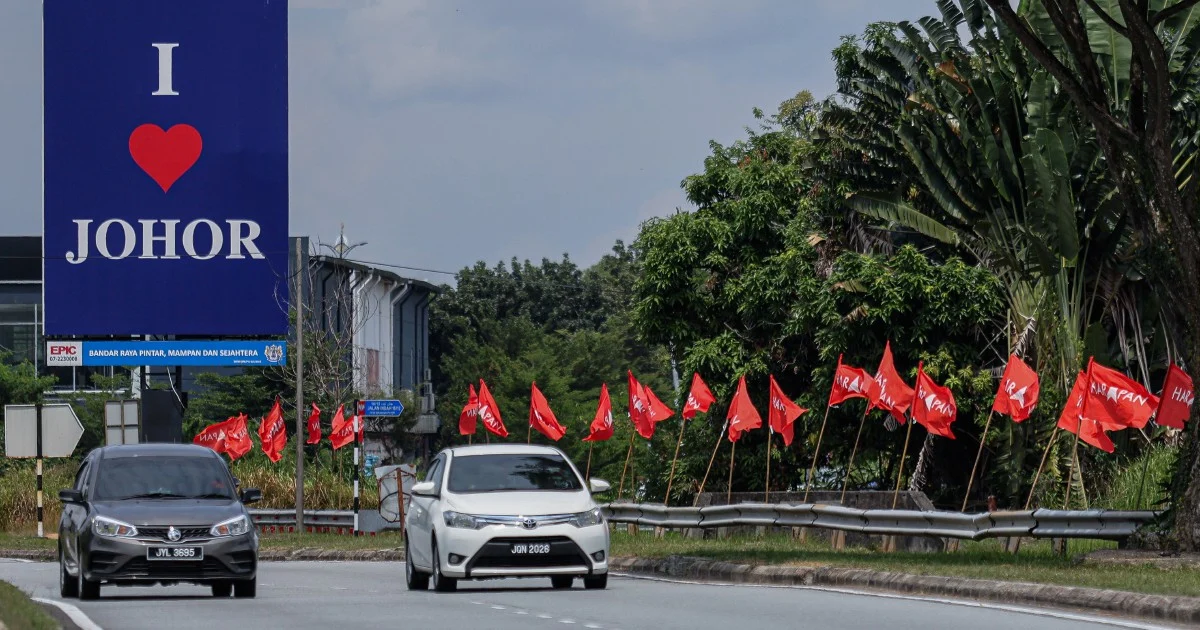
The upcoming Johor state election represents far more than a straightforward battle over which candidate will claim the menteri besar's office, according to a prominent PKR youth movement leader who has called for a broader assessment of the competing coalitions' overall capacity to lead. Speaking in Johor Baru, the official contended that reducing the contest to a personality-driven showdown would obscure the fundamental question facing voters: which team possesses the competence, vision, and concrete strategies necessary to advance the state's economic prosperity and improve living standards for its residents.
This perspective reflects a strategic reframing of the electoral contest that extends beyond the immediate battle for the top executive position. Rather than focusing campaign messaging on individual candidates or their personal appeal, the PKR youth faction is positioning the election as a referendum on governance models and policy agendas. The argument carries particular weight in Malaysian politics, where menteri besar contests have historically dominated state-level campaigns, often overshadowing substantive discussions about economic direction, infrastructure investment, and social programmes.
Johor's economic significance amplifies the importance of this broader conversation. As Malaysia's southernmost state and a crucial industrial and commercial hub, Johor's development trajectory influences not only its 4.2 million residents but reverberates across the broader Southeast Asian region. Port Klang's activities, manufacturing clusters, and cross-border trade with Singapore make Johor's economic management decisions consequential for regional supply chains and investment flows. Voters evaluating competing coalitions must weigh which combination of political forces can navigate these complexities effectively.
The PKR youth leader's intervention also reflects internal coalition dynamics within Pakatan Harapan and its associated political networks in Johor. By emphasizing team capability rather than individual leadership credentials, the statement potentially serves to manage expectations around specific candidacies while maintaining coalition unity. This approach allows various factions within the broader opposition alignment to rally around shared economic and social objectives without becoming entangled in disputes over personality-based leadership contests.
From a Malaysian governance perspective, this argument addresses a persistent challenge in state politics: the tendency for elections to become concentrated on individual leaders rather than institutional capacity and policy platforms. When voters focus primarily on who occupies the chief minister's chair, they may neglect evaluating whether supporting parties have coherent plans for healthcare delivery, education quality, environmental protection, or inclusive economic participation. A coalition's depth of talent and policy development matters substantially for delivering results between elections.
Johor's recent political history demonstrates why this framing gains relevance. The state has experienced significant transitions in its political leadership and coalitional alignments over the past decade, with shifting control between Barisan Nasional and opposition coalitions. Each transition has brought different emphasis on development priorities and governance approaches. Voters assessing the current contest can benefit from examining which team offers clearer commitments on specific policy domains that matter to their daily lives and economic prospects.
The economic dimension proves particularly salient given Malaysia's ongoing challenges with inclusive growth and equitable distribution of development benefits. Johor residents across different income levels and geographic areas—from Johor Baru's urban precincts to rural Peninsular districts and Johor Baharu's port vicinity—have varying priorities regarding state investments. A coalition presenting coherent plans for addressing these diverse needs demonstrates stronger governance potential than one centred on individual appeal.
This argument also resonates with the broader regional context. Southeast Asian states increasingly confront challenges requiring sophisticated economic management amid global supply chain disruptions, climate transitions, and technological competition. Johor's ability to attract investment, develop its workforce, and maintain social stability depends substantially on whether its government possesses comprehensive capabilities across multiple policy domains. A menteri besar's personal qualities matter less than whether the supporting coalition includes expertise in areas like industrial development, financial management, and infrastructure coordination.
The PKR youth leader's intervention implicitly critiques campaign strategies that rely heavily on personality marketing and individual candidate positioning. Modern political competition increasingly emphasizes leaders' biographical narratives and personal appeal, yet this approach can distract voters from evaluating institutional competence and policy substance. By advocating for focus on team capacity and development plans, the official champions a more analytically rigorous approach to electoral decision-making that could strengthen democratic deliberation around state governance.
Moving forward, this framing may influence how various coalitions present themselves to Johor voters. Rather than concentrating entirely on promoting individual candidates' credentials, both ruling and opposition coalitions could develop more detailed policy platforms addressing economic sectors, social services, and infrastructure priorities that resonate with diverse voter interests. Such an approach would elevate public discourse while demonstrating that competing teams possess comprehensive vision for the state's future development.
For Malaysian voters and observers monitoring Johor's political contest, the PKR youth leader's perspective offers a valuable reminder that state elections ultimately determine not just who occupies executive office, but which group of political forces will shape policy priorities and allocate resources across education, healthcare, economic development, and community services. Evaluating coalitions on these criteria provides a more substantive basis for electoral choices than focusing narrowly on individual leadership candidates.

