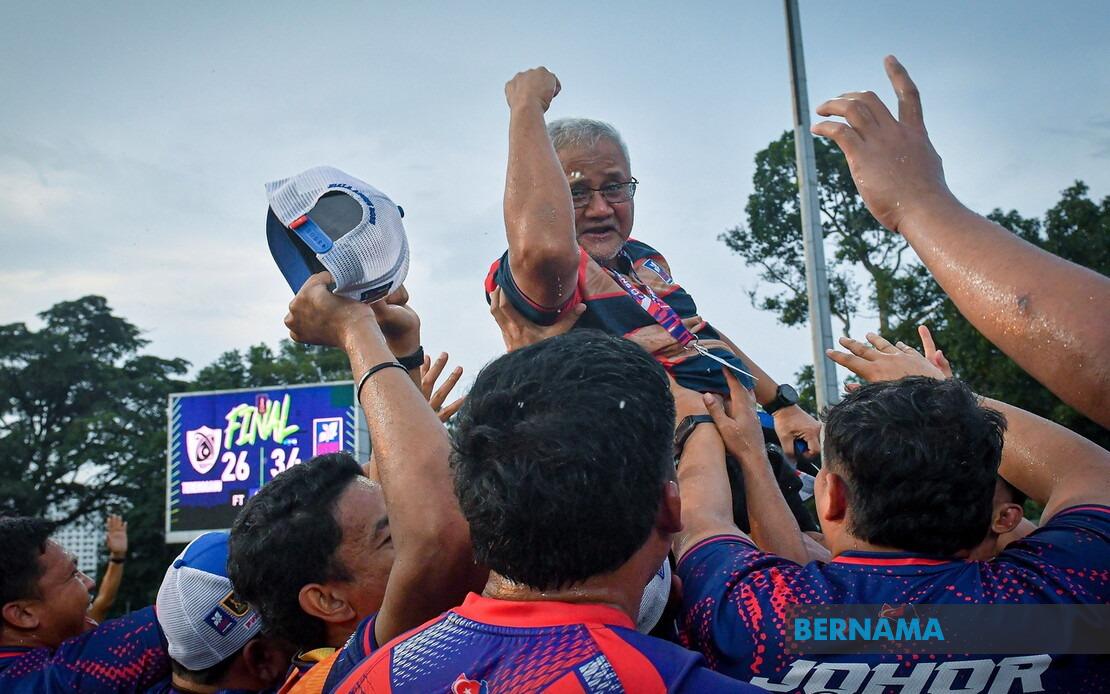
Johor's rugby squad has reclaimed the prestigious Agong's Cup after nearly a decade away from the championship podium, mounting a stunning second-half turnaround to defeat Terengganu 34-26 in the final of the 42nd edition at the Universiti Teknologi MARA (UiTM) Stadium in Shah Alam. The triumph represents the southern state's third crown in this tournament's storied history, providing considerable pride to a rugby programme that last tasted victory in 2017.
The match itself served as a compelling narrative of momentum shifts and resilience. Terengganu established early dominance, building a 19-17 halftime advantage that suggested the competition might conclude with an upset victory for the coastal state. However, Johor's coaching staff orchestrated a tactical transformation during the interval that would prove instrumental in the final outcome. The adjustments deployed in the second period allowed Johor's forward pack to gain territorial supremacy and create more attacking opportunities for their backline, gradually wrestling control away from their opponents.
The comeback victory underscores Johor's status as one of Malaysian rugby's traditional powerhouses. Their championship collection now includes titles from 2013 and the freshly claimed 2025 crown, establishing a pattern of dominance punctuated by periods of competitive struggle. This nine-year gap between titles reflects the increasingly competitive nature of domestic rugby, where emerging provinces like Terengganu and established forces like Kelantan have elevated the overall standard of play across the nation's representative sides.
In the supporting fixture, Kelantan demonstrated their own credentials as serious contenders by edging Royal Malaysia Police in an extraordinarily competitive third-place playoff that concluded 43-41. The narrow margin demonstrated the exceptional depth of talent now present in Malaysian rugby, where even matches outside the headline final generated drama and high-quality play. This result suggests Kelantan may represent a genuine threat to established hierarchies in future competitions, having confirmed their position among the nation's rugby elite.
The financial rewards distributed by tournament organisers reflected the tournament's significance within Malaysia's sporting calendar. Johor's victorious squad shared RM20,000 in prize money, while runners-up Terengganu received RM15,000, Kelantan pocketed RM10,000, and PDRM took home RM5,000. These monetary incentives, whilst modest by international standards, provide crucial funding for domestic rugby programmes struggling to maintain competitive squads amid resource constraints that plague many Malaysian sports at the grassroots and representative levels.
Johor's Aqasha Daniel Irwan earned individual recognition for his outstanding contributions throughout the tournament, receiving the player-of-tournament accolade alongside RM1,000 in cash and a commemorative plaque. This honour acknowledged a performance of particular distinction amidst considerable competition, suggesting Irwan demonstrated exceptional skill, consistency, and game awareness across multiple fixtures. Such individual awards often signal emerging talent capable of representing Malaysia at international level or commanding respect within the professional rugby circuits of the region.
The Agong's Cup remains one of Southeast Asia's longest-established rugby competitions, steeped in tradition and symbolising the highest standards of regional amateur rugby. For Malaysian supporters, the tournament provides a focal point for provincial pride and sporting excellence, drawing substantial followings from respective state constituencies. The competition's longevity across forty-two editions testifies to the enduring appeal of rugby within Malaysia's sporting culture, despite competition from football, badminton, and other mainstream sports for public attention and investment.
Johor's extended absence from championship glory during the nine-year interval raises interesting questions about the cyclical nature of provincial rugby success. Coaching changes, player development timelines, and resource allocation decisions all influence a state representative team's trajectory. The return to championship status suggests current leadership made significant improvements to squad composition, tactical sophistication, and preparation methodology that reversed fortunes against formidable opposition.
The competitive emergence of sides like Terengganu and Kelantan indicates rugby's expansion into provinces traditionally peripheral to the sport's Malaysian heartland. Historically concentrated in southern and central regions, the sport's geographical spread reflects growing investment in grassroots development and improved infrastructure across the nation. This wider distribution of competitive strength ultimately benefits Malaysian rugby by creating deeper talent pools and reducing over-reliance on established powerhouses.
Looking forward, Johor's title offers momentum heading toward regional and international competitions where Malaysian rugby typically contests. The Agong's Cup serves as crucial preparation for Test matches against touring sides and regional fixtures that determine Malaysia's standing within the Asian rugby hierarchy. Johor's squad, now battle-hardened and recently victorious, may represent a meaningful platform for national team selections and provide coaching staff with performers demonstrating recent championship experience.
The tournament's conclusion leaves Malaysian rugby administration contemplating next season's competition structure and how to maintain the elevated competitive standards demonstrated across this edition. Questions of scheduling, participant preparation, and financial support remain perpetual challenges for domestic sports governance. However, the dramatic quality of matches throughout the championship suggests Malaysian rugby possesses sufficient depth to sustain compelling inter-provincial competition without external investment or structural reform.

