Johor's education reform agenda is taking a significant step forward with the inclusion of Islamic religious schools in its transformative initiative. The state government has approved the construction of the first Sekolah Agama Rintis Bangsa Johor (SARBJ) in Kota Iskandar this year, marking an expansion of the successful Sekolah Rintis Bangsa Johor (SRBJ) programme beyond conventional schools into the religious education sector. This development reflects a comprehensive approach to modernising the state's entire education landscape, from conventional primary and secondary institutions to faith-based learning environments.
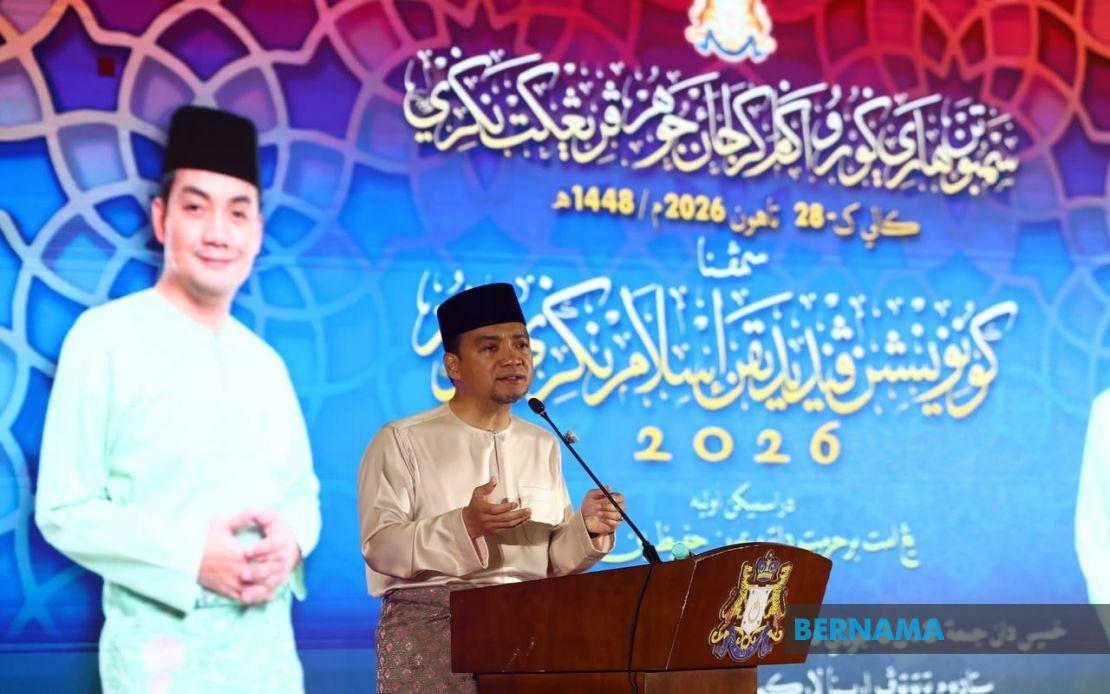
Menteri Besar Datuk Onn Hafiz Ghazi credited the Regent of Johor, Tunku Mahkota Ismail, with conceiving the overarching reform strategy. Speaking at the 28th Johor Government Religious Teachers' Day celebration and the closing of the State Islamic Education Convention at Arena Larkin Indoor Stadium, the Menteri Besar emphasised the initiative's ambition to comprehensively reshape how the state approaches education across all institutional frameworks. The vision extends beyond isolated policy adjustments to represent a fundamental reimagining of educational delivery and student development in Johor.
The SRBJ initiative has already demonstrated measurable progress with four operational schools forming the foundation of this reform model. Two primary schools—Sekolah Kebangsaan Seri Kota Puteri 4 in Pasir Gudang and Sekolah Kebangsaan Tasek Utara in Johor Bahru—operate alongside secondary counterparts Sekolah Menengah Kebangsaan Seri Kota Puteri 2 in Pasir Gudang and Sekolah Menengah Kebangsaan Tasek Utara in Johor Bahru. These institutions serve as operational laboratories, testing and refining pedagogical approaches before broader implementation.
The framework driving these schools encompasses multiple interrelated reform components designed to address contemporary educational challenges. Digital learning infrastructure forms the technological backbone, enabling students to access modern educational resources and develop proficiency with tools essential for 21st-century competence. Simultaneously, the initiative prioritises multilingual education, recognising Malaysia's multicultural context and the economic advantages of linguistic versatility. Character development receives equal emphasis alongside academic achievement, reflecting a philosophy that holistic education must nurture moral and ethical dimensions alongside intellectual growth.
Teacher empowerment represents another critical pillar of the SRBJ model. By investing in educator development, professional support systems, and creating environments where teachers can exercise pedagogical creativity, the initiative acknowledges that curriculum transformation ultimately depends on classroom practitioners who understand reform objectives and possess both skills and motivation to implement them effectively. The provision of high-quality educational facilities—from modern laboratories to well-resourced libraries and technology centres—ensures that policy commitments translate into tangible improvements students experience daily.
Extending this comprehensive model to religious schools through the SARBJ programme represents a nuanced policy decision. Islamic religious education occupies a distinctive position within Malaysia's education ecosystem, addressing spiritual and cultural formation alongside conventional subjects. By applying SRBJ principles to SARBJ institutions, the Johor government signals that modernisation and religious education are not contradictory objectives. Instead, religious schools can simultaneously maintain their identity and mission while adopting contemporary pedagogical methods, digital resources, and multilingual approaches that enhance student preparation for competitive labour markets.
The timing of the SARBJ announcement reflects broader recognition across Southeast Asia that educational systems require continuous evolution. Johor's willingness to pilot reforms systematically through dedicated schools before broader rollout demonstrates institutional learning from other reform initiatives. Rather than imposing changes uniformly across all schools simultaneously—an approach often generating resistance and implementation inconsistencies—the pilot model allows educators, administrators, and policymakers to identify effective practices, troubleshoot challenges, and build evidence supporting wider adoption.
Further expansion plans indicate the state government's commitment to systematic coverage across educational sectors. Menteri Besar Onn Hafiz announced intentions to introduce the reform approach to early childhood education through a pilot kindergarten programme. This vertical extension addresses education's foundational years, where early intervention produces significant long-term developmental benefits. Early childhood exposure to digital-enriched learning environments, multilingual inputs, and structured character development can establish stronger educational foundations than interventions beginning at primary school level.
For Malaysian policymakers observing from other states, Johor's sequenced approach offers instructive lessons. Creating flagship institutions that demonstrate reform feasibility builds political and bureaucratic support while generating evidence convincing sceptical stakeholders. The religious school expansion particularly signals sophisticated policy thinking—acknowledging that Malaysia's diverse education system requires contextually appropriate rather than uniform solutions. SARBJ institutions can maintain Islamic educational traditions while adopting modernised delivery methods, addressing a common tension in Muslim-majority nations balancing religious formation with contemporary skill development.
The inclusion of senior officials including State Islamic Religious Affairs Committee chairman Mohd Fared Mohd Khalid at the announcement underscores cross-institutional coordination essential for educational reform success. Religious education in Malaysia involves complex stakeholder relationships spanning federal religious departments, state Islamic authorities, school administrators, and teacher organisations. Securing alignment among these constituencies—demonstrated through coordinated public statements and joint officiating of events—significantly enhances implementation prospects.
Johor's education reform initiative also reflects competitive dynamics within Malaysia's federal system. States actively differentiate themselves through distinctive policy initiatives attracting media attention and demonstrating governance effectiveness. The SRBJ programme has generated sustained positive coverage, positioning Johor as an education innovation leader. This reputational advantage influences perceptions among investors and skilled professionals considering relocation, subtly supporting broader state development objectives.
International education research increasingly emphasises that sustainable reform requires systemic thinking transcending individual school improvements. Johor's horizontal expansion across school types and vertical extension to early childhood, combined with consistent pedagogical principles across all institutions, reflects contemporary reform best practices. The framework recognises that students experience education holistically; fragmentary improvements in isolated schools or subjects produce limited system-level transformation.
As the SARBJ programme moves from announcement to implementation in Kota Iskandar, careful documentation of outcomes will generate valuable comparative data. Understanding how core SRBJ principles—digital learning, multilingual proficiency, character development, teacher empowerment, and quality facilities—translate specifically within religious school contexts will inform not only Johor's future expansion but potentially inspire similar initiatives across Malaysia and neighbouring Southeast Asian nations navigating comparable education modernisation challenges.

