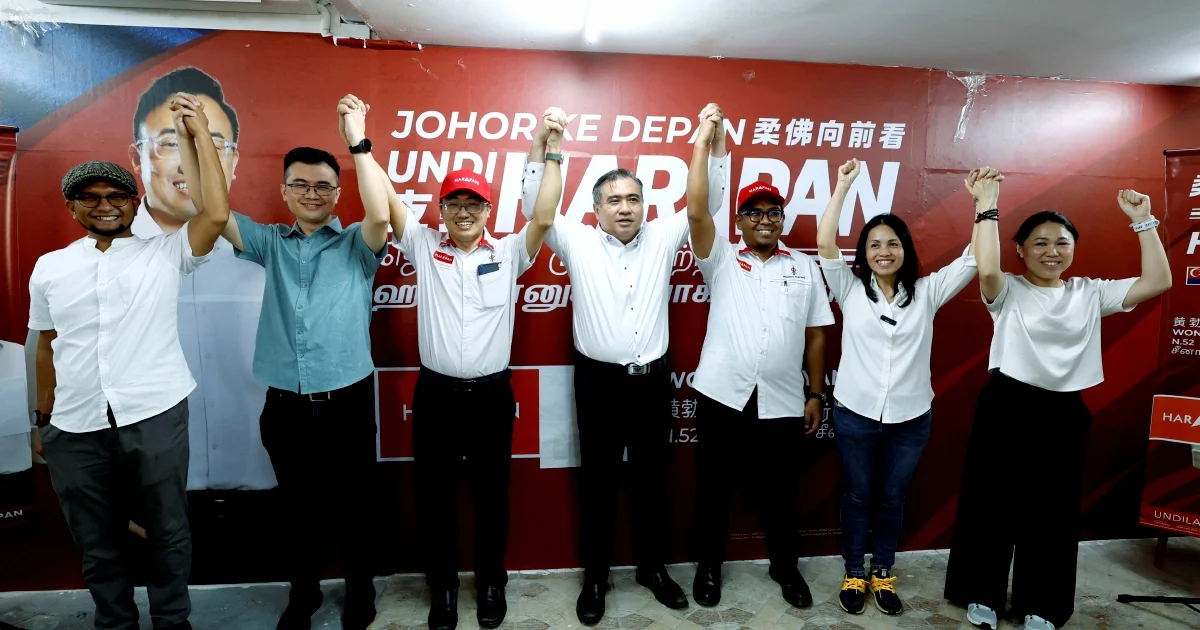
Pakatan Harapan's leadership is maintaining strategic focus on securing victory in the Johor state election before turning attention to the critical question of who will lead the state government. Transport Minister Anthony Loke has made clear that naming the coalition's menteri besar candidate remains deliberately scheduled for after polling day, with the decision to be made by PH's top leadership council once electoral success is assured. This measured sequencing reflects the coalition's desire to avoid internal distractions during the crucial campaign period.
The deliberate postponement of the menteri besar selection signals PH's understanding that premature succession decisions could fracture coalition unity or alienate potential voters by appearing to take victory for granted. By deferring this announcement, the coalition maintains flexibility in its negotiations with component parties, particularly should the final electoral outcome differ from internal projections. Each party within the PH framework—which includes PKR, DAP, Amanah, and other partners—has legitimate interests in top state positions, and resolving these claims before rather than after an election victory risks creating resentment among those passed over.
For Malaysian voters, this approach carries both reassurance and concern. The focus on election victory first suggests a coalition united by common purpose, yet it also raises questions about whether adequate internal discussions have occurred regarding governance priorities and the qualities desired in Johor's next chief minister. Voters accustomed to knowing leadership candidates beforehand may find the uncertainty unusual, though it reflects pragmatic politics recognising that announcing a menteri besar now could invite public scrutiny that might prove counterproductive.
Johor's political significance extends well beyond state boundaries. As Malaysia's second-largest state by population and a critical economic contributor, the selection of its menteri besar carries implications for regional stability and federal-state relations. The state's position as a gateway to Singapore and its role in ASEAN economic integration mean that governance decisions made in Johor Baru ripple across Southeast Asia. PH's deliberate timing suggests confidence in its campaign messaging and voter appeal, betting that Johor residents will prioritise ending the previous administration's perceived failings over curiosity about its successor.
The leadership council's eventual role in selecting the candidate reflects PH's federal structure and the need for coordination among its constituent parties. This system requires consensus-building and careful navigation of competing interests—PKR's traditional influence in Johor, DAP's urban support base, and Amanah's growing ground presence all carry weight in such decisions. By deferring this choice until after victory is confirmed, the top council gains the legitimacy of demonstrated electoral success when making what could prove a contentious appointment.
Critically, this timing also allows the coalition to assess post-election political arithmetic with precision. Should a particular coalition partner dramatically outperform expectations or underperform in specific constituencies, that performance becomes a tangible justification for how leadership roles are allocated. A party that secures significantly more seats can argue for greater influence in menteri besar selection, making the post-election timing strategically sound for parties seeking to claim they have earned senior positions through campaign effort.
For opposition parties and political observers, Loke's announcement confirms that PH operates with clear internal processes despite its multi-party structure. Rather than haphazard decision-making, the coalition has established a deliberate protocol that places electoral victory first and leadership succession second. This methodical approach may frustrate those seeking transparency, yet it also suggests an organisation capable of complex coordination—a quality relevant to whether the coalition can actually govern effectively once it wins.
The broader context of Malaysian politics shapes this decision-making framework. Recent elections have demonstrated volatile voter sentiment and the possibility of surprise outcomes, making overconfidence dangerous. By not naming a menteri besar candidate now, PH avoids the scenario where an announced candidate becomes a focal point for opposition attacks or internal resentment. Additionally, keeping the selection process opaque prevents rival camps from weaponising leadership questions to fracture the coalition before voting concludes.
For Johor's business community and international investors, the lack of an announced candidate creates minor uncertainty but also opportunities. The eventual appointment will bring fresh perspectives and potentially new policy priorities to state governance. Companies operating in Johor should anticipate possible shifts in economic policies, infrastructure priorities, and regulatory approaches once PH's top council makes its selection and the new menteri besar assumes office.
The sequencing also reflects lessons from previous Malaysian political transitions. Experience has shown that publicly announcing successors creates management challenges in outgoing administrations and can trigger early power transfers or institutional drift. By committing to a post-election announcement, PH demonstrates sophistication in managing both the political campaign and governmental continuity.
Looking ahead, the party's focus on election victory over leadership naming must translate into a compelling campaign message that resonates with Johor voters beyond simply promising administrative change. The coalition's ability to articulate a vision for Johor's future—whether on education, economic opportunity, infrastructure development, or governance standards—will ultimately determine whether voters reward PH with the majority needed to implement whatever vision its eventual menteri besar carries to office.

