The nomination window for Johor's 16th State Election has officially closed, concluding a crucial procedural step in the electoral calendar. All 56 nomination centres across the state ceased accepting nomination papers at 10am on 27 June, following a one-hour submission window that began at 9am. Returning officers at each centre announced the closure at their designated times, marking the formal end of candidate registration for what shapes up to be a closely watched state contest. The proceedings moved forward without disruption, setting the stage for the next phases of the election cycle that will culminate in a new state government.
The closure of nomination centres represents a critical juncture in the electoral process, as it determines the final candidate roster and shapes the competitive landscape across all state constituencies. With 56 nomination centres operating simultaneously across Johor, the Election Commission coordinated an extensive logistical operation to ensure all qualifying candidates could register their nominations within the prescribed timeframe. The orderly execution of this process reflects institutional preparations and the experience accumulated from previous electoral exercises in Malaysia's second-largest state by population.
Following the completion of nominations, attention now pivots to the official publication of the eligible candidate list and the distribution of aspirants across Johor's state seats. The Election Commission will formally announce how many candidates are contesting each constituency, information that will immediately clarify the competitive dynamics and provide voters with details about their electoral choices. This announcement typically generates significant media and public interest, as it reveals party strategies, the strength of competing slates, and potential multi-cornered contests that may affect voting patterns.
The campaign phase represents the next substantial chapter in the electoral timeline. The Election Commission has designated a 14-day campaign period beginning after nominations close and extending until 11.59pm on 10 July. This window allows political parties, candidates, and civil society organisations to conduct grassroots activities, public forums, and media engagements designed to persuade voters ahead of polling day. The condensed timeframe reflects the compressed nature of state elections compared to federal contests and requires campaigns to be strategically efficient in reaching voters across diverse constituencies.
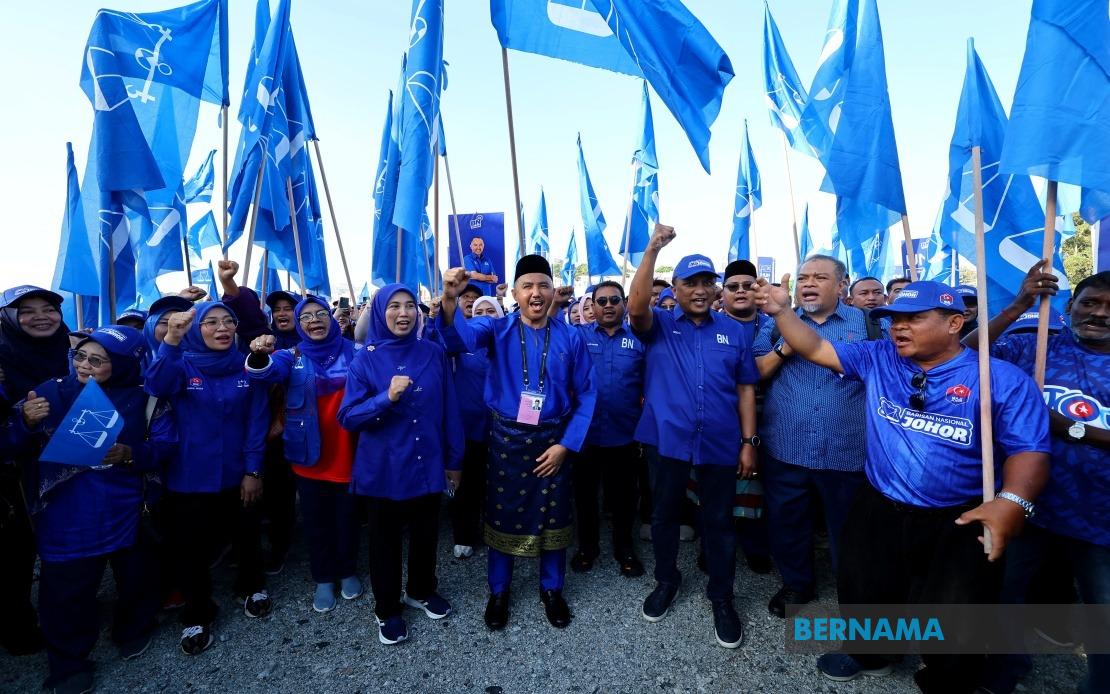
Venues surrounding the nomination centres witnessed visible expressions of electoral enthusiasm throughout the morning. Supporters from various political parties gathered to accompany their respective candidates to the nomination centres, demonstrating the mobilisation capacity of competing organisations even at this procedural stage. Such scenes underscore the competitive intensity in Johor, a state that has historically been a significant political battleground with meaningful implications for national politics. The presence of party workers and sympathisers reflects the genuine stakes involved in contests at the state level.
The security posture surrounding nomination proceedings reflected the importance attached to maintaining electoral integrity. The Royal Malaysian Police (PDRM) deployed personnel across all nomination centres, while the People's Volunteer Corps (RELA) provided supplementary support. This layered security arrangement ensured that the nomination process remained protected against any disruptions or incidents that might undermine public confidence in the electoral machinery. The Election Commission's emphasis on maintaining calm and order throughout the morning demonstrated institutional commitment to conducting a credible election.
Johor's electoral roll presents a substantial voting population that will determine the outcome of the 16th state election. The Election Commission has confirmed that 2,727,926 voters are eligible to participate, comprising 2,703,175 ordinary voters alongside 12,041 military personnel and their spouses, plus 12,710 police personnel and their spouses. This electorate spans urban and rural constituencies with distinct demographic profiles, economic interests, and political orientations. The sheer scale of the voting population underscores the logistical complexity involved in conducting a credible and orderly election across the state.
The inclusion of military and police personnel in the electoral roll reflects Malaysia's institutional arrangements for extending voting rights to uniformed services members. These constituencies, whilst relatively modest in numerical terms, carry symbolic importance as expressions of democratic principles within hierarchical institutions. Their votes are separately managed through distinct polling arrangements, and their participation in electoral contests represents an important dimension of electoral inclusivity in the Malaysian system.
Early voting has been scheduled for 7 July, providing designated groups with opportunities to cast ballots before the main polling day. This advance voting arrangement typically benefits individuals whose occupational or personal circumstances may prevent them from voting on the scheduled election day. The early voting option reflects electoral best practices aimed at maximising participation rates and accommodating diverse voter circumstances across the state.
Polling day itself is set for 11 July, representing the culmination of the nomination, campaign, and preparation phases. This date provides voters with a definitive opportunity to exercise their franchise and select representatives who will comprise the new Johor State Assembly. The outcome of the election will determine the state government's composition and policy direction for the ensuing term, carrying implications for state-level governance on matters ranging from economic development to social services and infrastructure investment.
For the Malaysian electorate and regional observers, the Johor election holds broader political significance. As a major state with substantial population and economic importance, electoral outcomes in Johor often provide indicators of voter sentiment and shifting political alignments that may have resonance beyond the state's borders. The conduct of the nomination process and the character of the ensuing campaign will attract scrutiny from political analysts, civil society observers, and media commentators seeking to understand evolving electoral dynamics in Malaysia.
The successful completion of nominations within the prescribed framework demonstrates the Election Commission's capacity to administer complex electoral procedures despite the operational demands involved. The combination of orderly procedures, visible security arrangements, and public participation in accompanying candidates reflects a functioning electoral system where multiple stakeholders engage in processes designed to produce representative outcomes. As the campaign period commences, the focus shifts from procedural administration to substantive political competition and voter engagement across Johor's constituencies.

