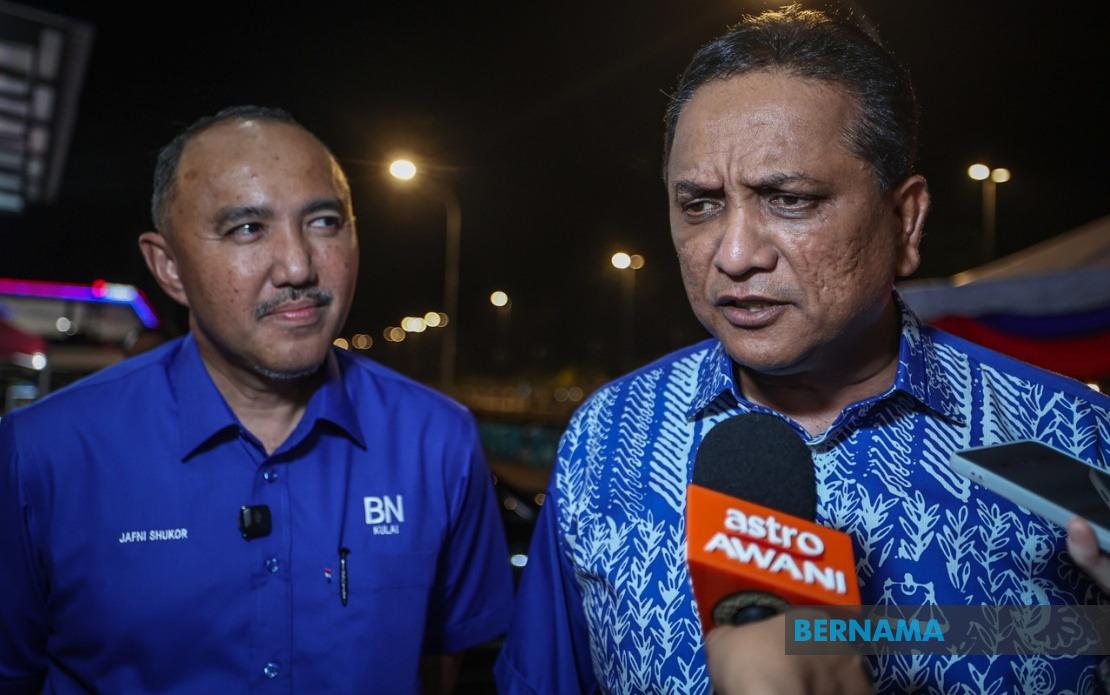
A senior UMNO politician has firmly rejected suggestions that the Regent of Johor wields improper influence over the state administration, characterising such allegations as significantly overstated and lacking substance. Datuk Seri Reezal Merican Naina Merican, speaking as an UMNO Supreme Council member, argued that the Tunku Mahkota Ismail's vocal engagement in state affairs reflects legitimate royal oversight rather than any form of governmental control. His remarks came in response to mounting political tensions within Johor's ruling coalition, with the state poised to hold elections scheduled for July 11.
The controversy centres on perceptions about the balance of power between the Palace and elected state officials. Reezal Merican contended that the Regent's interventions serve as an essential institutional check on the Menteri Besar and state administration, a role entirely consistent with constitutional monarchy principles operating throughout Malaysia. Rather than representing an erosion of elected leadership, he framed such oversight as a fundamental safeguard for Johor's governance structures and a protection of public interest. This interpretation directly counters allegations that administrative authority has shifted inappropriately toward palace institutions.
The timing of these claims, advanced by a prominent political figure abandoning UMNO, has raised questions about their underlying motivations. Datuk Dr Mohd Puad Zarkashi, the former Speaker of the Johor State Legislative Assembly, recently departed the party while alleging that the Menteri Besar has effectively become subordinate to palace direction. Reezal Merican questioned whether such accusations genuinely reflect governance concerns or represent a calculated political manoeuvre designed to capitalize on election-period sensitivities. The fact that these allegations surfaced just days before nomination day suggests tactical positioning rather than substantive governance critique.
For Malaysian observers and particularly those in Johor, understanding the constitutional relationship between royal institutions and elected government remains important. The Regent's constitutional role includes advisory authority and the ability to raise concerns about state administration, powers that exist in parallel to, rather than in place of, democratic governance. When the Regent articulates views on development priorities, infrastructure projects, or administrative performance, such input operates within established institutional frameworks. Reezal Merican's assertion that UMNO's Johor leadership has never experienced palace overreach suggests that any concerns about excessive royal influence remain peripheral to mainstream party operations.
The broader context involves Johor's approaching state election, which creates fertile ground for political maneuvering and strategic accusations. With nomination day set for June 27 and polling scheduled for July 11, opposition figures and dissenters within the ruling coalition have incentive to raise dramatic allegations that might sway voter sentiment. The invocation of palace influence touches upon Malaysian voters' sensitivities regarding democratic institutions and constitutional governance, making it a particularly potent accusatory tool. By framing governmental decisions as palace-directed rather than democratically determined, critics can imply that voter preferences matter less than royal prerogative.
Reezal Merican's defence extended to questioning the credibility of sources making such allegations. As someone directly involved in UMNO's Supreme Council deliberations and party strategy, he possesses firsthand knowledge about internal assessments of Johor governance. His claim that no party leadership has characterized Johor UMNO as palace-controlled carries weight within party circles, suggesting that despite public controversies, senior management does not view governance dynamics as fundamentally compromised. This distinction between public political theatre and internal party evaluation proves significant for understanding whether these claims reflect genuine institutional anxieties or surface-level election-period rhetoric.
The departure of prominent figures like Mohd Puad from ruling coalition parties often precipitates accusations against remaining leadership, as departing individuals seek to justify their exit and establish themselves within alternative political networks. By attributing the Menteri Besar's policies to palace direction rather than elected leadership failure, Mohd Puad simultaneously absolves himself of responsibility for governance outcomes during his tenure while impugning his former colleagues' autonomy. This dynamic, while common in Malaysian politics, tends to reduce the credibility of such allegations when examined critically against actual governance performance and documented decision-making processes.
From a Southeast Asian perspective, Malaysia's constitutional arrangements represent a distinctive model combining constitutional monarchy with democratic elections. The Johor political controversy reflects broader regional tensions about how traditional institutions and modern democratic systems coexist within single political frameworks. In Thailand, the Philippines, and Indonesia, similar tensions between palace or military institutions and elected governments have generated substantial controversy. Malaysia's relative stability partly derives from clearer institutional boundaries and greater acceptance that monarchy can exercise supervisory functions without invalidating democratic processes. The allegations against Johor governance, if accepted uncritically, would suggest that Malaysia's model functions less effectively than regional reputation suggests.
The practical implications for Johor's governance warrant consideration regardless of which interpretation prevails regarding palace influence. If the Regent genuinely exercises excessive administrative direction, democratic accountability becomes compromised because voters cannot effectively evaluate or discipline palace institutions through elections. Conversely, if allegations prove politically motivated, the state's development priorities should be evaluated on substantive grounds rather than constitutional speculation. Reezal Merican's response implicitly argues for the latter approach, urging observers to assess governmental performance independently rather than through accusations of institutional overreach. This distinction matters because governance quality ultimately depends on policy substance rather than institutional attribution of decision-making authority.
As Johor moves toward elections, the palace puppet narrative will likely resurface during campaign discourse, particularly if opposition forces seek to mobilize voter concerns about governance autonomy. Reezal Merican's preemptive dismissal of such claims suggests ruling coalition awareness that this allegation carries persuasive potential with segments of the electorate. By characterizing the claims as exaggerated and unfounded, he attempts to inoculate party candidates against criticism while reinforcing the message that palace engagement represents normal constitutional practice rather than democratic distortion. The effectiveness of this messaging will become apparent through election results and subsequent governance conduct under either incumbent or alternative leadership.

