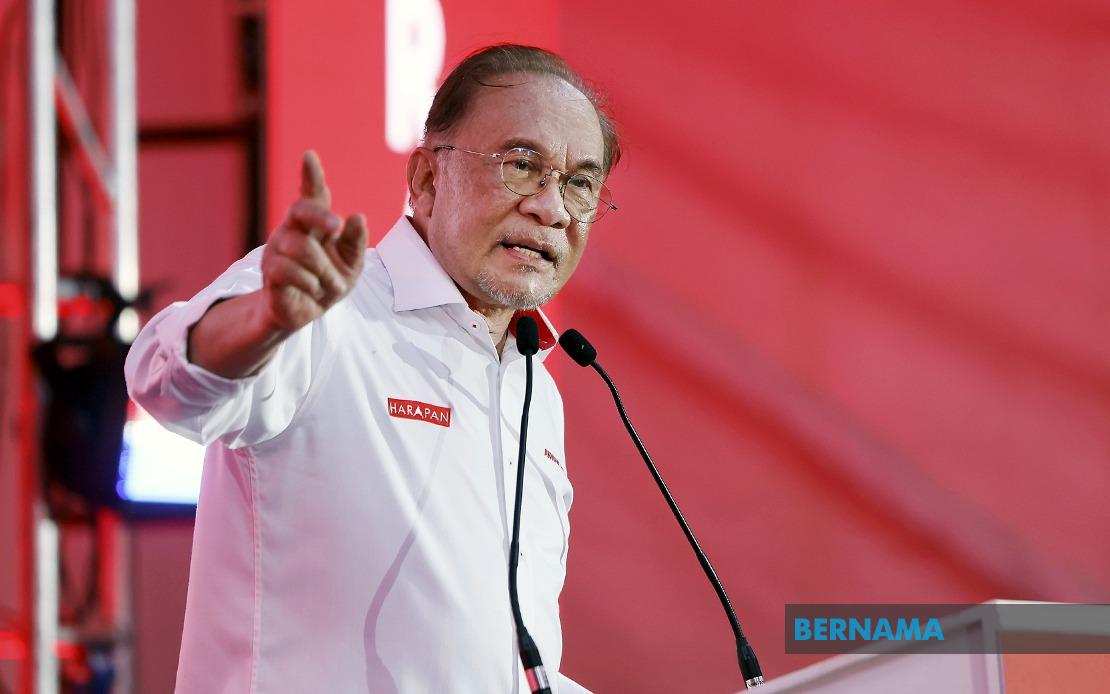
Prime Minister Datuk Seri Anwar Ibrahim told a political gathering in Tangkak that the federal government has invested more in Johor's development than the state has contributed to national revenue, painting a picture of substantial federal commitment to the southern region. Speaking at a Pakatan Harapan candidate announcement ceremony for the upcoming Johor state election, Anwar highlighted figures from the Finance Ministry indicating that Johor contributed approximately RM14 billion to federal coffers between 2023 and 2025, while simultaneously receiving RM16 billion in return through various development projects, operating allocations and related programmes.
The Prime Minister's emphasis on this financial relationship reflects an ongoing political narrative about federal investment in states, particularly ahead of state elections where regional development becomes a central campaign issue. By publicly presenting these figures, Anwar sought to demonstrate that despite Johor's economic contributions to the national kitty, the federal government remains committed to channelling resources back into the state's infrastructure and welfare programmes. This message carries weight in a state with significant economic output, as voters often scrutinise how their tax contributions translate into tangible benefits.
Anwar, who doubles as Finance Minister, used the occasion to provide comparative analysis showing increased federal support under the current administration. According to his presentation, Johor received between RM6 billion and RM7 billion annually in operating expenditure under the previous government. This figure has risen to RM8.7 billion annually under the MADANI Government, representing a meaningful increase in recurring budget allocation for state operations, salaries, and maintenance of government services.
The expansion of developmental expenditure tells a similar story of escalating commitment. Development expenditure allocations to Johor increased from RM2.3 billion in 2022 to RM4.8 billion projected for 2026, more than doubling the investment in capital projects, infrastructure development, and long-term improvement initiatives. Operating expenditure similarly climbed from RM7 billion in 2022 to the projected RM8.7 billion for 2026, indicating sustained upward trajectory in federal support across both categories.
Within the broader national allocation framework, Johor currently ranks as the third-largest recipient of combined operating and development expenditure allocations, behind only the larger Malaysian states of Sabah and Sarawak. This positioning reflects both Johor's economic significance and demographic weight, though the comparison also highlights how federal resources are distributed across the country. The ranking underscores Johor's importance in national development priorities, particularly given its status as a major industrial and commercial hub.
Beyond conventional budget allocations, Johor has also benefited substantially from two new federal assistance programmes aimed at providing direct financial support to lower-income households. The state ranks as the second-largest recipient of assistance under both Sumbangan Tunai Rahmah (STR) and Sumbangan Asas Rahmah (SARA), trailing only Selangor in aggregate disbursements. These direct cash assistance programmes represent an additional layer of federal support reaching Johor residents, complementing traditional infrastructure and development spending.
The timing of Anwar's remarks is significant given the imminent Johor state election, where such figures become campaign ammunition for the ruling coalition. Political parties competing for state control typically scrutinise federal investment patterns, with opposition parties often arguing that their regions receive insufficient allocations. By presenting concrete numbers showing net positive federal investment in Johor, the Prime Minister attempted to preempt such criticism and demonstrate tangible deliverables to voters.
For Malaysian observers tracking federal-state fiscal relationships, these figures invite deeper analysis about revenue distribution mechanisms and regional development equity. States that contribute disproportionately to federal revenue through resource extraction, manufacturing, or commerce often question whether they receive proportionate returns. Anwar's approach suggests that the federal government is actively monitoring such perceptions and using comparative data to justify its allocation decisions to state-level populations.
The emphasis on increased allocations under the current administration also serves a broader political purpose, contrasting the MADANI Government's approach with previous governance. By highlighting year-on-year improvements in Johor's allocations and demonstrating that the state receives more than it contributes, Anwar positioned the government as responsive to regional needs and committed to inclusive development. This messaging resonates particularly in states with strong economic output, where residents may otherwise feel their contributions subsidise other regions.
The RM16 billion figure encompasses diverse spending categories, from infrastructure projects to education and healthcare facilities to social welfare programmes. Breaking down this allocation into its constituent parts would reveal exactly how federal resources translate into ground-level benefits for Johor residents, from new roads and public facilities to improved government services. The aggregate number alone, however, serves Anwar's immediate political purpose of demonstrating federal commitment during an election campaign.
From a Southeast Asian perspective, Malaysia's federal fiscal framework operates distinctively, with strong centralisation of tax collection and power of allocation residing with the federal government. This structure creates inherent tensions between federal and state leadership, particularly when opposition parties control states. Johor's case, governed by the ruling coalition, allows for more seamless federal investment, unlike states with different political complexions that sometimes navigate more contentious allocation negotiations.
The increase in both operating and development allocations over recent years reflects broader economic and social policy shifts under the MADANI framework, which emphasises targeted assistance and infrastructure modernisation. Johor's position as third-largest recipient of these allocations places it among the country's priority development zones, alongside the larger East Malaysian states. Whether these investments translate into measurable improvements in service delivery, economic growth, and quality of life will ultimately determine their political impact during the election campaign.

