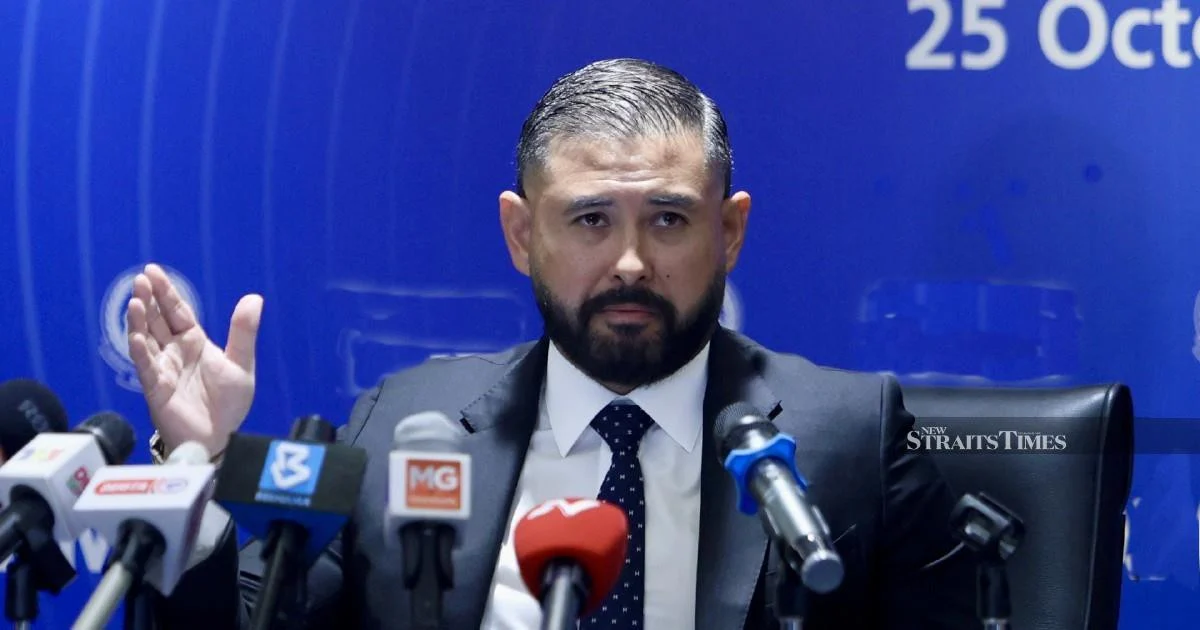
Tunku Ismail Sultan Ibrahim has directly challenged the federal government's diagnosis of Johor's fiscal condition, reframing a narrative about internal mismanagement into one about structural imbalance in Malaysia's revenue distribution system. The regent's comments constitute a significant pushback against recent public statements from the prime minister, who had characterised the state as wealthy but plagued by leakages—a formulation that implicitly blamed state-level governance for financial underperformance. By redirecting responsibility toward federal structures, the regent has elevated what might have seemed a technical budgetary dispute into a broader constitutional and governance question affecting how Johor relates to Kuala Lumpur.
The distinction the regent is drawing is substantive rather than merely semantic. Describing the situation as one where the federal government "drains" rather than the state "leaks" fundamentally changes the locus of accountability. Leakage suggests inefficiency or corruption within state institutions—a diagnosis that would implicate Johor's own administrative apparatus. Drainage, by contrast, refers to mechanisms built into the national system itself: federal tax collection policies, inter-governmental fiscal transfers, and revenue-sharing arrangements enshrined in the Federal Constitution. This reframing suggests that even with exemplary governance at the state level, Johor faces structural constraints on its available resources.
Understanding this dispute requires familiarity with Malaysia's complex federal fiscal architecture. States depend on federal allocations through mechanisms such as the JKJP (Jawatankuasa Khas Jana Perakuan Pembangunan), which distributes petroleum royalties and other revenue-sharing arrangements. Additionally, states collect their own revenues through land, agriculture, and licensing fees, but these are typically modest compared to federal revenue sources. Federal taxes—income tax, indirect taxes, and duties—flow to Kuala Lumpur, and states receive portions through the revenue-sharing formula. For resource-rich states like Johor, which historically benefited from petroleum revenues before these declined, the relationship between federal retention and state allocation has become increasingly contentious.
The regent's position carries particular weight given Johor's constitutional standing. As one of Malaysia's most developed and economically significant states, with a substantial industrial base and port facilities, Johor generates considerable economic activity and tax revenue. The state has also historically served as a political and commercial counterweight to the federal centre, and its royal institution maintains considerable authority and visibility. When the regent speaks on fiscal matters, he does so from a position of institutional prominence that commands national attention in ways that comments from other state leaders might not.
This exchange also reflects broader tensions within Malaysian federalism that have simmered for decades. Poorer states argue they require higher federal allocations to develop infrastructure and services. Wealthier states like Johor counter that they contribute disproportionately to the national treasury but receive minimal commensurate return. The petroleum-rich states of Sabah and Sarawak have historically articulated similar grievances, anchoring their complaints in specific constitutional guarantees about oil revenue. Johor's grievance is somewhat different—grounded not in explicit constitutional entitlements but in arguments about fairness and economic efficiency.
The fiscal health of states matters significantly for Malaysian citizens and for the broader economy. States control education facilities beyond the federal system, local infrastructure, agriculture, and land administration. Underfunded states struggle to maintain roads, support local enterprises, and invest in human capital. If Johor believes it is systematically under-resourced relative to its economic contribution, it will inevitably advocate for policy changes that could reshape federal-state fiscal relations. This has implications not merely for Johor but for how Malaysia distributes resources nationally and whether the federal structure remains politically sustainable.
The regent's intervention also signals potential friction between state and federal leadership on economic priorities. Should Johor succeed in securing a larger share of federal revenue, or in restructuring how petroleum and other revenues are distributed, other states would likely demand similar adjustments. The federation could face pressure to renegotiate the entire fiscal compact that has governed centre-state relations since independence. Such negotiations would touch on sensitive constitutional questions and could become entangled with broader political struggles for influence between federal and state authorities.
For Malaysian businesses and investors, especially those operating in Johor, these arguments carry practical implications. State investment in infrastructure, workforce development, and regulatory environments depends substantially on available revenues. If Johor's administration believes it lacks sufficient funds to maintain competitive advantages over other Malaysian states or regional competitors in Singapore and Thailand, it may constrain its ability to attract investment or retain existing operations. Companies dependent on state-provided facilities or services could find themselves affected by fiscal constraints that may be attributed to federal policy rather than state inefficiency.
The debate also illustrates how disputes framed in fiscal and technical language often mask deeper political questions about power and autonomy within federalism. Both the prime minister's diagnosis and the regent's counter-argument are presenting interpretations of Johor's situation that align with their respective institutional interests. The federal government benefits from narratives emphasizing state-level mismanagement, which justify continued federal oversight and revenue retention. State leadership benefits from narratives emphasizing federal structural constraints, which justify demands for greater autonomy or resource redistribution. Neither interpretation is necessarily false, but both are shaped by institutional positioning.
Moving forward, this disagreement will likely inform discussions about federal-state fiscal reform and broader constitutional questions about Malaysian federalism. Whether the dispute remains confined to public rhetoric or escalates into formal demands for constitutional amendment or legislative change remains to be seen. What is clear is that Johor, through its regent, has articulated a vision of federal-state relations centred on equity and fair resource distribution—a vision that may resonate across other Malaysian states and reshape conversations about how the federation allocates its wealth.

