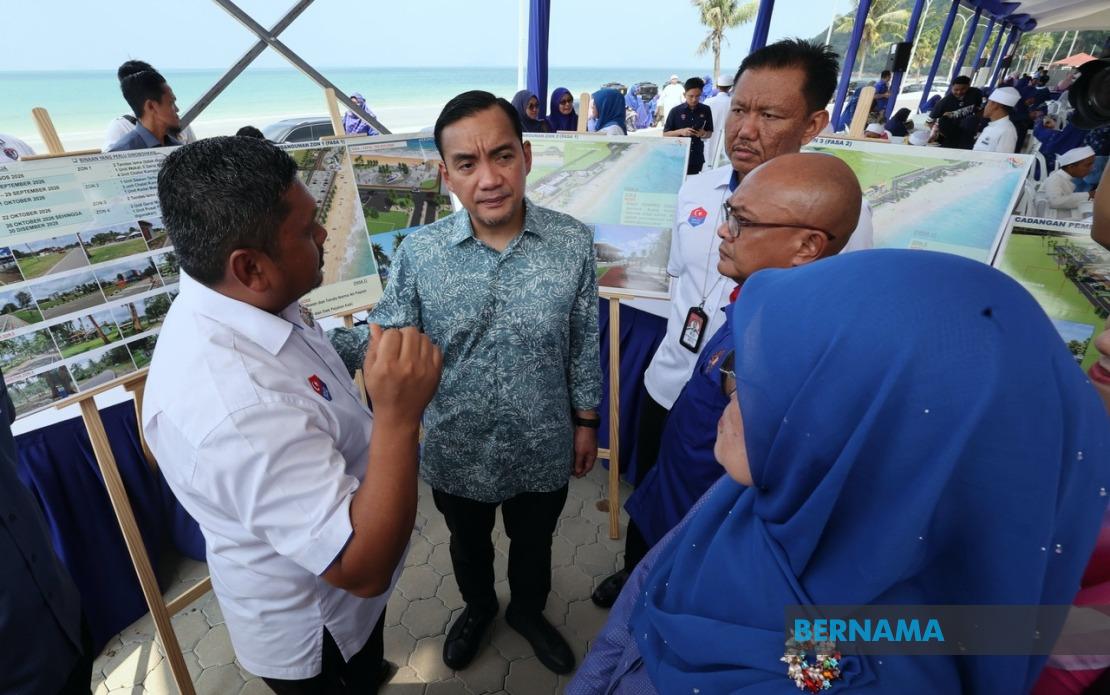
Johor's state government has unveiled a RM1.5 million development package for Mersing, signalling a broader commitment to distribute prosperity beyond the state capital and ensure remote districts share in economic gains. Menteri Besar Datuk Onn Hafiz Ghazi framed the investment as essential to replicating the developmental success experienced by Johor Bahru across the entire state, recognising that growth confined to urban centres creates imbalances that undermine social cohesion and regional stability.
The allocation reflects priorities across multiple sectors critical to quality of life in the coastal district. Healthcare emerges as a leading investment area, with RM500,000 dedicated to upgrading facilities at the Mersing Hospital Haemodialysis Unit, addressing a significant healthcare gap for residents requiring regular dialysis treatment. This initiative carries particular weight in a district where access to specialised medical services can require lengthy travel to larger urban facilities, potentially delaying critical care. The investment signals recognition that infrastructure supporting chronic disease management represents a fundamental responsibility of state government.
Recreational and community infrastructure also features prominently in the breakdown. RM200,000 will replace carpets at Kampung Sri Lalang Mosque, RM200,000 will construct a futsal court at Taman Sri Mersing, and another RM200,000 will repair an existing futsal court at Felda Nitar. A further RM80,000 has been earmarked for a sepak takraw court at Felda Tenggaroh 6. These expenditures reflect understanding that sports facilities serve dual purposes—promoting public health and providing affordable recreation that strengthens community bonds, particularly crucial in districts competing with urban migration.
Rural and indigenous communities receive targeted attention through this allocation. RM100,000 each has been committed for solar-powered streetlighting in the Orang Asli villages of Kampung Peta and Kampung Tanjung Tuan, addressing infrastructure deficits that persist in peripheral settlements. Similarly, RM100,000 will upgrade the Kami Anak Felda Malaysia building in Felda Tenggaroh Timur, supporting facilities serving former plantation workers and their descendants. These targeted investments acknowledge that blanket development policies often overlook communities facing distinct disadvantages.
Onn Hafiz articulated a philosophical underpinning to the investment strategy, emphasising that tourism assets and economic diversification initiatives lose meaning if residents themselves cannot access employment and improved living conditions. With Mersing's population standing at approximately 80,000, the district represents a significant component of Johor's population yet often receives proportionally smaller allocations than urban centres. The Menteri Besar's assertion that development benefits must translate into tangible employment, particularly for youth, reflects awareness that demographic pressures and limited local opportunities drive migration to urban areas, depopulating rural districts.
This commitment to equitable distribution connects directly to the broader Johor Economic Transformation Plan, a comprehensive policy framework addressing short-, medium-, and long-term development objectives. The JETP represents state leadership's recognition that sustainable economic growth requires fostering opportunity across geographic and demographic boundaries. Rather than concentrating investment in high-return urban projects, the framework deliberately channels resources toward districts requiring infrastructure upgrades and economic diversification.
Beyond immediate infrastructure spending, Onn Hafiz outlined strategic initiatives with longer gestation periods but significant potential impact. A proposal to establish a petrol station serving the Special Forces Group at Camp Iskandar represents a modest but symbolic investment generating local employment and revenue streams for businesses supporting military personnel. The announcement of plans to establish a Religious Affairs Office addresses administrative deficiencies limiting residents' access to government services, while a Technical and Vocational Education and Training campus would expand skills training pathways for youth seeking alternatives to migration.
For Malaysian and regional observers, Johor's approach offers a model addressing persistent tensions between centralised economic growth and inclusive development. Many Southeast Asian nations struggle with capital-centric growth patterns where wealth concentrates in megacities while peripheral regions stagnate. By explicitly prioritising equitable distribution and monitoring implementation across districts, Johor's strategy acknowledges that political stability and social cohesion depend upon ensuring citizens experience tangible development gains in their home communities.
The involvement of local assemblyman Mohd Youzaimi Yusof from Tenggaroh and assemblywoman Alwiyah Talib from Endau underscores the decentralised governance approach underlying the allocation. By incorporating elected district representatives in both planning and implementation oversight, the state government enhances accountability and ensures projects address locally-identified priorities rather than reflecting top-down assumptions about community needs. This collaborative approach also strengthens political legitimacy and grassroots support for state development initiatives.
Mersing's geographic position as a coastal district with established tourism infrastructure creates particular development opportunities. The district hosts popular diving and island destinations attracting international visitors, yet local residents historically captured limited benefits from tourism revenue. By simultaneously investing in healthcare, education, and recreational facilities, the state government aims to create conditions allowing residents to transition from subsistence fishing and agriculture toward service sector and skilled employment aligned with tourism expansion. This represents a deliberate effort to integrate peripheral communities into broader economic growth narratives rather than relegating them to spectators of prosperity benefiting others.
The RM1.5 million commitment, while substantial, must be contextualised within broader state budgetary allocations to assess genuine prioritisation of equitable development. The specific targeting of Mersing suggests either particular political considerations or genuine recognition of infrastructure deficits meriting urgent intervention. Subsequent implementation and oversight will determine whether announced allocations translate into completed projects meeting stated objectives. For districts across Malaysia and Southeast Asia facing similar development pressures and youth emigration patterns, Johor's approach provides measurable outcomes worth monitoring as evidence of effective regional development strategy.

