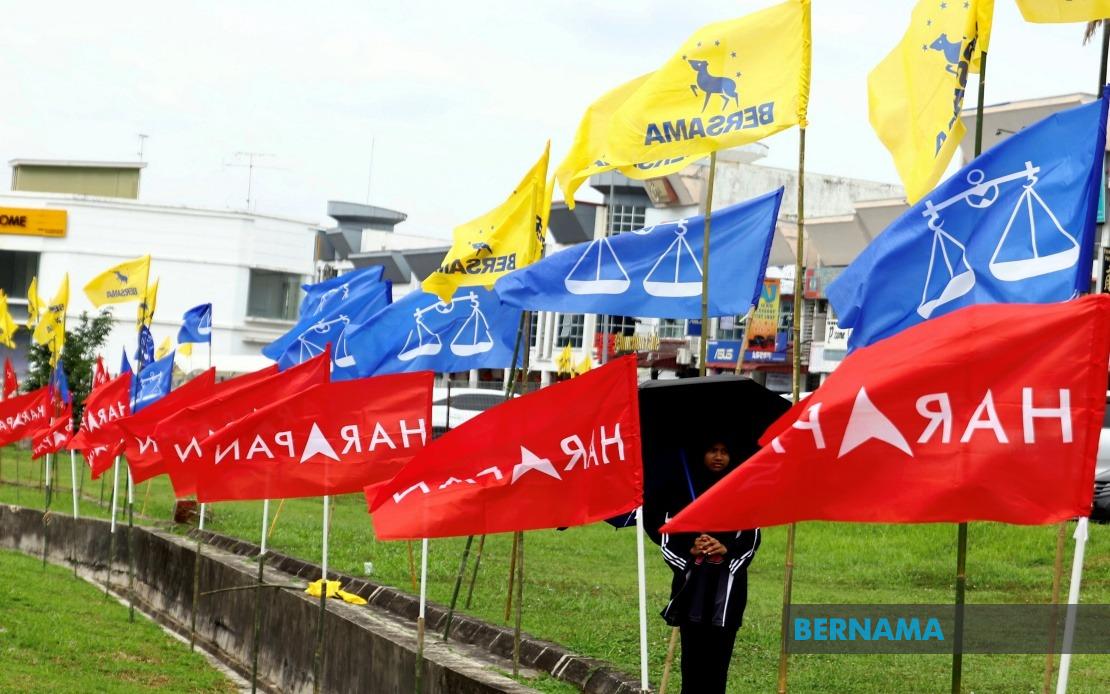
Johor's tumultuous two-week campaign period draws to a close at midnight tonight, leaving the state's 2.7 million registered voters with the final say on which coalition will steer Southeast Asia's southernmost state through the next five years. The 16th Johor state election tomorrow will determine control of 56 legislative seats among 172 candidates—a notably smaller field than the 239 who competed in the previous election—with voting to commence at 8 am across 1,076 polling centres nationwide. The Election Commission anticipates releasing comprehensive results by 10 pm, streamlining what has historically been a protracted tallying process.
Campaigning that ignited on June 27 has subjected voters to an unrelenting barrage of political messaging centred on bread-and-butter concerns: the punishing cost of living, pathways to economic rejuvenation, employment prospects, and welfare provisions. Both the ruling Pakatan Harapan coalition and the opposition Barisan Nasional have channelled considerable resources into their organisational machinery, with the Prime Minister Datuk Seri Anwar Ibrahim and Deputy Prime Minister Datuk Seri Dr Ahmad Zahid Hamidi both making high-profile final campaign appearances to galvanise their respective party networks. These closing manoeuvres underscore the critical importance both blocs attach to retaining or reclaiming influence in Johor, a state that has historically served as a crucial political battleground reflecting broader shifts in national sentiment.
The electoral contest features a notably crowded field extending beyond the two dominant coalitions. Barisan Nasional and Pakatan Harapan each field 56 candidates, while Perikatan Nasional puts forward 33 hopefuls, Parti Bersama Malaysia contributes 15 contenders, and smaller outfits including MUDA, Parti Orang Asli Malaysia, and Parti Sosialis Malaysia round out the contest with four, one, and one candidate respectively, plus six independent aspirants. This configuration reflects a fragmentation of Malaysia's political landscape, though the outcome will almost certainly hinge upon performance by the two major coalitions competing for legislative control.
The incumbent Barisan Nasional presently commands 40 of the 56 seats in the dissolved legislature, a commanding position acquired through its victory in the 2022 election. Pakatan Harapan holds 12 seats, Perikatan Nasional controls three, and MUDA retains one. The composition of the next assembly will substantially depend upon whether Barisan Nasional's incumbency advantage translates into vote retention, whether Pakatan Harapan can mobilise support to overturn the previous deficit, or whether either coalition experiences slippage to third-party challengers and independent candidates. An estimated 20,607 personnel from the Malaysian Armed Forces, Royal Malaysia Police, General Operations Force, and their family members already exercised their franchise through early voting procedures completed last Tuesday, establishing a baseline electoral momentum heading into the main poll.
Political analysts emphasise that voter turnout will function as a crucial interpretive lens for understanding campaign effectiveness. Dr Nazreena Mohammed Yasin from Universiti Tun Hussein Onn Malaysia argues that turnout variations across different constituencies and demographic segments cannot be uniformly generalised, cautioning against treating higher participation as an automatic harbinger of victory for particular parties. She notes that in the 2022 Johor election, overall turnout reached 54.92 per cent, establishing a benchmark against which tomorrow's participation can be measured. Rather than serving as a definitive predictor of electoral outcomes, turnout should be conceptualised as a variable that potentially reshapes dynamics particularly in closely contested marginal constituencies where narrow victory margins prevail.
The cohort of undecided voters—sometimes characterised as fence-sitters—looms as potentially decisive. Nazreena explains that last-minute voter decisions in seats with slender winning margins could easily swing the balance, rendering the final hours of this campaign season disproportionately consequential. Party machinery effectiveness in mobilising supporters and managing polling day logistics will prove similarly vital, particularly in fiercely contested battlegrounds where organisational discipline and operational competence can make measurable differences. Changes in victory margins themselves merit close analytical scrutiny, as they illuminate whether particular coalitions have consolidated, eroded, or fundamentally shifted their electoral support since the previous election cycle.
Associate Professor Dr Mazlan Ali from Universiti Teknologi Malaysia identifies political stability as the dominant campaign narrative advanced by both major coalitions. He observes that Barisan Nasional and Pakatan Harapan have leveraged their respective track records at both federal and state government levels, alongside their participation in the Unity Government arrangement, to construct compelling arguments about their capacity to maintain institutional continuity. While each coalition has presented substantive manifestos and policy pledges, Mazlan argues that voters increasingly evaluate political parties through the prism of demonstrated governance performance and their historical capacity to fulfil campaign promises. This performance-based evaluation represents a significant maturation in voter sophistication, wherein campaign rhetoric yields to demonstrated competence.
The heightened public interest surrounding this election has created conditions conducive to elevated voter participation, according to Mazlan's assessment. When voters perceive elections as consequential for their material circumstances and future prospects, participation typically increases, thereby magnifying the significance of individual votes in determining electoral outcomes. This phenomenon should be particularly pronounced in Johor, given the state's economic importance, its role as a bellwether for national political sentiment, and the visible intensity of coalition competition in recent months. Every voter who crosses the threshold of a polling centre tomorrow will carry particular weight in deciding the state's governance trajectory and policy direction for the next quinquennium.
The broader Malaysian context renders this Johor election distinctly significant beyond its provincial boundaries. The state represents one of the nation's economic engines, generating substantial federal revenue and hosting critical infrastructure. Furthermore, Johor's voting patterns have historically foreshadowed national political realignments, with shifts in voter sentiment here often preceding broader repositioning of electoral coalitions at the federal tier. The current political landscape, marked by the relatively novel Unity Government arrangement at the federal level, creates unprecedented dynamics whereby both Barisan Nasional and Pakatan Harapan compete while simultaneously governing together in Putrajaya. This awkward partnership dynamic may introduce novel tensions into the Johor campaign, as voters weigh the benefits of unified federal governance against preferences for single-coalition state administration.
Economic grievances have understandably dominated campaign discourse, reflecting genuine hardship experienced by broad segments of the electorate. The cost of living crisis—manifesting in spiralling food prices, housing costs, and utility bills—has substantially eroded household purchasing power and generated anxiety about retirement security and children's educational prospects. Both coalitions have attempted to position themselves as solutions to these challenges, though voters inevitably remain sceptical about whether grand campaign promises will materialise into tangible relief. The Election Commission's procedures for tomorrow's voting and result tabulation have been extensively planned and rehearsed, with security measures and ballot integrity protocols designed to ensure an orderly, credible democratic process reflecting the authentic preferences of participating voters.
As Johor enters its final hours before the election, the political atmosphere crackles with anticipation and uncertainty. The relentless campaign barrage concludes, polling centre doors will open to admit millions of voters clutching their identity documents and electoral cards, and the machinery of democracy will process the cumulative preferences of one of Malaysia's most politically engaged electorates. Whatever outcome emerges tomorrow evening will reverberate throughout Malaysian political circles and likely influence calculations about the Unity Government's durability and the trajectory of national politics through the remainder of the legislative term. The decisions Johor voters render will be rendered with full awareness that they are choosing not merely their state government but also participating in a broader national political narrative still in formation.

