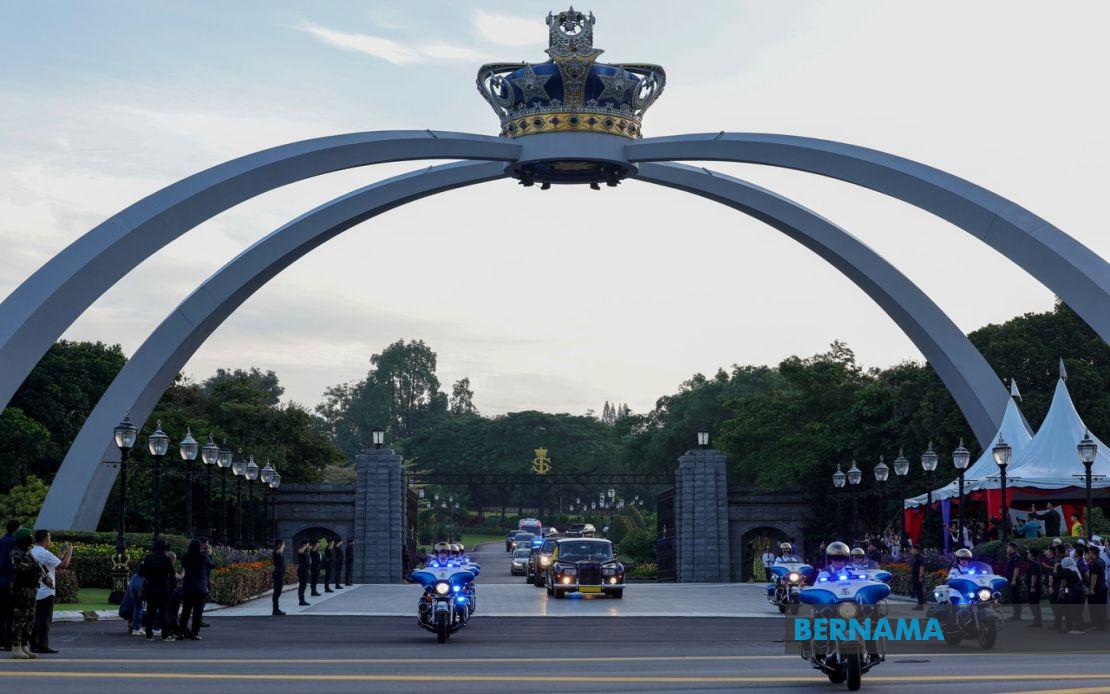
The swearing-in of Johor's newly reconstituted State Executive Council has been pushed back by 24 hours, moving from its originally scheduled date on Friday to Saturday at Istana Bukit Serene in Johor Bahru. Media organisations received notification of the postponement on Friday morning, with no explanation provided for the change in timing. The ceremony was set to proceed under the presence of the Regent of Johor, Tunku Mahkota Ismail, marking a significant constitutional moment for the state following its recent electoral mandate.
Menteri Besar Datuk Onn Hafiz Ghazi, who secured his second consecutive term leading the state administration just days earlier, was expected to lead the proceedings alongside key institutional figures including Johor Royal Council president Datuk Dr Rahim Ramli and State Secretary Datuk Mohammed Ridha Abd Kadir. The absence of publicly stated reasons for the delay has drawn attention to potential logistical, security, or ceremonial considerations that may have influenced the decision, though such administrative adjustments are not uncommon in high-level state functions.
Onn Hafiz's reconfirmation as Menteri Besar came following Johor's 16th State Election held on Saturday, where Barisan Nasional secured a commanding supermajority by capturing 48 of the 56 seats in the State Legislative Assembly. The result represented a decisive endorsement of BN's governance in the southern state, with the coalition expanding its legislative control and providing Onn Hafiz with a strengthened mandate to shape policy direction over the coming term.
The Menteri Besar, who also represents the Machap state assembly constituency, was formally sworn in the previous Sunday in a ceremonial process that preceded the more expansive Exco swearing-in. This typical sequencing allows the chief executive to assume office before his cabinet assumes their respective positions, establishing a clear chain of constitutional authority.
Johor's political landscape has been marked by relative stability under BN stewardship, particularly following the coalition's recovery across Malaysia in the 2022 general elections. The state's strong electoral performance reflects both BN's organisational strength in the region and voter confidence in the incumbent administration's economic management and development initiatives.
The State Executive Council typically comprises ministerial-level appointments responsible for portfolio areas including finance, infrastructure, education, health, and economic development. The composition of Onn Hafiz's second-term cabinet will likely reflect both continuity with proven administrators and potential refreshments to address emerging policy priorities. Such appointments are closely watched by stakeholders across the state, as they signal the administration's strategic priorities for the new electoral cycle.
Postponements of formal ceremonies, while occasionally frustrating for scheduled participants and media planning, generally reflect operational requirements rather than substantive political developments. Constitutional observers note that such adjustments are routine administrative matters, though transparency regarding reasons for changes can help maintain public confidence in government processes.
For Malaysian political observers and Southeast Asian analysts tracking Johor's trajectory, the election outcome reinforces the state's significance as a bellwether of broader coalition performance. As Malaysia's second-largest state by population and a critical economic hub with substantial port and industrial infrastructure, Johor's governance directly influences regional development patterns and inter-state coordination mechanisms within Malaysia's federal system.
The Saturday swearing-in ceremony will formally establish the governance framework through which the newly elected administration intends to execute its mandate across the coming term, setting institutional and procedural foundations for policy implementation in areas ranging from land development and urban planning to revenue collection and social service delivery.

