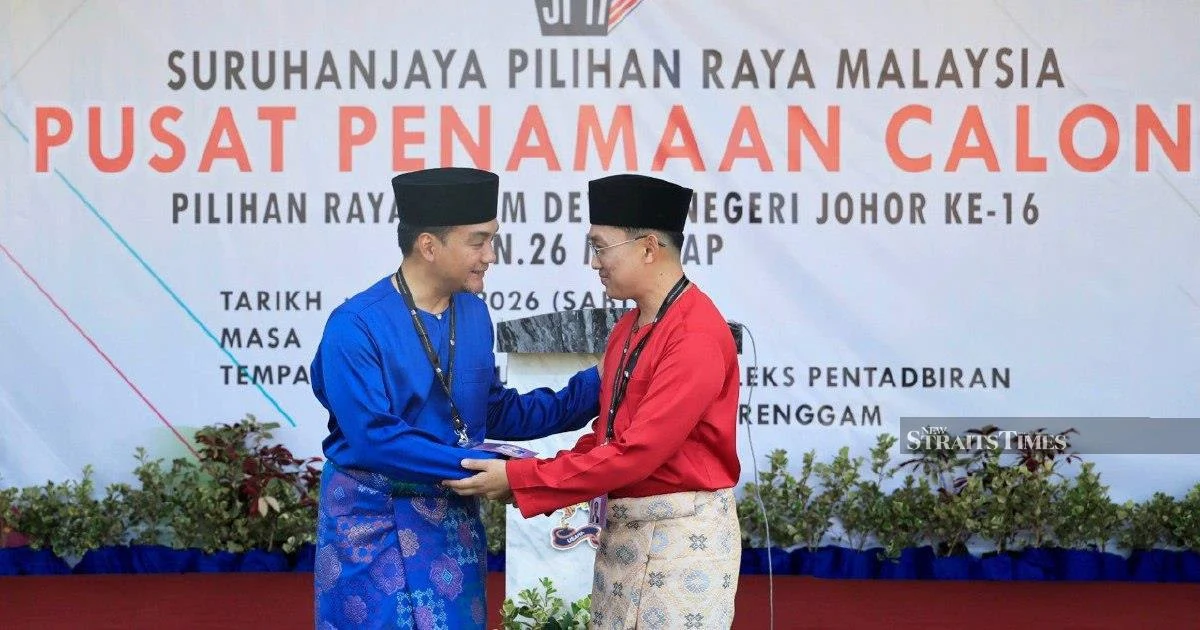
Caretaker Menteri Besar Datuk Onn Hafiz Ghazi offered a candid assessment of the political landscape in Johor ahead of the July 11 state election, acknowledging that the outcome of his re-election bid in Machap remains uncertain. Speaking at Simpang Renggam, the PAS-led administrator of the southern state recognised that electoral contests often defy predictions, suggesting the competition for his seat represents a genuine contest rather than a coronation.
Onn Hafiz's measured tone reflects a shift in political dynamics within Johor, where earlier assumptions about incumbent dominance have given way to genuine uncertainty. The Machap constituency, which the Menteri Besar represents, has emerged as a focal point of electoral attention, with multiple parties mobilising resources and grassroots networks to challenge his position. This intensification of competition stands in contrast to previous state elections in the region, where incumbent administrations often enjoyed significant structural advantages.
The caretaker leader's acknowledgment that "anything can happen" carries implications beyond his personal electoral fortune. It signals to supporters and observers alike that the state's political establishment recognises the volatility of current voter sentiment across Malaysia. Johor, traditionally a stronghold of UMNO and its coalition partners, has experienced shifting voting patterns in recent years, with younger voters particularly inclined to question established political alignments.
Machap itself represents a microcosm of broader Johor political tensions. The constituency encompasses urban and semi-urban areas where economic concerns—employment, rising costs of living, and wage stagnation—feature prominently in voter discussions. Onn Hafiz's willingness to frame the contest as genuinely competitive may reflect private polling data suggesting tighter margins than historical precedent would suggest, or it could represent a calculated strategy to energise supporters by avoiding complacency.
The timing of his remarks carries strategic significance. By tempering expectations before nomination day and early campaigning phases, the Menteri Besar positions himself to claim victory against headwinds should he prevail, whilst also preparing his administration for potential transition scenarios. This rhetorical positioning demonstrates political maturity and an understanding that overconfidence frequently precedes electoral upset in contemporary Malaysian politics.
Regional context amplifies the stakes in Johor's election. The state serves as an economic engine for Malaysia's southern corridor and maintains geopolitical sensitivity given its proximity to Singapore. Election outcomes here often presage broader shifts in national political sentiment, making Johor results closely watched by analysts assessing whether support for current federal administrations is strengthening or eroding. A competitive contest in Machap suggests broader competitiveness throughout the state.
Onn Hafiz assumed the Menteri Besar role following the collapse of the previous PAS-led administration and the subsequent political realignments that reshaped Johor's coalitions. His tenure has focused on stabilising governance and rebuilding institutional confidence after a period of political turbulence. Seeking a second full term provides him with the opportunity to advance longer-term development initiatives, yet securing a fresh mandate requires convincing voters that his administration warrants continued backing.
The opposition landscape in Johor has meanwhile consolidated around strengthened PKR and DAP operations, whilst UMNO's position remains complicated by its fractious relationship with PAS and ongoing internal divisions regarding political strategy. These fragmented opposition dynamics create openings for incumbents, yet simultaneously they inject unpredictability into electoral calculations. A splintered opposition does not guarantee incumbent success if voter dissatisfaction runs sufficiently deep.
Onn Hafiz's public acknowledgment of uncertainty may also serve a practical function in his campaign operations. By signalling that his re-election cannot be taken for granted, he can justify intensive ground-level mobilisation efforts to supporters and party machinery. This framing transforms competitive intensity into evidence of leadership seriousness rather than evidence of vulnerability, potentially mobilising supporters who might otherwise assume victory was assured.
The July 11 election will test whether Johor's electorate perceives sufficient progress under PAS administration to justify continuity, or whether voters prefer exploring alternative governance arrangements. Economic performance data, infrastructure completion rates, and public services assessments will feature in voter deliberations, alongside broader national political considerations. Onn Hafiz's characterisation of the contest as unpredictable aligns with genuine electoral volatility evident across multiple recent Malaysian elections, where polling has frequently underestimated voter appetite for change.
For Malaysian observers monitoring state-level political developments, the Johor election outcome carries relevance extending beyond the state's borders. Johor results may provide early signals regarding whether the political realignments of recent years have stabilised into new equilibria, or whether volatility continues reshaping electoral landscapes. Machap's contest, viewed through this wider lens, offers insight into voter sentiment among the economically active, urban-leaning demographic groups whose electoral choices increasingly determine state and national political outcomes.

