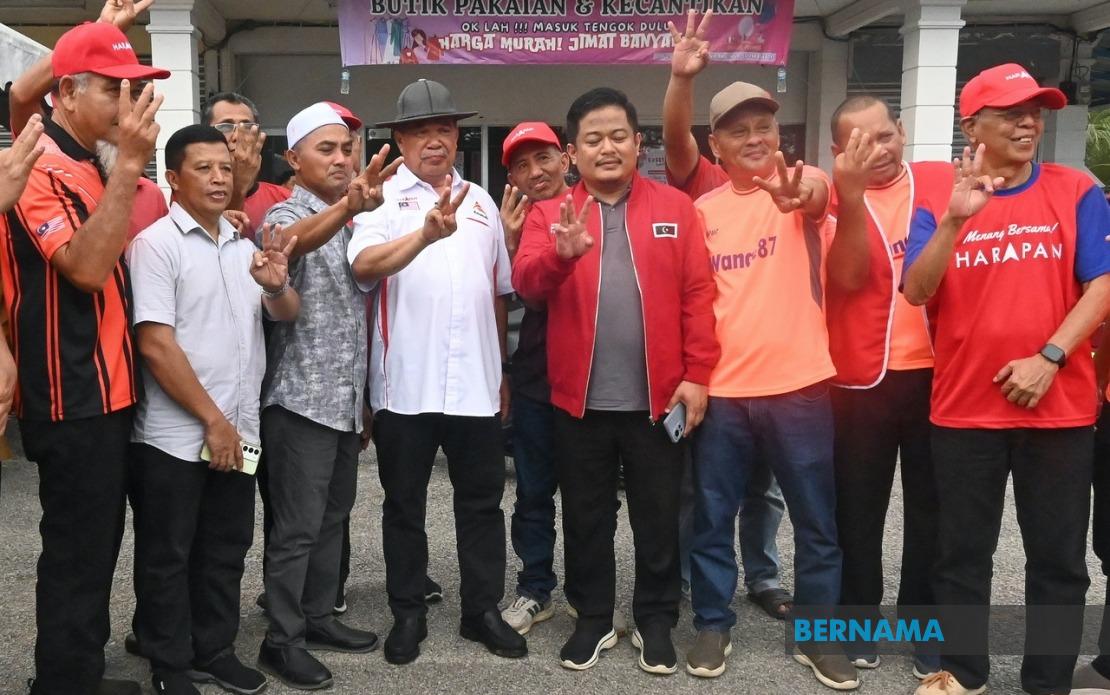
Datuk Seri Mohamad Sabu, president of Amanah and Malaysia's Minister of Agriculture and Food Security, has made an emphatic appeal to Johor voters to elect Pakatan Harapan candidates in the upcoming state election, arguing that the opposition's accusations of the manifesto being a mere "copy paste" exercise can only be disproven through actual implementation. Speaking after a campaign event in Rengit as part of the Johor Tour with Bang Mat programme, he stressed that voters hold the key to whether the coalition can translate its pledges into tangible results that address the concerns raised by ordinary Malaysians across the state.
The core of Mohamad Sabu's message centres on a fundamental distinction between promise and practice. While acknowledging that any political party can draft an attractive manifesto, he contends that the real test of political commitment lies in the execution of those pledges once a government takes office. Should Pakatan Harapan secure victory in Saturday's election, he pledged that implementation would commence immediately, with concrete action beginning as soon as July 12. This urgency reflects the coalition's determination to demonstrate that its campaign commitments are not rhetorical flourishes designed merely to win votes but genuine policy frameworks prepared for rapid deployment.
The manifesto itself represents months of grassroots engagement and field work across Johor, according to Mohamad Sabu. The coalition claims to have conducted extensive consultations with rural and urban communities, listening to residents' grievances and identifying their priorities before crafting policy responses. This ground-up approach, he suggests, distinguishes the Pakatan Harapan platform from generic political documents that lack connection to authentic public concerns. By framing the manifesto as emerging from the voices of Johor residents themselves rather than from backroom political calculations, the coalition seeks to establish legitimacy and ownership among voters who might otherwise view campaign promises with scepticism.
A notable dimension of Mohamad Sabu's remarks involves acknowledgment of changing political dynamics in rural Johor. He observed that rural voters' receptiveness to Pakatan Harapan has shifted substantially since the 2018 general election, when the coalition was relatively unknown in village communities. The minister noted that during recent campaign activities, Pakatan Harapan leaders and candidates now receive consistently positive responses from rural constituents, with residents actively seeking interaction and photograph opportunities. This represents a significant transformation in the coalition's political standing among traditionally conservative voter bases that have historically favoured established parties.
The timing of these comments carries particular weight given that early voting by security forces is scheduled for July 10, with the main polling day set for July 11. This compressed timeline intensifies pressure on all contending parties to maximise campaign impact in the final days before balloting. For Pakatan Harapan, Mohamad Sabu's messaging attempts to convert growing voter interest into decisive electoral support by framing the election as a referendum on whether Johor residents trust the coalition enough to grant it the mandate to govern and implement its programme.
The context of rural support holds significant implications for the broader Malaysian political landscape. Historically, rural areas have represented strongholds for the ruling Barisan Nasional coalition and, more recently, for Perikatan Nasional. Pakatan Harapan's apparent gains in rural receptiveness suggest potential structural shifts in voting patterns that could reshape competition in Johor, a state that has been politically contested between major coalitions over successive electoral cycles. Any breakthrough in rural areas would indicate that the coalition's messaging on economic management, agricultural support, and social provision has resonated beyond its traditional urban constituency.
Modamad Sabu's positioning of the manifesto as the culmination of extensive consultation work serves a strategic purpose beyond mere campaign rhetoric. By emphasising that the document reflects genuine public input rather than party ideology imposed from above, the coalition attempts to frame implementation as a public mandate that transcends partisan considerations. This rhetorical approach seeks to establish psychological ownership among voters, suggesting that supporting Pakatan Harapan means supporting their own expressed preferences rather than simply voting for a political party.
The criticism that the manifesto represents "copy paste" politics, likely referring to perceived similarities with previous campaign documents, is a vulnerability that Mohamad Sabu directly confronts. His response essentially concedes that manifestos may appear superficially similar across parties, but argues that differences emerge in execution capacity and political will. This defence strategy acknowledges voter scepticism about political promises while attempting to redirect attention toward the coalition's track record and administrative capability.
For Malaysian voters, particularly those in Johor who face decisions in the coming days, these assurances raise fundamental questions about political trust and accountability. The election represents an opportunity to evaluate which coalition's stated priorities align most closely with their own concerns, and which coalition they believe possesses genuine commitment and capacity to deliver. Mohamad Sabu's framing of Saturday's election as a decisive moment for implementing a people-centred agenda reflects Pakatan Harapan's attempt to position itself as responsive to authentic public needs rather than driven by narrow partisan interests.

