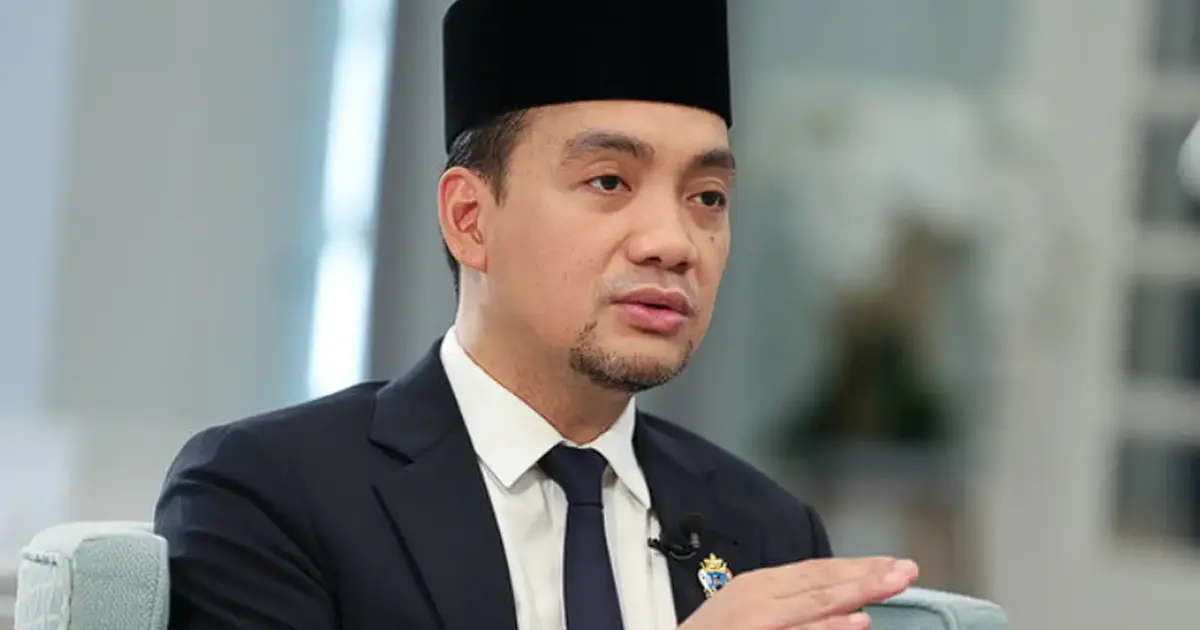
Onn Hafiz, serving as Johor's caretaker menteri besar, has moved to quell concerns about palace involvement in state governance by emphasizing that royal assent for the Johor state assembly's dissolution represents an essential constitutional function. His statement arrives amid broader scrutiny of the degree to which the monarchy exercises influence over political decisions, a sensitive topic in Malaysian federalism where each state's ruler holds significant ceremonial and legal authority.
The distinction Onn Hafiz draws between constitutional procedure and political interference speaks to a fundamental tension in Malaysia's constitutional architecture. While sultans wield formal powers that include approving legislative business and state executive actions, these powers are traditionally exercised on ministerial advice rather than through direct political judgment. By framing the assembly's dissolution through this lens, the caretaker menteri besar seeks to reassure the public that the palace is performing its designated role without overstepping into partisan territory.
In the Malaysian political system, the dissolution of a state assembly requires the ruler's consent, making royal assent a procedurally necessary step rather than an optional gesture of approval. This mechanism exists across multiple states and reflects the constitutional settlement that reserves certain powers to state rulers as a counterbalance to executive authority. However, the timing and context of dissolutions—particularly those arising from political instability or factional maneuvering—can invite public speculation about whether rulers are enabling or constraining political actors.
Onn Hafiz's clarification becomes especially significant given Johor's prominence within Malaysian politics. As the country's second-largest state by population and a traditional stronghold of Umno, developments in Johor carry national resonance. The state has experienced considerable political turbulence in recent years, with shifts in coalition alignments affecting both state and federal governance. Any perception that the palace is taking sides in these disputes could undermine confidence in the monarchy's neutrality, a cornerstone of its institutional legitimacy.
The caretaker status itself warrants consideration. When a menteri besar holds office in a caretaker capacity—typically following a dissolution or pending fresh elections—questions about the proper scope of decision-making intensify. A caretaker administration conventionally exercises constrained powers, attending to routine governance while avoiding major policy initiatives. In this context, even procedural matters like securing royal assent for the assembly's dissolution can become topics of public debate if observers perceive overreach or backroom political dealing.
Malaysia's constitutional scholars have long grappled with the appropriate relationship between sultans and state executives. While the Federal Constitution and individual state constitutions provide formal frameworks, political practice often operates in the space between explicit constitutional language and constitutional convention. Rulers' offices typically exercise their powers on advice, yet the advice itself originates from actors with clear political interests. Navigating this terrain requires careful communication that respects both the Sultan's constitutional position and public expectations of impartiality.
The emphasis on constitutional procedure rather than discretionary judgment reflects international best practice in constitutional monarchies. In jurisdictions like the United Kingdom, Australia, and Canada, the Crown's roles are frequently described in terms of formal requirements and established processes rather than opportunities for personal political intervention. Onn Hafiz's framing aligns Johor's governance with these global norms, suggesting that the Johor palace operates within analogous constraints.
Yet concerns about palace influence persist across Malaysian political discourse. Opposition figures and civil society observers have occasionally voiced worries that unelected sultans wield too much power relative to elected representatives. These concerns intensified during the COVID-19 pandemic when several sultans exercised emergency powers, and during recent federal political realignments involving the King's roles in swearing in or endorsing prime ministers. In this charged atmosphere, Onn Hafiz's defensive posture indicates that state authorities feel pressure to justify ordinary constitutional actions.
For Malaysian readers, particularly those in Johor, the statement carries practical implications. It signals that the upcoming state elections will proceed through established constitutional channels, with the palace playing a prescribed rather than improvised role. This reassurance matters for electoral legitimacy; if voters believe that the rules governing assembly dissolution and elections are understood and followed consistently, they are more likely to accept outcomes as democratically authentic. Conversely, if the process appears opaque or subject to hidden palace preferences, electoral results may carry reduced legitimacy regardless of their factual fairness.
The broader Southeast Asian context also bears noting. Across the region, questions about the proper balance between monarchical institutions and democratic governance arise in Thailand, Cambodia, and elsewhere. Malaysia's experience offers a regional case study in how constitutional monarchy can coexist with electoral competition. Onn Hafiz's careful distinction between constitutional function and political interference contributes to Malaysia's ongoing negotiation of these tensions, demonstrating an awareness that clear communication about institutional roles serves democratic stability.
Looking ahead, state elections will provide the real test of whether the assembly's dissolution and subsequent electoral process are viewed as constitutionally sound or politically compromised. Voter turnout, acceptance of results, and the absence of sustained allegations of improper palace interference will indicate whether Onn Hafiz's clarification has effectively separated perception from reality. His statement is, in essence, an appeal for public trust in institutional processes during a period of political flux.

