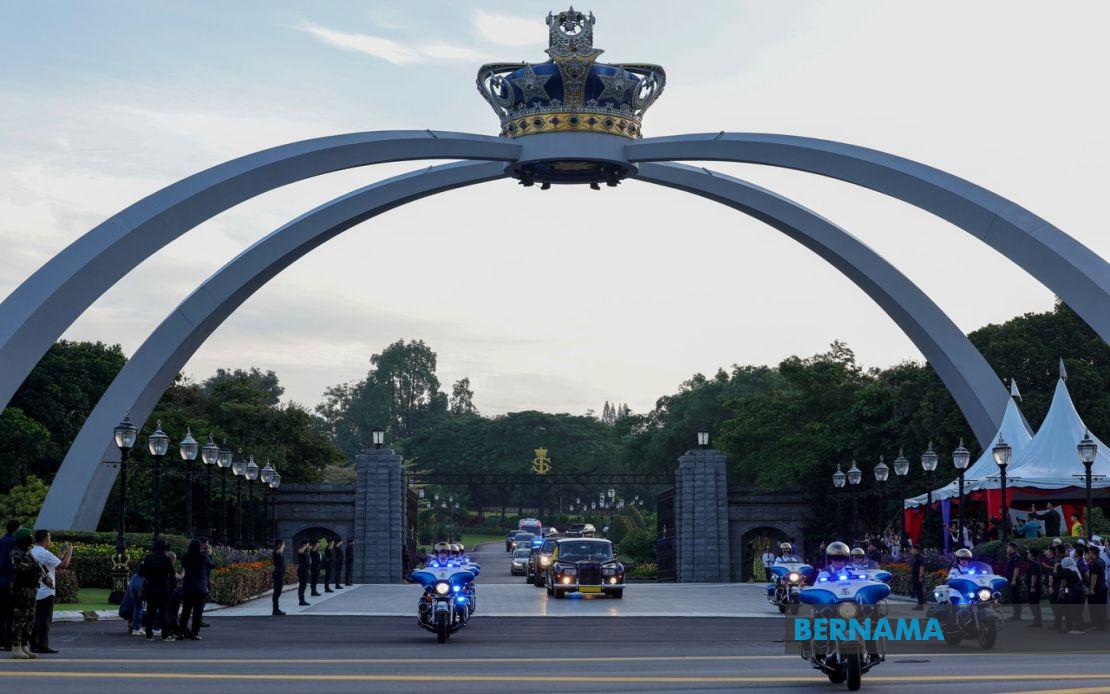
A new Menteri Besar for Johor will take the oath of office this afternoon in a formal ceremony at Istana Bukit Serene, the royal residence in the state capital. The swearing-in is scheduled for 3 pm, with media permitted to cover proceedings from the Crown Arch entrance of the palace. While the Johor Palace issued an official invitation confirming the time and venue, it notably withheld the identity of the incoming chief minister, leaving political observers and the press to speculate on the appointment even as preparations moved forward.
The palace announcement came via WhatsApp message, a measure of the controlled access maintained around high-level state ceremonies. The invitation specifically designated the Crown Arch as the designated area for journalists to document the event, reflecting standard protocol for significant constitutional proceedings. This arrangement suggests the palace anticipated substantial media interest in the appointment, given the political implications of the incoming administration and the recent decisive mandate delivered by Johor voters.
Media personnel positioned themselves strategically throughout the morning, with journalists and photographers converging on two key locations ahead of the official ceremony. Reporters camped outside the gates of Istana Bukit Serene and at the Menteri Besar's official residence in Saujana, each location potentially offering opportunities to capture the arrival or movements of officials involved in the transition process. By midday, the presence of press contingents at these vantage points signalled that the succession process had entered its final phase.
The path to this afternoon's ceremony became clearer following Sultan Ibrahim Iskandar's morning audience with Barisan Nasional's top leadership. Datuk Seri Ahmad Zahid Hamidi, who chairs the coalition at the national level, met with the Sultan at Istana Pasir Pelangi, with the engagement lasting approximately one hour. Johor's state-level BN chairman Datuk Onn Hafiz Ghazi attended the meeting alongside Zahid Hamidi, suggesting discussions centred on finalising the state leadership succession and securing royal approval for the appointment.
The political momentum underlying this transition stems from Barisan Nasional's commanding performance in yesterday's state assembly election. The coalition secured an overwhelming majority, capturing 48 of the 56 seats contested, a result that represents one of the most decisive state-level victories in recent Malaysian electoral history. Such a substantial mandate provides BN with considerable room to govern without legislative constraints and enhances the legitimacy of whomever the party's leadership designates as Menteri Besar.
For Malaysian political observers, the scale of BN's triumph in Johor carries significance beyond the state itself. Johor ranks among Malaysia's largest and most economically important states, serving as a crucial component of BN's traditional support base in Peninsula Malaysia. A commanding majority in the state assembly signals the coalition's continued capacity to mobilise voters in traditional strongholds, even as Malaysian politics has become more volatile and unpredictable over recent years.
The forthcoming swearing-in represents the formalisation of electoral results into governmental authority. Once the Menteri Besar takes the oath before the Sultan, the administration will gain full legal standing to begin implementing its agenda. The timing and ceremonial nature of the event underscore the constitutional importance of the transition, emphasising that state government authority flows from the sovereign and the people's democratic choice.
From a governance perspective, the incoming administration will assume control during a period of ongoing economic recovery and development priorities across Johor. The state has traditionally focused on manufacturing, port operations, agriculture, and tourism, sectors that remain central to its economic profile. The new government's ability to navigate these sectors effectively while managing federal-state relations will shape its record and influence Johor's trajectory over the coming years.
The political consolidation occurring today also carries implications for the broader Malaysian political landscape. Barisan Nasional's resurgence in Johor, evident from yesterday's results, reflects the coalition's ongoing appeal to significant voter constituencies. This pattern, should it extend to other state and federal contests, could reshape Malaysia's political equilibrium after years of competitive challenges from Pakatan Harapan and other opposition formations. The succession of leadership in Johor thus unfolds against a backdrop of potential broader shifts in Malaysian politics.
For residents and businesses operating in Johor, the completion of the transition today marks the transition from electoral campaign mode to governance mode. The new administration will assume responsibility for delivering on promises made during the campaign while addressing ongoing state challenges and opportunities. The quality of governance and responsiveness to constituent needs over the next term will ultimately determine whether BN's electoral mandate translates into sustained political support.

