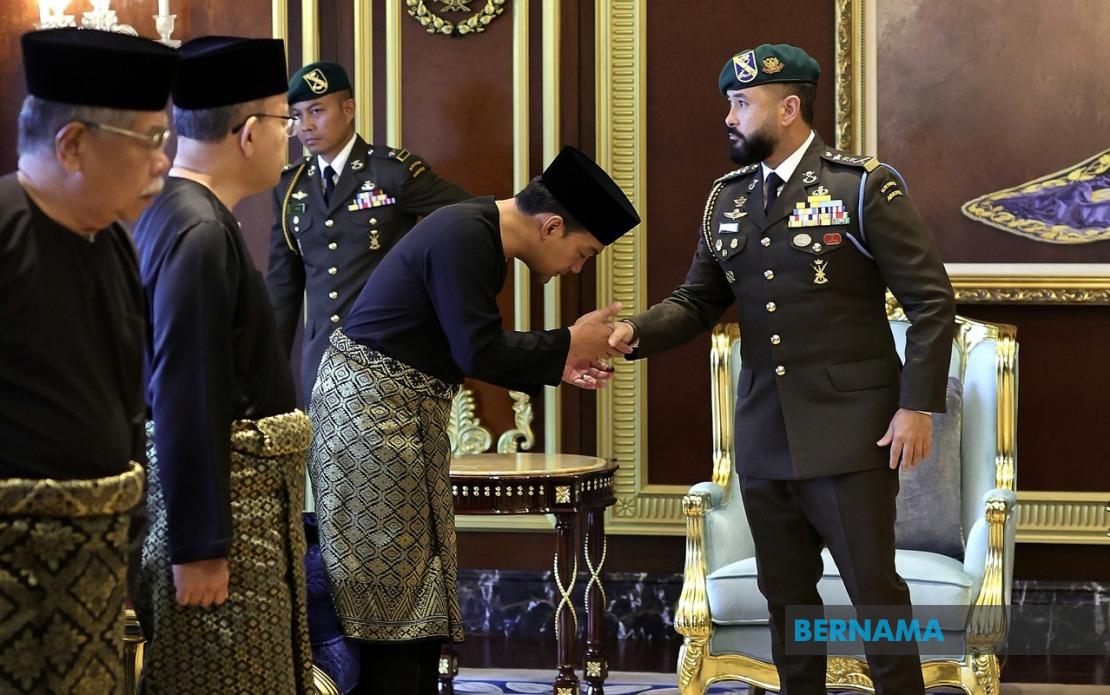
Members of Johor's newly formed State Executive Council will take their oath of office tomorrow at Istana Bukit Serene in Johor Bahru, marking the formal establishment of the administration following the state's recent electoral success. The ceremony will be presided over by the Regent of Johor, Tunku Mahkota Ismail, who will oversee the swearing-in of the executive leadership team that will guide the state through the coming years.
The formal proceedings are scheduled to commence in the morning, with media representatives invited to document the occasion from both main palace entrances beginning at 9.30 am. Among the dignitaries expected to participate are Menteri Besar Datuk Onn Hafiz Ghazi, who was sworn in for his new term just four days earlier, alongside Johor Council of Royal Court president Datuk Dr Abdul Rahim Ramli and state secretary Datuk Mohammed Ridha Abd Kadir. The presence of these senior officials underscores the significance of the event within Johor's political calendar.
This swearing-in ceremony represents the culmination of a significant political mandate that emerged from the 16th Johor State Election held recently. Barisan Nasional achieved a commanding victory, securing 48 of the 56 available state seats, which provides a robust foundation for Onn Hafiz Ghazi's administration to pursue its agenda without facing the precarious parliamentary mathematics that has characterised Malaysian politics in recent years. The scale of this win suggests voter confidence in the coalition's direction for the state.
For Malaysian observers, the Johor result carries considerable weight in the broader political landscape. As the country's second-largest state by population and a crucial economic hub in the southern corridor, Johor's governance trajectory influences not only its own development but also regional stability and investor confidence across Southeast Asia. The establishment of a strong, cohesive executive council with a clear mandate should facilitate more efficient decision-making on key developmental issues affecting the state's 4.2 million residents.
The timing of this formal swearing-in ceremony, occurring several days after Onn Hafiz Ghazi personally took the oath as Menteri Besar, reflects the ceremonial protocols that accompany significant transitions in Malaysian state administrations. The broader Exco line-up remains to be detailed officially, but their appointment follows a carefully choreographed process that ensures alignment with the Regent's constitutional role as guardian of Johor's interests. This deliberate pacing allows for consultation and ensures that appointed officials understand the expectations placed upon them.
Barisan Nasional's performance in Johor suggests that voter concerns about governance, economic management, and stability continue to resonate across Malaysia's electorate. The coalition's ability to retain and strengthen its position in the state contrasts with volatile electoral dynamics witnessed in other states in recent election cycles. For political analysts tracking Malaysia's democratic trajectory, Johor's decisiveness offers a counterpoint to the fragmented results seen elsewhere, raising questions about whether different regions harbour distinct priorities or whether specific leadership qualities resonated with Johor voters.
The new Exco will inherit a state administration grappling with post-pandemic economic recovery, infrastructure development, and the integration of Johor's strategic position within the Greater Kuala Lumpur-Klang Valley economic corridor. The Port of Tanjung Pelepas, Johor Bahru's status as a crucial border city, and ongoing investments in industrial zones represent significant economic levers that the new team must skillfully manage. Their effectiveness in coordinating with federal authorities on matters affecting cross-border commerce and regional development will be closely watched by stakeholders across Southeast Asia.
The ceremonial nature of tomorrow's event, with its emphasis on formal protocols and the Regent's involvement, reinforces the constitutional foundations that underpin Malaysian state governance. While executive power flows through the Menteri Besar and Exco members, the ceremonial acknowledgment of the Regent's role serves as a reminder of the traditional institutional framework that provides legitimacy and continuity within the Malaysian federation. This balance between modern administrative demands and constitutional tradition characterises the Malaysian political system.
Looking forward, the composition of the Exco line-up will signal how Onn Hafiz Ghazi intends to govern in this new term. Appointments often reflect calculations about regional representation, factional balance within Barisan Nasional, and technical expertise required for specific portfolios. The public revelation of individual assignments will provide early indicators about the administration's priorities and how it plans to navigate both federal-state relations and internal coalition dynamics. Observers should note which party members receive prominent portfolios and whether the allocation reflects continuity or strategic repositioning within Johor's political landscape.

