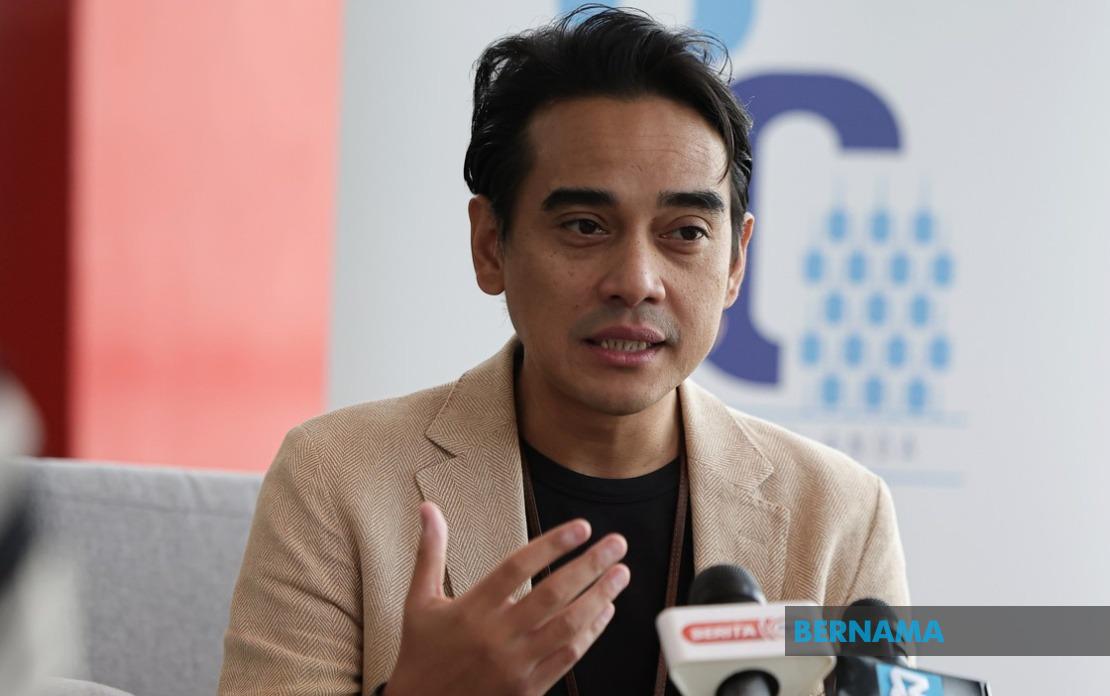
The future viability of journalism in Malaysia depends on how quickly and thoroughly media practitioners adopt artificial intelligence capabilities, according to Ashwad Ismail, Director-General of Broadcasting. Speaking during an appearance on Bernama TV's The Nation programme, Ismail delivered a blunt assessment of the competitive pressures reshaping newsrooms across the region: those who master AI will advance, while those who ignore the technology risk obsolescence within their own profession. The warning reflects growing anxiety within Malaysia's media establishment about whether traditional news organisations can retain relevance as digital transformation accelerates across every aspect of the industry.
Ismail's framing of AI represents a deliberate reorientation of how the sector discusses technological disruption. Rather than portraying artificial intelligence as an existential threat to journalism itself, he presents it as a competitive differentiation tool—a skill gap that separates forward-thinking professionals from those destined for displacement. This distinction matters strategically because it shifts responsibility away from technology companies and towards individual journalists, compelling them to view continuous learning in AI applications as a non-negotiable career requirement. The message carries particular weight in Malaysia, where media sector employment has already faced pressures from declining advertising revenues and consolidation among news organisations over the past decade.
The core argument articulated by Ismail hinges on a critical distinction: robots will not eliminate journalism, but journalists who fail to harness AI will find themselves outmaneuvered by competitors who do. This framing acknowledges that newsroom jobs will persist, but only for those who evolve their skill sets to integrate with emerging tools. The implication is that the industry faces not wholesale elimination but rather a talent thinning process where capability determines who survives restructuring. For young journalists entering the field and experienced practitioners mid-career, this creates pressure to invest time and resources in understanding how to integrate AI into research, writing, fact-checking, and content analysis workflows.
However, Ismail recognises that unfettered adoption of AI in newsrooms presents ethical and quality-control risks. He advocates for the development of comprehensive guidelines that establish how news organisations should deploy AI responsibly. These frameworks would serve as guardrails, ensuring that artificial intelligence augments human journalistic judgment rather than replacing it or introducing systematic bias into reporting. The call for guidelines reflects concern within Malaysia's media leadership that rapid, uncoordinated AI implementation could compromise editorial standards or inadvertently spread misinformation if algorithms are poorly trained or inadequately monitored. This is particularly salient in Southeast Asia, where AI-generated disinformation has already caused documented harm to public discourse.
The emphasis on human capability enhancement rather than human replacement reveals a more nuanced technological vision than alarmist narratives about AI and job losses often permit. Ismail envisions AI as infrastructure that frees journalists from routine, repetitive tasks—database queries, initial fact verification, content categorisation—thereby creating space for deeper investigative work and more thoughtful analysis. This framing aligns with how media organisations in Singapore, South Korea, and other technologically advanced economies have begun deploying AI in practice. The value proposition centres on allowing experienced journalists to focus on interpretive, contextual, and investigative work that requires human judgment while machines handle information processing at scale.
Rebuilding public trust in media emerges as the second pillar of Ismail's vision for journalism's future. He argues that news organisations must return to fundamental journalistic practices, particularly hyperlocal reporting that directly serves specific communities rather than chasing viral content. This localisation strategy creates direct accountability between journalists and the audiences they serve, establishing the human relationships that underpin credible news gathering. In the Malaysian context, where media fragmentation and polarisation have eroded shared information ecosystems, hyperlocal reporting offers a pathway to relevance by addressing issues—municipal governance, local development, community safety—that affect daily life in ways national stories often do not.
The emphasis on human touch and community engagement represents a counterbalance to fears that AI-intensive newsrooms will become sterile, algorithm-driven operations disconnected from the people they serve. Ismail's argument suggests that the most successful news organisations will combine technological sophistication with editorial commitment to local storytelling. This hybrid model appeals to both business logic—local audiences are more likely to subscribe to or engage with news about their own communities—and professional ethics—journalism's ultimate purpose is serving public understanding of shared civic life, not maximising engagement metrics.
The timing of these remarks, delivered ahead of the HAWANA 2026 conference in Penang, signals that questions about journalism's technological transformation are moving from industry margins to mainstream institutional discussion. The conference, which will be officially opened by Prime Minister Datuk Seri Anwar Ibrahim and will attract over 1,200 participants including ASEAN media delegates, suggests that Southeast Asian governments and media leaders view AI's integration into journalism as a strategic matter warranting coordinated dialogue. This regional framing acknowledges that technological disruption crosses borders and that regulatory approaches, professional standards, and workforce development strategies benefit from comparative learning across the ASEAN bloc.
For Malaysian journalists and media organisations specifically, Ismail's message carries practical urgency. The competitive labour market for talent in Southeast Asia means that journalists with verifiable AI competency will command premium value as scarce resources. News organisations that establish clear internal pathways for staff training in AI tools will likely retain talented practitioners who might otherwise seek positions at better-resourced outlets. Educational institutions training journalists must simultaneously update curricula to include AI literacy alongside traditional reporting skills, creating a pipeline of professionals who view technological fluency as normal rather than exceptional.
The challenge of developing industry-wide guidelines for responsible AI use in newsrooms represents a second major implementation hurdle. Malaysia's media landscape includes both large, well-resourced organisations and smaller outlets with limited technical capacity. Guidelines that fail to account for these resource disparities risk creating competitive advantage for large players while placing smaller news organisations at disadvantage. Standardised approaches developed through consultation with industry associations, regulatory bodies, and journalists' unions could help level the playing field while establishing minimum standards that protect editorial integrity across the sector.
Ismail's perspective also implicitly critiques media organisations that might view AI primarily as a cost-reduction mechanism—a way to produce more content with fewer staff. While technological efficiency is legitimate business objective, journalism's social function requires that newsroom transformation be guided by editorial values rather than purely by labour cost dynamics. News organisations that use AI to eliminate positions without redeploying those resources toward investigative or explanatory work risk degrading overall reporting quality even as output volume increases, ultimately damaging their credibility and long-term commercial viability.
Looking forward, the integration of AI into Malaysian journalism will likely proceed unevenly, with early adopters among major news organisations establishing competitive advantage while smaller outlets adapt more slowly. The professional and educational infrastructure supporting this transition—training programmes, industry standards, career pathways—remains underdeveloped across Southeast Asia. Success in this transition depends not on technology itself but on deliberate institutional choices about how to deploy it: whether as a tool to deepen journalistic capacity or merely to reduce costs; whether embedded within frameworks protecting editorial integrity or applied opportunistically without strategic vision; whether developed collaboratively across the industry or pursued competitively by individual organisations without regard for broader professional standards.