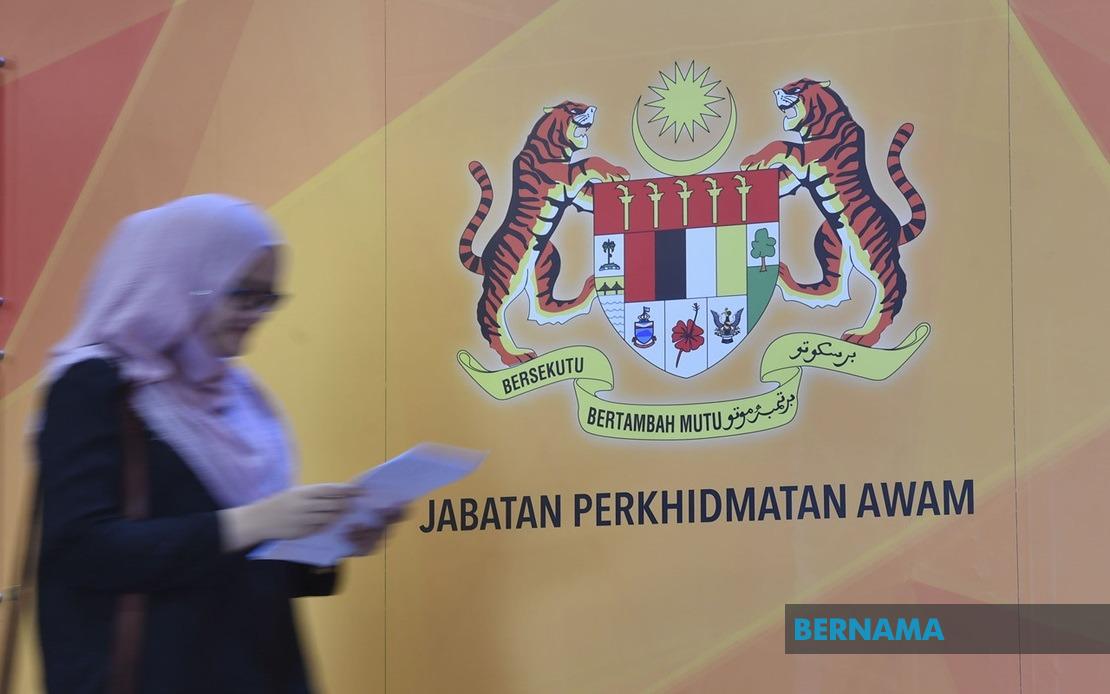
The Public Service Department has unveiled an expanded sponsorship initiative offering 640 places to 2026 Sijil Pelajaran Malaysia graduates, reaffirming the government's commitment to cultivating a high-calibre talent pool essential for the nation's advancement. The announcement underscores how MADANI administration priorities align with human capital development as a cornerstone of Malaysia's economic trajectory and regional standing.
The sponsorship package encompasses four distinct pathways, each targeting different student profiles and aspirations. The National Sponsorship Programme provides 30 places, while the Special Programme for Japan, Korea, France and Germany allocates 140 slots—a significant commitment reflecting Malaysia's strategic partnerships with these industrialised economies. The Special Programme for Domestic SPM Graduates dedicates 200 positions to scholars pursuing tertiary education within Malaysia, ensuring opportunities exist regardless of international aspirations. The JPA-MARA Special Programme, the largest component, reserves 270 slots, demonstrating institutional coordination between two major government agencies to maximise reach and accessibility.
This multi-tiered approach recognises that talent development requires diverse pathways. Domestic placements serve students who prefer studying within Malaysia's growing higher education ecosystem or face financial constraints limiting international mobility. International opportunities, conversely, expose Malaysian scholars to global pedagogies and networks—investments that typically yield returns through enhanced expertise and international professional connections that benefit Malaysia's competitiveness.
The sponsorships encompass strategically prioritised fields aligned with national economic diversification goals. Engineering, science and technology remain foundational, reflecting Malaysia's ongoing industrialisation and transition toward high-value manufacturing and innovation-driven sectors. The inclusion of social sciences acknowledges that sustainable development requires expertise in policy, economics, public administration, and social research—disciplines often overlooked in purely STEM-focused initiatives yet critical for implementing complex reforms.
Geographical diversity in study destinations reveals calculated soft power and educational diplomacy. Partnerships with the United States and Australia represent traditional ties to established tertiary systems and English-speaking labour markets, while arrangements with Japan, South Korea, France and Germany signal Malaysia's engagement with advanced economies in manufacturing, automotive, pharmaceuticals and renewable energy sectors. New Zealand represents Pacific educational opportunities, whilst opportunities within Malaysia ensure no eligible talent faces geographical barriers to advancement.
The Academic Merit-Based Convertible Loan mechanism introduced in June 2025 represents a structural innovation in scholarship delivery. Unlike traditional fully-funded scholarships, convertible loans obligate recipients to maintain rigorous academic standards, theoretically incentivising sustained excellence. The loan structure—convertible presumably to grants upon meeting performance thresholds—balances fiscal responsibility with meritocratic principles, though critics might argue it introduces financial risk for scholars from disadvantaged backgrounds despite their qualification.
Application result checking commenced from 10 am on announcement date, extending through June 22, through JPA's designated portal system. This compressed timeline reflects administrative efficiency but potentially disadvantages applicants with limited digital literacy or internet access, an equity consideration worth monitoring in subsequent programme iterations.
For Malaysian students, particularly those from middle and lower-income households, these 640 opportunities represent life-altering pathways. International education financing traditionally constitutes a significant family burden; sponsorships effectively democratise access to world-class institutions otherwise inaccessible to talented but economically constrained cohorts. This has downstream implications for social mobility and the diversification of Malaysia's professional classes.
Regionally, JPA's scholarship strategy positions Malaysia within competitive talent circulation across East and Southeast Asia. Singapore, South Korea and Vietnam aggressively recruit Malaysian talent; sponsoring domestic students internationally but encouraging them to return through loan structures creates retention incentives whilst signalling confidence in Malaysia's development trajectory. Successful returnees bring credentialed expertise that strengthens institutional capacity across government, academia and industry.
The initiative also reflects evolving international education trends. Rather than concentrating placements in single anglophone destinations, JPA's diversified portfolio hedges against geopolitical risks whilst building specific sectoral expertise. Japanese sponsorships might target automotive and robotics expertise, Korean slots focus on semiconductor and digital technology, while European programmes strengthen pharmaceutical, engineering and renewable energy capabilities.
Implementation success hinges on post-graduation outcomes. Institutional partnerships must ensure employability alignment—sponsorships carry opportunity costs if graduates cannot leverage qualifications within Malaysian labour markets. JPA historically maintains strong returnee rates compared to international scholarship programmes, partly through loan conditionality but also reflecting genuine domestic opportunity and national identity. Monitoring employment trajectories and sectoral distribution of graduates provides valuable data for refining future allocations.
The 640-slot initiative, whilst substantial, remains modest relative to Malaysia's 500,000-plus annual SPM cohort. Less than 0.2% of graduates access these premium sponsorships, preserving their prestige but highlighting why complementary scholarship schemes, institutional bursaries, and loan schemes remain essential to broaden tertiary access. Successive governments' incremental expansion of JPA offerings suggests recognition that single national schemes cannot satisfy demand for subsidised higher education.
Looking forward, JPA's framework offers lessons for Southeast Asian peers developing human capital strategies. Combining domestic and international placements, prioritising strategic sectors, and linking awards to performance metrics provide models for balancing aspiration with fiscal constraints. Malaysia's demonstrated ability to coordinate multiple agencies and destination countries whilst maintaining programme integrity strengthens its educational leadership across the region, attracting students from neighbouring countries and enhancing institutional prestige.

