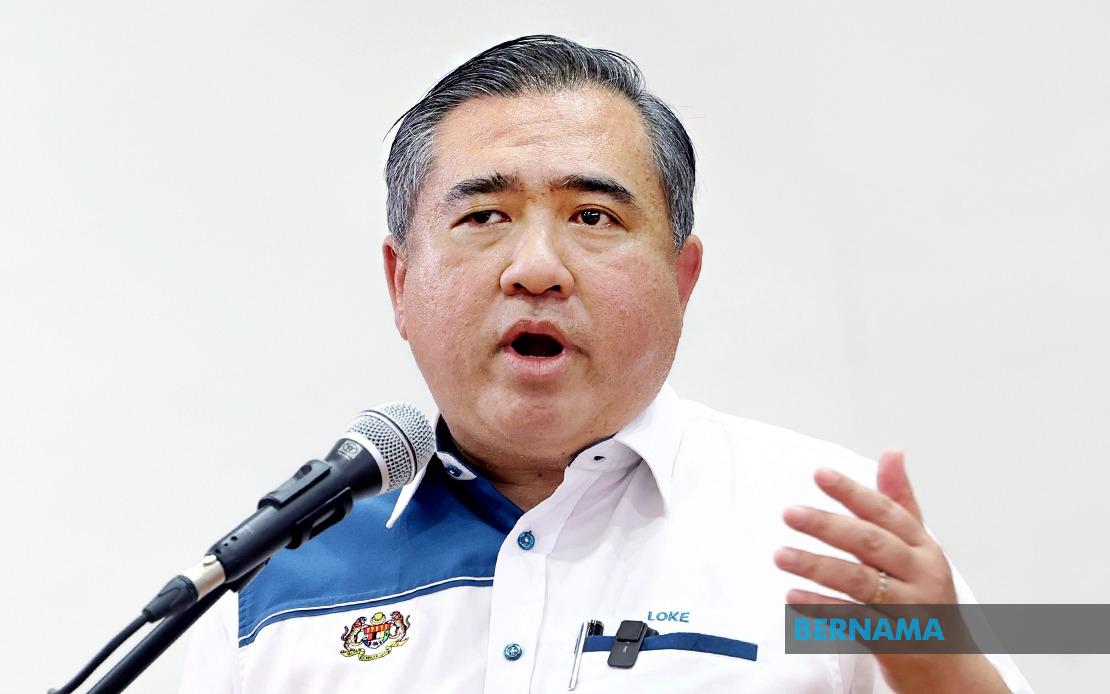
Transport Minister Anthony Loke has directed the Road Transport Department to take enforcement action against motorcyclists discovered riding without safety helmets during the Johor state election campaign, following evidence from videos that circulated online. The ministry's stance applies uniformly across all political affiliations, with Loke emphasizing that Pakatan Harapan campaign personnel would face identical consequences to those from other coalitions if caught flouting the regulations.
Loke's directive comes after a group of opposition campaign workers, including members from the DAP, were filmed riding motorcycles without proper protective equipment during campaign activities in Johor. The minister acknowledged the seriousness of the viral footage, stating that the Transport Ministry views such violations as a matter requiring immediate corrective action through existing legal mechanisms. Rather than viewing the enforcement as selective or politically motivated, Loke framed it within a broader commitment to consistent application of road safety statutes.
The Transport Minister articulated a principled position regarding the enforcement of helmet regulations, drawing parallels to a similar situation he had previously raised during the Slim by-election campaign approximately six years ago. At that time, Loke had raised concerns about Barisan Nasional leaders engaging in campaign activities without proper safety equipment, establishing a precedent for his current stance. He emphasized then, as now, that there exists nothing inherently problematic with conducting election campaigning from motorcycles, provided that riders maintain compliance with mandatory safety protocols.
Loke's statement underscores a critical distinction between the activity of political campaigning itself and the manner in which such activities are conducted. Rather than seeking to restrict campaign methods, his approach targets specific safety violations that occur within those activities. This nuance suggests that the enforcement action targets behaviour rather than political expression, positioning road safety compliance as a universal obligation transcending partisan considerations.
The minister's willingness to apply enforcement measures against his own party's affiliates demonstrates a commitment to impartial governance that extends beyond typical political rhetoric. Loke, who serves as secretary-general of the DAP, made explicit his determination to maintain this principle even when it affects his own political allies and campaign associates. This stance carries particular significance given that the violated footage involved opposition workers, making equitable enforcement a test of governmental credibility.
Malaysia's road safety framework operates independently of political party structures, a principle that Loke reiterated as fundamental to his position. Helmet regulations exist to protect riders from serious injury and death, with extensive evidence demonstrating their effectiveness in reducing fatalities and severe trauma outcomes. The Transport Minister framed enforcement as primarily a public health imperative rather than a political matter, even as the specific incident involved political figures.
The enforcement action reflects broader concerns about road safety compliance among election campaign participants across Southeast Asia, where motorcycles serve as primary vehicles for reaching voters in many constituencies. Campaign workers often engage in high-risk behaviour while travelling between events, and viral videos documenting safety violations can influence public perception of candidates' commitment to community wellbeing. The Johor incident thus extends beyond a single regulatory matter to encompass questions of leadership and public responsibility.
JPJ's anticipated summonses would fall within the Road Transport Act, which stipulates substantial penalties for helmet violations. These penalties typically include financial fines that escalate for repeat offences, and accumulated violations can trigger vehicle licensing restrictions. The prospect of enforcement against opposition campaign workers during an active election period demonstrates governmental willingness to enforce regulations regardless of political timing, though such actions inevitably carry perceptions of timing and fairness that observers will scrutinize.
The incident raises implications for campaign conduct standards across Malaysian electoral processes. Political parties increasingly leverage motorcade-style campaigning, particularly in states where constituencies remain geographically dispersed, and where direct engagement with voters requires intensive travel. Establishing consistent safety expectations during these activities could influence campaign methodologies across the political spectrum, potentially reducing overall road risk associated with election seasons.
Loke's approach contrasts with alternative governance responses that might have emphasized selective enforcement or partisan application of regulations. By proactively committing to equitable treatment regardless of party affiliation, the Transport Minister attempts to establish enforcement credibility and insulate the decision from accusations of political bias. However, the timing of enforcement during an active campaign period may still generate controversy among observers skeptical of government impartiality, regardless of stated intentions.
The broader implications for Malaysian road safety extend beyond the immediate incident. Political figures wield considerable influence over public behaviour, and campaign-related incidents that gain viral attention can either reinforce or undermine safety messaging. When political actors visibly comply with safety regulations, their example reaches audiences beyond traditional media, potentially strengthening helmet-wearing adoption among the general motorcycling population. Conversely, footage of political figures disregarding safety requirements can normalize such behaviour among supporters.
The Transport Ministry's intervention signals commitment to maintaining road safety standards as non-negotiable public goods, distinct from the political considerations that typically shape policy decisions. While election campaigns create pressures to prioritize voter engagement and visibility, safety compliance emerges as a boundary that responsible governance declines to compromise. This positioning reflects growing recognition within the Malaysian government that infrastructure and safety standards require consistent enforcement to maintain their integrity and effectiveness.

