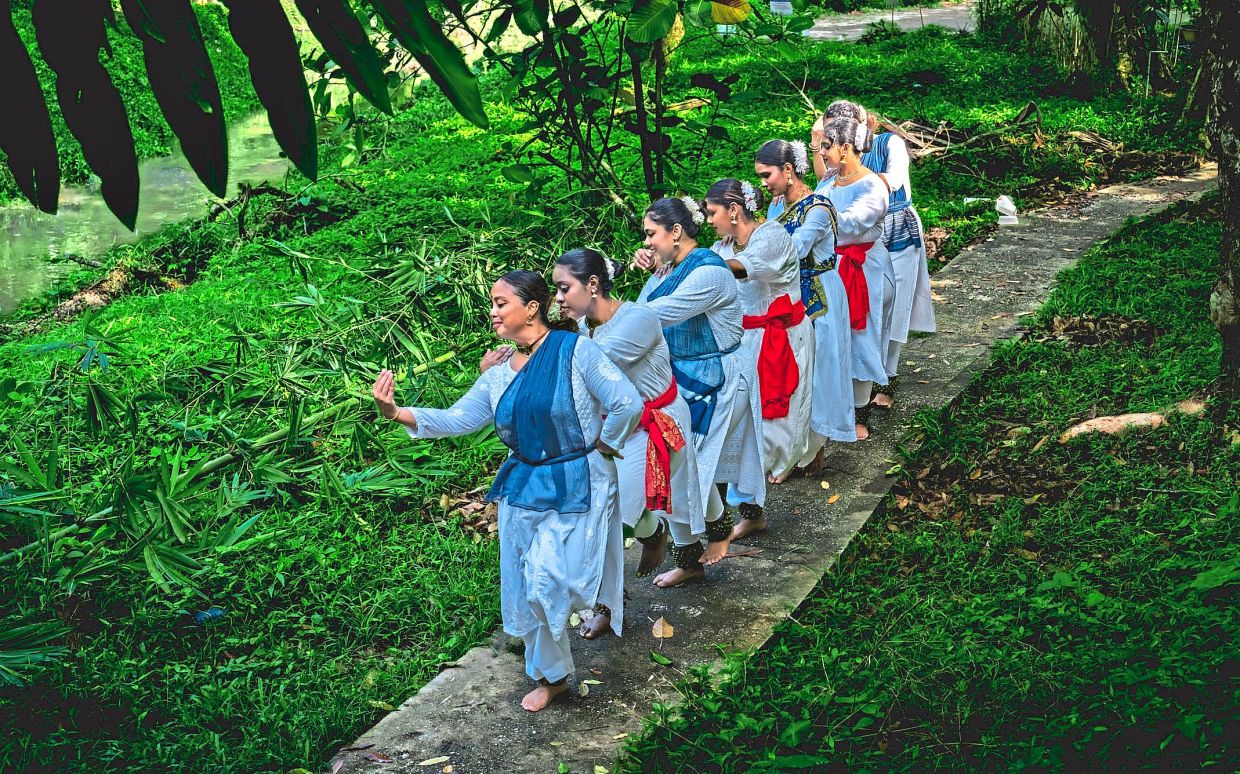
Kalpana Dance Theatre in Kuala Lumpur reaches a significant milestone this year—three decades of artistic survival and creative evolution in an industry notorious for its financial precarity and unpredictable operating environment. The achievement reflects the resilience of its founder-director Shangita Namasivayam, who has navigated the competing demands of sustaining a cultural institution while maintaining artistic integrity. Like any living river carving new channels through landscape, the theatre has adapted repeatedly to remain relevant and vibrant, now preparing to celebrate the anniversary through a production that bridges classical heritage with contemporary environmental concerns.
The commemorative bharatanatyam concert, scheduled for August 8 at the Shantanand Auditorium in Temple of Fine Arts, KL, departs from conventional retrospective celebrations by centering on an urgent social theme: the degradation of water resources. Rather than simply showcasing technical virtuosity or revisiting past successes, Namasivayam has conceived a production architecture around two major Indian rivers—the Ganga in northern India and the Kaveri in southern India—that functions simultaneously as aesthetic framework and pedagogical tool. This choice reflects a deliberate pedagogical strategy: using the emotional and spiritual power of classical dance to cultivate environmental consciousness among performers and audiences alike.
The two rivers carry profound symbolic weight within Indian civilization. The Ganga represents the continent's spiritual heart, a waterway invested with millennia of religious significance and cultural memory across Hindu, Buddhist, and Sikh traditions. The Kaveri, revered as the southern Ganga, holds equally vital importance for the agrarian societies of the Deccan plateau, sustaining irrigation systems, hydroelectric generation, and agricultural production across multiple states. Both rivers have inspired centuries of classical and folk artistic expression, with their sacred significance woven into performance traditions that blend mythology, regional musical idioms, and dance vocabularies developed over generations. Yet both face acute environmental stress—pollution, over-extraction, ecosystem collapse—that contradicts their traditional associations with purity, abundance, and renewal.
Namasivayam articulates the conceptual framework with characteristic clarity: the Ganga functions as a shore of compassion where spiritual cleansing occurs, while the Kaveri emerges as a mother of prosperity where agricultural life flourishes. Together, the rivers transcend their geographical specificity to express a universal truth about water as both physical sustenance and spiritual metaphor. However, the production's intellectual intervention operates on a second level, using this archetypal imagery to confront contemporary resource destruction. By positioning water as essential to life while directing attention toward industrial and human-caused degradation of rivers and oceans, the concert becomes a vehicle for raising awareness among young dancers about their complicity in and responsibility toward environmental crisis.
To embed this commitment beyond symbolic representation, Kalpana Dance Theatre has partnered with The Alliance of River Three (ART!), a Malaysian environmental organization founded in 2018 by Kennedy Michael. ART! pursues river ecosystem restoration through concrete community action: building River Three Parks, organizing regular cleanup initiatives, and implementing long-term ecological rehabilitation in urban waterway corridors. The organization earned recognition as a 2020 Star Golden Hearts Awards winner for developing innovative models of urban river restoration. Since January, Kalpana's dancers have participated in on-ground cleanup operations at Taman Melawati River Three SDG Park and Mid Valley River Three SDG Park, initiatives ART! aims to complete by 2030. This experiential dimension proves transformative: young performers encounter environmental degradation directly rather than as abstract concept, experiencing physical labor in service of restoration and acquiring visceral understanding of water pollution's reality.
Namasivayam emphasizes the pedagogical value of such hands-on engagement: the younger generation of urban Malaysian dancers rarely experience manual labor or direct contact with environmental conditions, and the cleanup work becomes an eye-opening encounter with ecological realities their classroom instruction could never replicate. This experiential learning approach reflects a broader conviction that arts education functions most powerfully when connected to lived social experience and community responsibility. The performance thus operates on multiple registers simultaneously—as artistic expression, as educational intervention for performers, and as community action aligned with broader sustainability goals.
The production itself represents a substantial collaborative achievement. Namasivayam has worked with established Indian artists over decades: choreographer PT Narendran, musician OS Arun, and scriptwriter Dr Va Ve Subramanian from Chennai. These relationships facilitate the kind of artistic trust and shared aesthetic vision that collaborative creation demands. Through extended discussion and artistic exploration, the team converged on a 90-minute thematic presentation that weaves classical bharatanatyam vocabulary with contemporary narrative concerns. The production engages 54 dancers ranging from six to 62 years old, deliberately including differently-abled performers and distributing roles equitably rather than concentrating attention on soloists. This inclusive approach embodies an egalitarian ethos where every participant contributes meaningfully to collective artistic expression.
The script, rendered in Tamil with English narration, pursues both poetic beauty and philosophical depth, constructed to resonate across generational and cultural boundaries. Rather than importing the entire Indian music ensemble—a logistically challenging and costly prospect—the production creates opportunities for Malaysian young dancers to collaborate with internationally accomplished artists who bring distinctive technical approaches and interpretive philosophies to bharatanatyam. Such cross-cultural artistic mentorship extends far beyond technical refinement; students develop deeper appreciation for the richness, diversity, and evolving possibilities within classical dance traditions that remain dynamic rather than fossilized.
Mounting productions of this scale and ambition within Malaysia's performing arts ecosystem presents persistent challenges, particularly securing adequate funding in a cultural landscape where dance remains undersupported compared to other art forms. Namasivayam's sustained commitment to production emerges from conviction that dance education becomes meaningful only through performance experience. Classroom instruction alone proves insufficient; students require the distinct effort, focus, and transformation that public performance demands. This philosophy reflects understanding that performing arts function as cultural inheritance requiring active transmission across generations. Without regular production opportunities, the traditions risk becoming academic abstractions rather than living practices embodied through repeated performance cycles that deepen technical and artistic mastery.
The theatrical partnership with ART! also reflects broader strategic thinking about how cultural institutions might leverage their social authority and audience reach toward environmental advocacy. Rather than treating climate and sustainability as separate from artistic mission, Kalpana Dance Theatre demonstrates integration of ecological responsibility into core programming. This approach carries particular resonance for Southeast Asian audiences confronting acute water security challenges. Malaysia's major urban rivers—the Klang, Selangor, Rajang—face pollution and ecosystem degradation paralleling the crises affecting India's sacred rivers. By making water consciousness central to classical dance production, the theatre creates cultural space for discussing environmental responsibility through aesthetic experience rather than policy debate alone, potentially reaching audiences who might disengage from conventional environmental discourse.
The 30-year trajectory of Kalpana Dance Theatre illustrates how cultural institutions navigate survival through continuous reinvention. Namasivayam's career demonstrates that sustaining artistic practice demands not merely technical excellence but also adaptive capacity, collaborative openness, and willingness to connect artistic traditions to contemporary social concerns. The August 8 concert represents more than anniversary celebration; it articulates a vision of classical dance as living tradition capable of addressing urgent present-day challenges while maintaining fidelity to centuries-old artistic vocabulary and philosophical depth. In this iteration, bharatanatyam becomes vehicle for environmental consciousness, community action, and intergenerational transmission of both cultural heritage and ecological responsibility—a synthesis that positions classical Indian dance not as historical artifact but as contemporary practice engaged with Southeast Asia's most pressing sustainability challenges.

