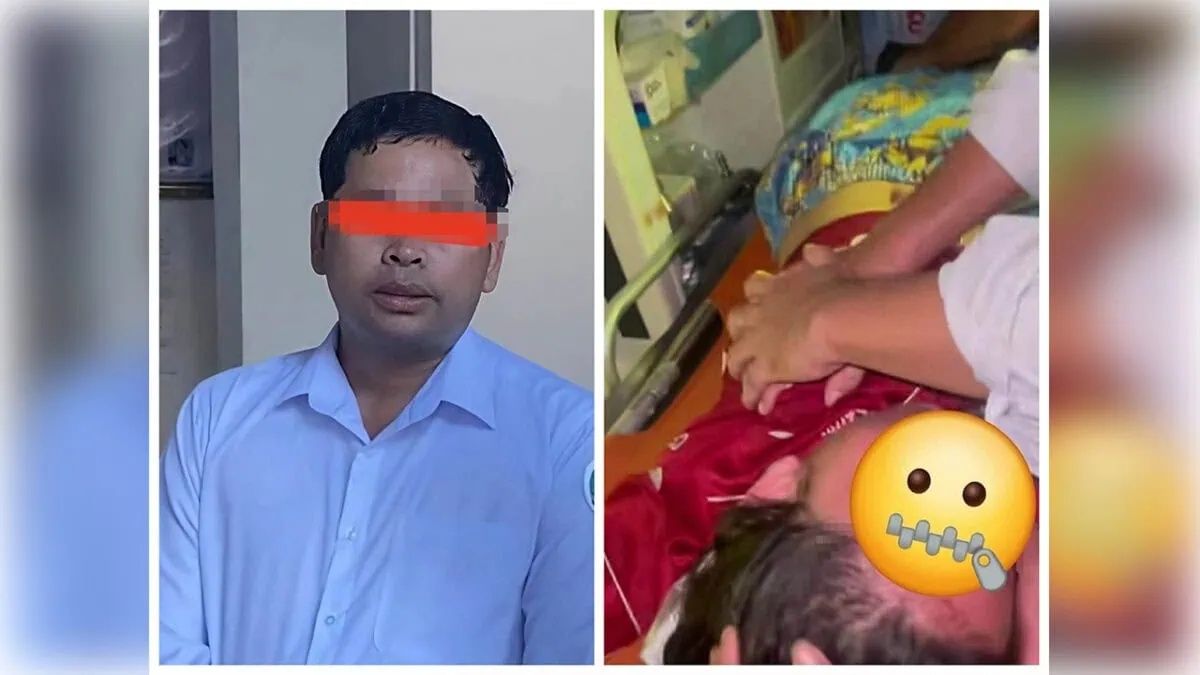
The administration of Kandal province in Cambodia has moved swiftly to address mounting public concern over a health centre director's handling of emergency care, removing Chhun Phally from his leadership position at Setbo Health Centre just one day after footage of his treatment of a teenage patient circulated widely on social media. Governor Kuoch Chamroeun formalised the decision through an immediate administrative order issued on Tuesday, August 4, reassigning Phally to a health official role under direct provincial administration rather than continuing in his previous leadership capacity.
The removal reflects the intensity of public reaction that built rapidly following the emergence of the video, which documented Phally's resuscitation efforts on a 17-year-old girl who had arrived at the facility experiencing seizures and significant respiratory distress. A family member had initially recorded the footage with the practical intention of relaying details about the patient's condition to other relatives, but the clip subsequently spread across social media platforms where it generated extensive commentary questioning both the medical appropriateness and the dignity considerations involved in the treatment approach. The swift administrative action signals official concern about reputational damage and the need to demonstrate responsiveness to public health sector anxieties.
What began as a documented medical emergency has evolved into a broader conversation about professional standards and patient protection within Cambodia's healthcare infrastructure. Online commentary raised two distinct categories of concern: some observers challenged whether the resuscitation procedures themselves aligned with established medical protocols and best practices for emergency response, whilst others contended that the manner of handling the patient—regardless of clinical intent—failed to respect her personal dignity and constituted a form of inappropriate treatment. The ambiguity between legitimate emergency intervention and potential misconduct created a potent combination for sustained public debate.
Phally himself responded to the controversy by issuing a public statement that emphasised his life-saving motivation whilst apologising for any misunderstanding the video may have generated. In his declaration, he stressed that his singular objective during the emergency had been to preserve the patient's life, and he explicitly denied any intention of sexual harassment or improper behaviour. The defensive posture of his statement reveals the seriousness with which allegations of inappropriate conduct, particularly involving a minor, are treated within the Cambodian context and the reputational stakes for healthcare professionals facing such accusations.
The Kandal provincial health department has established a formal investigation into the incident to determine whether Phally's actions adhered to professional medical standards and whether any form of misconduct occurred. Acting Provincial Health Director Kiem Piseth articulated the potential severity of findings, indicating that if investigation outcomes demonstrate either procedural violations or inappropriate behaviour, the consequences could extend far beyond administrative reassignment. His statement explicitly flagged the possibility of legal action rather than confining the matter to internal disciplinary mechanisms, suggesting that authorities are treating allegations of sexual harassment with the gravity they would receive in judicial proceedings.
The case illuminates persistent vulnerabilities within Southeast Asian health systems regarding the intersection of emergency medical protocols, patient privacy, and institutional accountability. Many countries in the region, including Malaysia, continue to grapple with balancing the demands of rapid emergency intervention against the imperative to protect patient dignity—a tension that becomes especially acute when adolescent patients are involved. The incident demonstrates how social media now functions as an immediate accountability mechanism, enabling rapid mobilisation of public opinion that can compel government action within hours rather than requiring lengthy formal complaint processes.
The controversy also raises substantive questions about training and oversight in emergency medical response across Cambodian healthcare facilities. If the investigation confirms that procedural standards were violated, the finding would suggest either inadequate training of personnel in proper resuscitation techniques or insufficient institutional protocols governing how emergency interventions should be conducted. For patients and families, the case underscores the reality that recording medical treatment—originally intended as informational—can become evidence subject to public scrutiny and criticism.
For regional healthcare systems, the incident carries cautionary implications about the need for explicit ethical frameworks that healthcare workers can apply even during high-pressure emergency situations. The absence of clear institutional guidance on balancing speed of intervention with dignity protection creates exactly the kind of ambiguous situations that generate public controversy and damage public trust. Malaysia's health system, already navigating questions about patient safety and provider accountability, might consider whether its own protocols adequately equip emergency responders to act decisively whilst maintaining transparent, respectful treatment of patients.
The investigation's outcome remains pending, and authorities have yet to announce whether disciplinary or legal proceedings against Phally will proceed beyond his administrative reassignment. This uncertainty extends the controversy and keeps scrutiny focused on both the specific incident and the broader question of professional standards enforcement within Cambodia's provincial health apparatus. The case will likely influence how other health administrators approach similar situations, potentially creating a chilling effect on emergency interventions if workers become excessively cautious about public perception during life-saving procedures.

