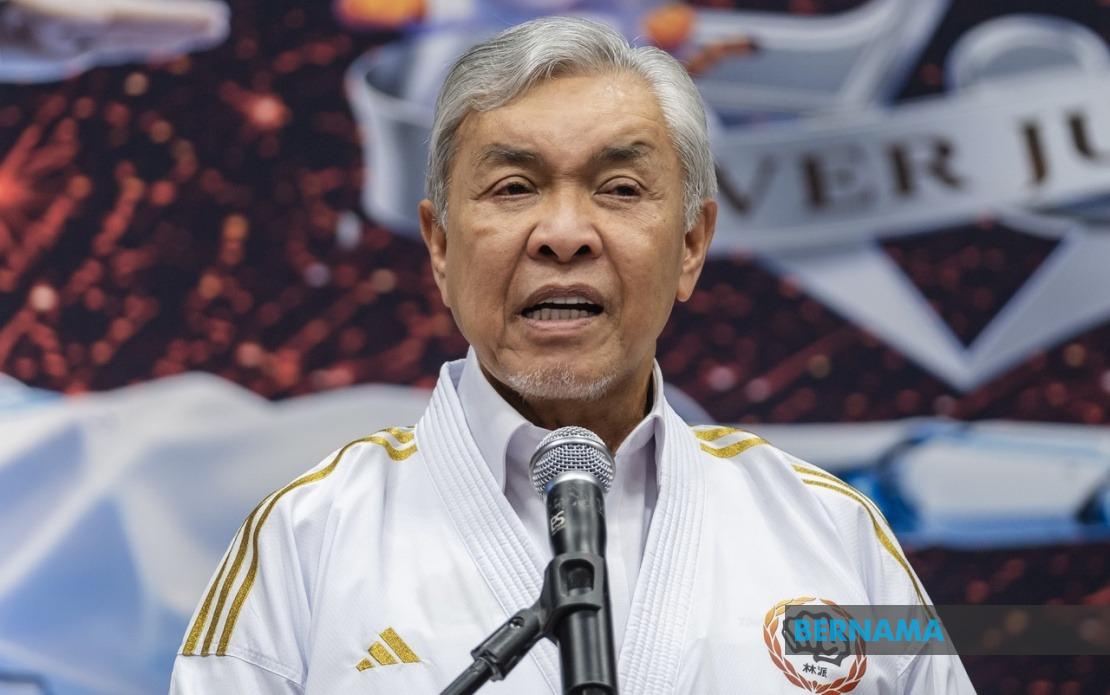
Malaysia is moving closer to officially recognizing karate within its premier schools sports competition, with Deputy Prime Minister Datuk Seri Dr Ahmad Zahid Hamidi confirming that Cabinet will consider the proposal in the coming week. Speaking at the International Open Karate Championship 2026 held at Titiwangsa Stadium in Kuala Lumpur, Ahmad Zahid—who heads the Cabinet Committee on Sports Development—disclosed that the government plans to engage Education Minister Fadhlina Sidek on incorporating karate into the Malaysian Schools Sports Council (MSSM) championships. The announcement represents a significant moment for the karate community, which has been actively campaigning for formal recognition within Malaysia's structured school sports ecosystem.
The timing of the proposal coincides with a major international showcase for the sport. The International Open Karate Championship 2026, now in its 25th year, has drawn an impressive contingent of over 1,850 competitors from 17 nations, underscoring karate's growing momentum in the region and globally. This substantial turnout demonstrates that the sport commands genuine interest and competitive depth across multiple countries, not merely as a niche pursuit but as a serious athletic discipline with established international standards and participation levels.
Putrajaya Karate Association president Datuk P. Thiagu, who organized the championship, has been instrumental in advocating for MSSM inclusion. Thiagu articulated a central argument in karate's favor: that formal recognition within the schools competition structure would accelerate talent identification and development at the grassroots level. By integrating karate into the MSSM calendar, Malaysian schools would have a unified framework for training, competition, and athlete progression, mirroring the structured pathways already established for sports like badminton, taekwondo, and athletics.
The rationale for inclusion rests partly on karate's existing popularity within Malaysian schools. While official MSSM recognition has not yet been granted, the sport has already attracted substantial student participation through independent school clubs and associations. Thiagu's argument that MSSM inclusion would "enable us to produce more talented athletes" reflects a broader principle in sports development: that institutional backing and integrated competition structures are essential conduits for identifying and nurturing elite performers. Without formal channels, talented young karateka may go unrecognized or migrate to other sports offering clearer competitive pathways.
From a Southeast Asian perspective, karate's potential inclusion in Malaysian schools sports carries regional implications. The discipline has been gaining traction across the region, with competition standards rising and athlete talent pools deepening. Countries that formalize karate development through school systems tend to see faster advancement in international rankings and medal tallies. Malaysia, which has positioned itself as a sporting nation of ambition, would benefit from establishing systematic development routes that capture young talent early and funnel them through structured competition.
The Cabinet's consideration of this proposal reflects evolving attitudes toward martial arts within mainstream sports governance. Historically, martial arts occupied a separate sphere from traditional Olympic and Commonwealth sports within school competitions. However, the international legitimacy of karate—including its inclusion in the Tokyo 2020 Olympics—has shifted perceptions. Malaysian policymakers appear cognizant that karate merits the same institutional support extended to more conventionally established sports.
Incorporating karate into MSSM would require addressing several practical considerations. The championship organizers and education officials would need to establish competition formats suited to age groups and skill levels within schools, recruit and certify coaches and officials, and secure suitable venues across the country. However, these logistical challenges are surmountable, and other martial arts like taekwondo have already demonstrated successful integration into the school sports system, providing a template for implementation.
The broader context of this proposal involves the Malaysian government's commitment to sports development as outlined in national strategic plans. By diversifying the sports offered within schools competitions, the country increases opportunities for students with differing athletic aptitudes and interests. This inclusivity can boost overall sports participation rates and cultivate a healthier, more active generation. For karate specifically, it represents validation that the discipline has matured sufficiently to warrant institutional backing.
Thiagu's hope that implementation could occur "in the near future" suggests that karate stakeholders are preparing for possible approval, with preliminary planning likely already underway. If Cabinet endorses the proposal and Education Minister Fadhlina Sidek provides ministerial support, the bureaucratic machinery could move relatively swiftly toward integration into the 2027 or 2028 MSSM calendar. The presence of Ahmad Zahid's political backing accelerates the likelihood of favorable consideration.
For Malaysian karate athletes, particularly at the secondary school level, formal MSSM recognition would open pathways to visibility, competitive opportunity, and potential scholarships or athlete development programs. Young competitors would gain access to standardized competitions and the prestige associated with representing their schools at state and national levels. This institutional framework often proves decisive in whether promising young athletes remain committed to a discipline or drift toward other pursuits.
The proposal also underscores the importance of domestic sports constituencies in shaping national sporting policy. The Putrajaya Karate Association's sustained advocacy, combined with the sport's demonstrable popularity and the championship's impressive international profile, has created conditions favorable for policy change. This illustrates how strategic engagement with government officials and effective organization by sports bodies can influence resource allocation and institutional recognition.
As Malaysia continues refining its sports development infrastructure, the inclusion of karate in MSSM would represent a thoughtful expansion of opportunities for school athletes. The proposal's advancement through Cabinet reflects recognition that the sport has matured and commands sufficient participation to justify formal integration. Pending Cabinet approval and ministerial support, Malaysian schools may soon welcome karate onto their championship rosters, creating fresh pathways for young talent while strengthening the nation's overall sporting ecosystem.

