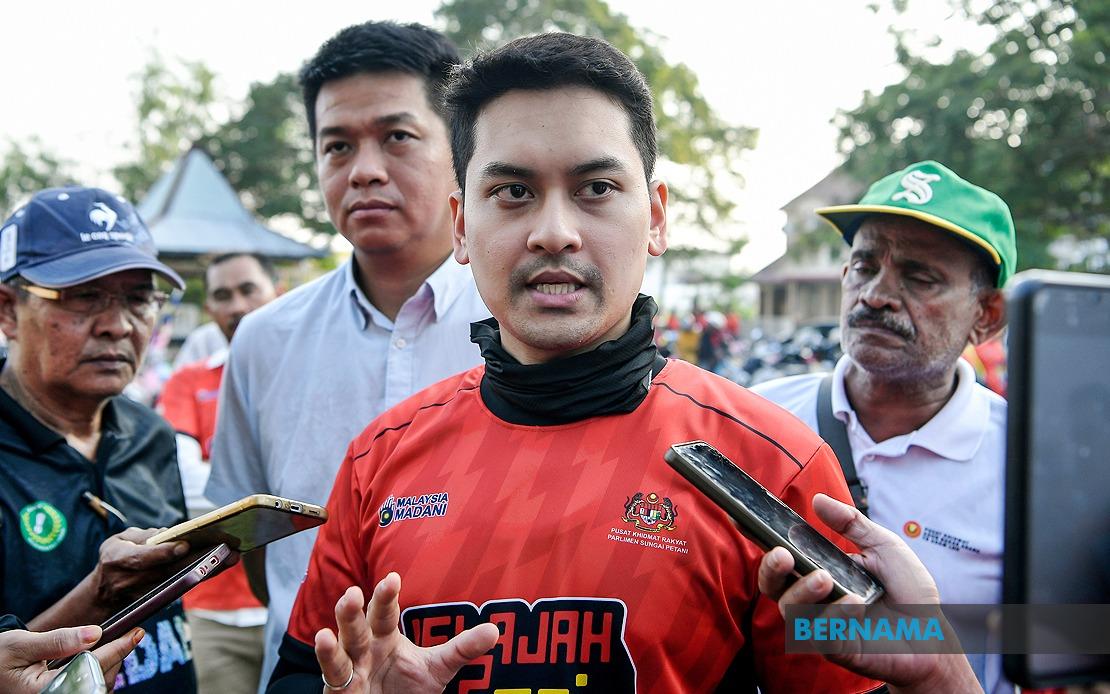
The Ministry of Youth and Sports has embarked on an ambitious nationwide consultation drive designed to place youth voices at the centre of Malaysia's 2027 budget planning. The MADANI Youth Budget Tour, which kicked off in the northern zone spanning Kedah, Penang, and Perlis, will move systematically through six regional divisions over the coming month, culminating in a comprehensive feedback package for Prime Minister Datuk Seri Anwar Ibrahim before the budget is tabled in October. This initiative represents a deliberate pivot towards direct youth engagement in policy formation, recognising that young Malaysians possess distinct economic, social, and developmental priorities that warrant formal government consultation.
Youth and Sports Minister Dr Mohammed Taufiq Johari launched the tour at the Kedah Youth and Sports Complex and subsequently addressed participants at the Sahabat MADANI Merdeka Eve event held at Universiti Teknologi MARA (UiTM) Penang. The minister characterised the tour as a structured platform enabling young people to articulate their concerns and aspirations directly to government representatives, rather than having budget priorities determined by traditional top-down mechanisms. By dividing the consultation process into six geographical zones, the ministry signals its commitment to capturing regional variations in youth concerns—a particularly important consideration for a nation as geographically and demographically diverse as Malaysia, where the needs of young urbanites in Kuala Lumpur may diverge substantially from those in smaller state capitals or rural areas.
The significance of this approach extends beyond mere symbolic consultation. Dr Taufiq stressed that meaningful youth involvement remains essential for ensuring that government policy and budgetary allocations genuinely reflect the priorities and needs of a generation that will inherit the consequences of today's spending decisions. Town hall sessions conducted as part of the tour have revealed that contemporary Malaysian youth are neither passive observers nor deferential audiences; they actively seek to voice their perspectives and challenge existing assumptions about what government should prioritise. This generational assertiveness reflects broader global trends among young people demanding greater agency in shaping their futures, particularly in matters of economic opportunity, environmental sustainability, and social inclusion.
Dr Taufiq also positioned youth as crucial agents for fostering national unity, characterising their responsibility as extending beyond merely preserving independence to actively bridging divides across religious and ethnic lines. This framing reflects concerns within government circles about communal tensions and the potential for divisive rhetoric to fracture social cohesion. By encouraging young people to serve as ambassadors of mutual respect and intercommunal understanding, the ministry articulates a vision wherein budget priorities might incorporate investments in youth-led peace-building initiatives, interfaith dialogue programmes, and community service activities that reinforce bonds across Malaysia's diverse population.
The tour coincides with the expansion of the Sahabat MADANI initiative, a volunteer-driven programme now comprising 11,060 registered volunteers across the nation. Prime Minister Anwar Ibrahim, who officialised the national-level launch at the UiTM Penang event, emphasised the programme's role as a bridge connecting government institutions with communities at the grassroots level. By mobilising volunteers to promote mutual respect and facilitate community engagement, Sahabat MADANI creates an infrastructure through which government messaging can reach local populations while simultaneously channelling community concerns upward to policymakers. For budget 2027, this volunteer network potentially provides valuable intelligence about community needs and priorities that might otherwise remain invisible to federal authorities.
The timing of the MADANI Youth Budget Tour merits careful consideration. Launching consultations a full month before the budget's tabling allows government adequate time to synthesise feedback, evaluate competing priorities, and make meaningful revisions to spending allocations based on youth input. Conversely, this timeline raises questions about how extensively youth preferences will actually influence budget outcomes, particularly where youth priorities conflict with established government commitments or fiscal constraints. The true test of the tour's effectiveness will be whether tangible budget provisions reflect consultation outcomes or whether the exercise functions primarily as a public relations instrument designed to enhance government legitimacy among young voters.
For Malaysian youth specifically, the tour's coverage of diverse regions offers an opportunity to articulate concerns that transcend generalised national narratives. Young people in Penang may prioritise different issues than those in Kedah or Perlis, yet all three states fall within the northern zone. The consultation structure acknowledges this regional heterogeneity while simultaneously attempting to identify common themes that should inform national-level policy. This geographical approach also reflects recognition that Malaysia's federal system requires coordination between state and federal authorities, and that youth priorities in each state must be understood within local political and economic contexts.
The involvement of Penang Chief Minister Chow Kon Yeow at the UiTM Penang event underscores the coordination between state and federal governments in facilitating youth engagement. State-level officials possess granular knowledge of local youth circumstances and can contribute valuable context to federal budget deliberations. Furthermore, state governments implement many programmes affecting youth directly—from skills training initiatives to employment support schemes—making their participation in the consultation process essential for ensuring coherence between federal budget priorities and state-level implementation capacity.
The broader implications of this tour extend to questions about institutional reform within Malaysian governance. Establishing formal mechanisms for youth consultation in budget-setting processes could establish precedent for more systematic intergenerational dialogue in policy formation generally. Currently, youth tend to influence government primarily through electoral cycles or episodic protests; institutionalising regular consultation channels might foster more constructive engagement and reduce perceptions among young people that government institutions are unresponsive to their concerns. However, success requires genuine openness to youth-driven policy innovations rather than cosmetic incorporation of token youth priorities into predetermined spending frameworks.
As the MADANI Youth Budget Tour progresses through the remaining five zones over the coming month, observers will monitor whether consultation sessions generate substantive policy discussions or remain largely ceremonial. The quality of youth participation—whether participants represent diverse socioeconomic backgrounds, education levels, and geographic locations, or concentrate among already-engaged youth activists—will determine the representativeness of feedback. Similarly, the government's demonstrated willingness to adopt budget provisions contrary to established preferences will signal whether this consultation represents genuine policymaking innovation or strategic performance designed to enhance institutional legitimacy among voters increasingly sceptical of traditional political processes.

