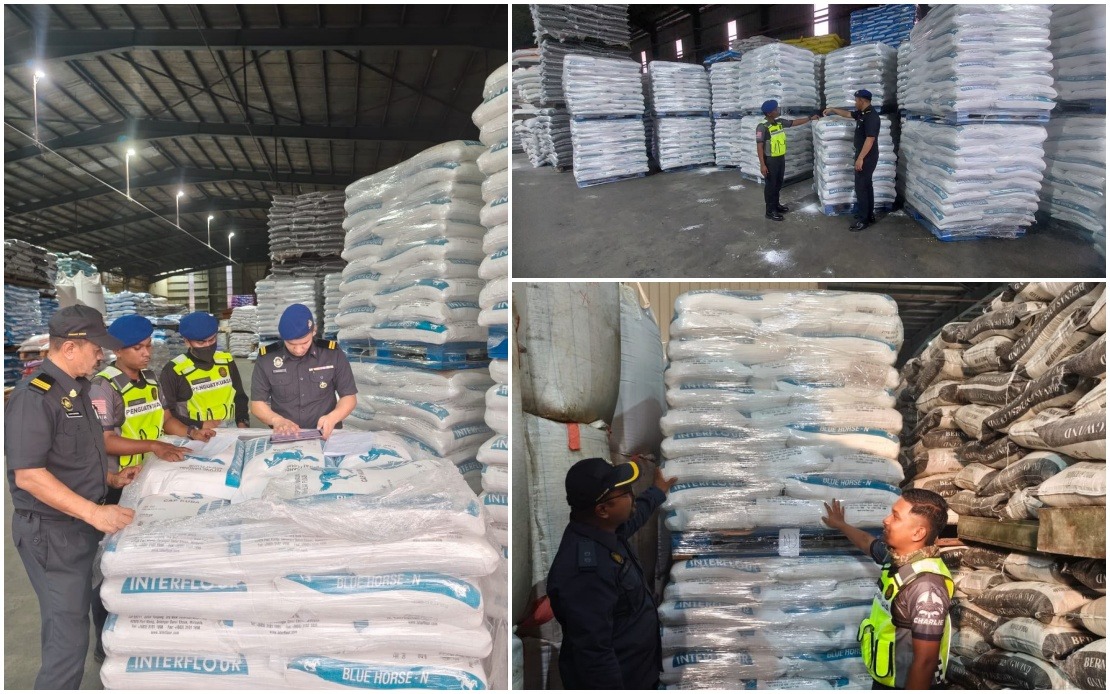
Authorities in Kedah have intensified enforcement efforts against unauthorized flour handling, conducting a raid on an animal feed processing facility in the Kuala Ketil Industrial Area that resulted in the seizure of more than 53 tonnes of wheat flour. The operation, carried out by four personnel from the Baling branch of the Ministry of Domestic Trade and Cost of Living (KPDN), descended on the premises on June 15 at approximately 4.30 pm, uncovering what officials described as a significant breach of supply control regulations.
The discovery of 53,325 kilogrammes of flour—valued at an estimated RM100,251—marked a substantial cache of subsidised commodity allegedly being processed into animal feed without authorization. Muhammad Nizam Jamaludin, the Kedah KPDN director, confirmed that inspection personnel found the stockpile during their routine enforcement activities, revealing a systematic operation that may have sidestepped regulatory oversight for an extended period.
At the heart of the alleged violation stands the matter of proper documentation and regulatory compliance. The factory manager, a 25-year-old Malaysian national identified during the raid, could not produce any valid permit or approval certificate from the Supply Controller—a critical requirement for storing flour in quantities exceeding nominal thresholds. This documentation failure constitutes the technical foundation of the investigation, transforming what might appear to be a straightforward commercial transaction into a potential case of regulatory evasion.
The invocation of Section 21 of the Control of Supplies Act 1961 (Act 122) signals the seriousness with which authorities are treating this matter. This legislation, passed more than six decades ago, remains the primary legal instrument governing the management and distribution of essential supplies throughout Malaysia. The specific provision under which the factory is being investigated typically addresses unauthorised handling, storage, and diversion of controlled goods—categories that carry significant penalties for violators.
For Malaysian consumers and businesses in the food supply chain, this enforcement action underscores the ongoing vulnerability of subsidised commodity systems to administrative leakage. Flour remains a price-controlled item in Malaysia, with government subsidies designed to keep staple foods affordable for ordinary households. When unaccounted-for quantities exit the formal distribution network, they effectively represent a loss of public resources and a distortion of market equilibrium that can ultimately affect pricing and availability across legitimate channels.
The animal feed sector's intersection with grain flour storage highlights a particular regulatory challenge facing Malaysian authorities. While flour destined for legitimate animal feed production serves a genuine industrial purpose, the framework creating opportunities for such purchases without proper oversight suggests systemic gaps in supply chain monitoring. The facility's location within an industrial zone may have previously offered a degree of anonymity that enabled operations to proceed without triggering immediate regulatory scrutiny.
Muhammad Nizam's statement regarding firm action against parties found misusing or diverting subsidised goods reflects a broader commitment across enforcement agencies to tighten controls over high-value commodities. This messaging serves dual purposes: it warns other operators that compliance shortcuts carry tangible consequences, while simultaneously reassuring the public that government is protecting the integrity of price-control schemes that millions depend upon daily.
The investigation process now underway will likely examine the supply chain leading backward to identify how 53 tonnes of flour were procured without triggering existing safeguards. Questions will centre on whether purchases occurred through legitimate channels with forged documentation, or whether the goods entered the factory through informal networks that bypass normal regulatory checkpoints. The answers will determine whether this represents an isolated breach or symptomatic of wider structural weaknesses in commodity tracking systems.
For businesses operating in food-related manufacturing across Southeast Asia, the case carries cautionary implications. Even operations in jurisdictions with less stringent regulatory frameworks than Malaysia must recognise that global supply chain scrutiny continues intensifying, particularly around commodities subject to government price controls or subsidies. The visibility of such enforcement actions—documented and publicised through official channels—creates deterrent effects extending beyond immediate jurisdictional boundaries.
The economic dimensions extend to considerations of fair competition within the animal feed manufacturing sector. Producers adhering to regulatory requirements and paying market rates for their flour inputs face competitive disadvantage against operators skirting rules and accessing subsidised supplies at artificially depressed costs. From this perspective, enforcement actions level playing fields and protect legitimate businesses from being undercut by operations relying on regulatory arbitrage.
As investigations continue, industry watchers will monitor how comprehensively authorities examine the supply chain and whether additional facilities face scrutiny. Such interconnected operations often involve networks of suppliers, processors, and distributors, suggesting that this single raid may represent only the opening stage of a broader compliance initiative. The precedent established through this case will likely influence regulatory behaviour across similar operations in northern Malaysian states.
Ultimately, the seizure demonstrates that despite the operational complexities of monitoring subsidised commodity flows across industrial zones and manufacturing facilities, enforcement mechanisms retain sufficient capabilities to detect and respond to material breaches. Whether such interventions prove sufficient to deter future violations, or merely represent episodic enforcement insufficient to secure systemic compliance, remains a question for ongoing assessment as authorities continue their investigation and the legal process unfolds.