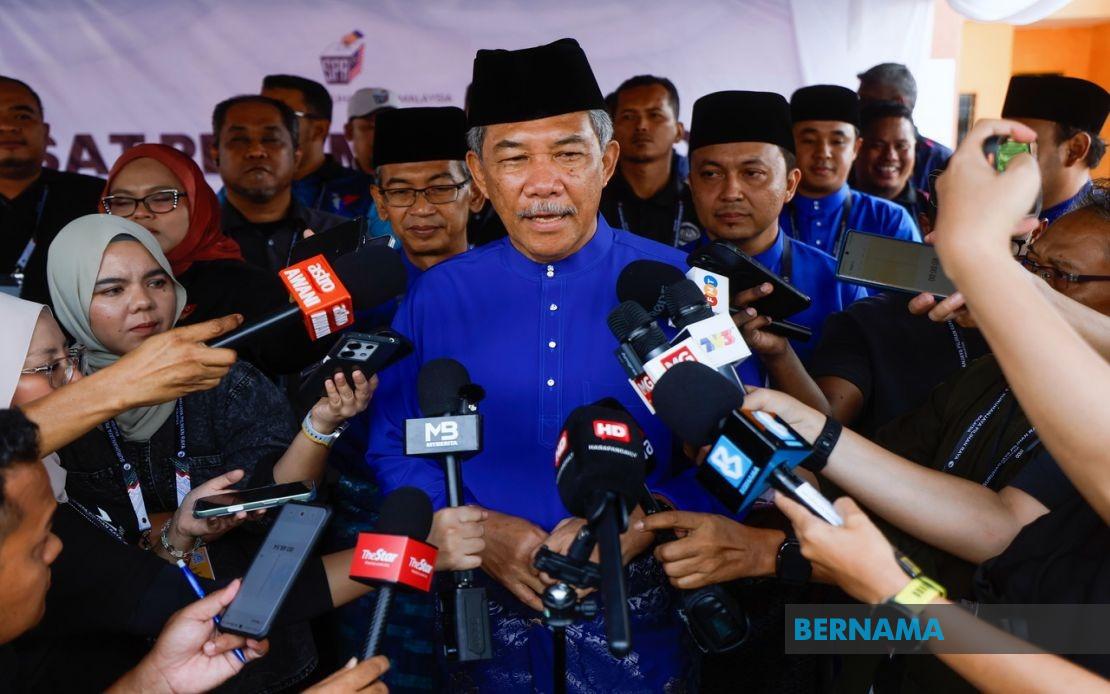
Barisan Nasional's deputy chairman Datuk Seri Mohamad Hasan has issued a stark warning to the coalition's election machinery: traditional customs and cultural institutions must remain off-limits during the Negeri Sembilan campaign trail. Speaking after the nomination process at Dewan Seri Rembau on July 18, the UMNO deputy president emphasised that adat issues should not be weaponised as campaign fodder, stressing instead that preserving the state's social cohesion should take precedence over electoral advantage.
Mohamad's intervention reflects growing concerns about the politicisation of sensitive cultural and religious matters in Malaysian state and federal elections. The adat system in Negeri Sembilan, governed by the Undang principles and hereditary leadership structures, forms the backbone of the state's constitutional identity. By drawing a clear line between electoral strategy and customary governance, the BN leadership appears intent on preventing the kind of divisive identity politics that has threatened social fabric in other Malaysian states during campaign periods.
The timing of this directive is significant given the compressed campaign calendar. With the state legislative assembly having been dissolved on June 5, the Election Commission set early voting for July 28 and general polling for August 1—a tight two-week window for campaigning across all 36 state seats. In such a condensed timeline, there is heightened temptation for political parties to lean on emotive and divisive messaging to capture voter attention. Mohamad's explicit guidance seeks to preempt such tactics before they take root.
Mohamad characterised the distinction as fundamental to democratic practice. Adat institutions, he argued, deserve institutional respect and must operate independently from partisan political calculations. "We should not drag adat issues into politics, especially during campaigning, as this will only complicate the situation in the state," he said, signalling that any attempt to instrumentalise customary governance structures for electoral gain risks undermining both the integrity of those institutions and the broader democratic process itself.
This position carries particular weight in Negeri Sembilan, where the Undang system remains deeply embedded in state governance and cultural identity. Unlike peninsular states where sultans operate within a more ceremonial constitutional framework, Negeri Sembilan's Undangs exercise substantive authority over adat matters and hold considerable symbolic importance within their respective districts. Any attempt to politicise adat disputes or exploit divisions within the customary leadership structure could reverberate across multiple communities and fracture consensus on fundamental governance questions.
Parallel to the adat directive, Mohamad clarified the electoral understanding between BN and Perikatan Nasional (PN). Rather than formalising a grand coalition arrangement similar to what transpired in Johor, the two coalitions will maintain a practical working relationship focused on constituency-level cooperation. This arrangement allows BN and PN to maximise combined voter support in constituencies where one coalition is not fielding candidates, theoretically enabling both to secure victories across the state's 36 seats without direct competition in selected battlegrounds.
This collaborative framework reveals strategic pragmatism on both sides. BN, despite its recent federal losses and internal rifts, retains significant organisational infrastructure in Negeri Sembilan and maintains traditional support bases, particularly among Malay-Muslim communities and civil service workers. PN, meanwhile, has gained traction in certain rural constituencies and among voters dissatisfied with BN's governance record. By avoiding direct confrontation in carefully chosen constituencies, both coalitions can direct resources toward competitive seats where victory margins remain genuinely contested.
However, such arrangements carry inherent tensions and risks. Voters accustomed to multi-sided contests may feel disenfranchised if their preferred choices are artificially constrained by backroom agreements. Additionally, the maintenance of electoral understandings without formal coalition structures creates ambiguity about post-election governance arrangements, potentially complicating state government formation if results prove fragmented or if either coalition demands greater influence than election outcomes warrant.
For Malaysian political observers, Mohamad's intervention on adat matters signals an emerging recognition that certain institutional and cultural boundaries deserve protection from electoral competition. This principle, if consistently applied across election cycles, could help insulate traditional governance structures from the corrosive effects of partisan politicking. Yet implementation remains uncertain; campaign teams operating at district and grassroots levels, where direct voter contact occurs, may not always heed directives from headquarters, particularly if they perceive electoral advantage in exploiting cultural sensitivities.
The Negeri Sembilan election thus becomes a test case for whether Malaysian political parties can self-regulate their use of cultural and religious issues as campaign weapons. BN's explicit guidance represents a threshold statement of principle, but translating principle into practice across dozens of constituencies over a compressed two-week campaign presents considerable challenges. How effectively BN's machinery respects these boundaries, and whether PN similarly constrains its messaging, will provide important indicators of political maturity and institutional respect within Malaysian democracy.
Beyond Negeri Sembilan, these developments carry implications for federal politics. If BN successfully demonstrates that coalitions can compete electorally while respecting institutional boundaries and avoiding cultural politicisation, such models could inform future state and federal campaigns. Conversely, any breach of these guidelines by either coalition could reignite arguments about the inevitability of cultural contestation in Malaysian elections, with consequences extending well beyond Negeri Sembilan's borders. The state election thus functions as both a local political contest and a testing ground for broader principles shaping Malaysian democratic practice.

