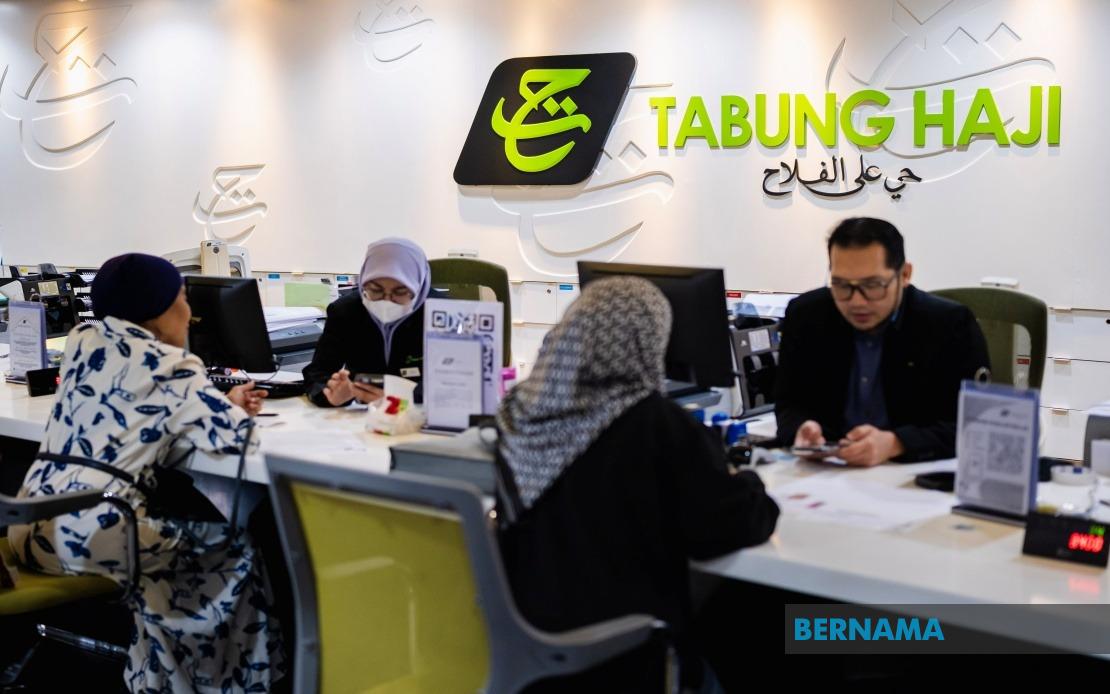
The recovery of Tabung Haji (TH) faces one critical test: whether the institution can genuinely free itself from political entanglement that has compromised its governance and eroded public trust. With more than three-quarters of the Royal Commission of Inquiry's recommendations now implemented, experts across Malaysia's academic and policy circles agree that the hajj savings body's future hinges less on structural reforms than on a fundamental shift in how the government relates to the organisation. The consensus is unmistakable—politics has damaged TH, and only sustained political distance can restore what was lost.
The damage inflicted by political interference has reverberated far beyond TH's balance sheet. Analysts point out that the institution's crisis represents a broader governance failure in which partisan considerations overwhelmed professional judgment and institutional independence. Professor Azmi Hassan, a fellow at the National Council of Professors and senior researcher with the Nusantara Academy for Strategic Research, articulates what many observers have concluded: separation of TH from political interests is not merely advisable but essential. "There is no denying the political interference in TH," he told Bernama. "At present, it is difficult to separate the institution from political interests, with almost every decision being linked to politics." This observation cuts to the heart of the crisis—not simply that mistakes were made, but that the decision-making environment itself became corrupted by considerations foreign to prudent financial stewardship.
What distinguishes TH's governance failures from isolated corporate missteps is the systematic nature of political influence over appointments and strategy. The pattern suggests that successive administrations treated TH as an extension of political machinery rather than as a fiduciary institution serving Muslim Malaysians' savings objectives. To reverse this trajectory, Professor Hassan argues that the government must demonstrate tangible commitment to institutional independence. The remedy he prescribes is straightforward yet challenging: appoint professionals unconnected to political parties to leadership positions, and ensure that major decisions reflect objective analysis rather than political calculation. Such a transition would mark a fundamental recalibration of how the state relates to TH, moving from patronage model to genuine stewardship.
The template for successful reform exists within Malaysia's own institutional landscape. Dr Mohd Amim Othman, a senior lecturer at Universiti Putra Malaysia's Faculty of Human Ecology, directs attention to the Employees Provident Fund and Permodalan Nasional Berhad as examples of professionally managed institutions that have maintained public confidence precisely because they operate at arm's length from political interference. The contrast is instructive: Malaysia possesses both the qualified personnel and the institutional knowledge required to run TH with the same professional rigour. The obstacle, Dr Amim suggests, is not capability but political will. "The problem is that politicians are reluctant to give up their control over the institution," he observed. This candid assessment captures the core challenge—implementing the RCI recommendations requires not just technical adjustments to board powers and ministerial authority, but a genuine political decision to cede control.
Investment decisions at TH provide the starkest illustration of how political interference translates into financial catastrophe. The Al-Rawda project in Saudi Arabia, which became TH's largest single loss among its troubled investments, proceeded despite incomplete due diligence—a decision that would likely never have advanced through objective professional review. Dr Saizal Pinjaman, director of Universiti Malaysia Sabah's Centre for Economic and Policy Development, emphasises that such failures occur precisely when political pressure overrides the careful assessment of risk. When politicians prioritise particular investments for reasons unrelated to financial prudence, professional board members face pressure to accommodate those preferences or risk political consequences. Restoring independent decision-making authority to TH's management team is therefore not an abstract governance principle but a practical necessity to prevent future capital destruction.
Yet independence without accountability would create a different danger. The RCI recommendations comprehensively address this balance, proposing both enhanced management autonomy and strengthened regulatory oversight. This dual requirement—freedom from political interference combined with robust external scrutiny—reflects sophisticated understanding that institutional independence must remain anchored to public accountability. The regulatory framework must ensure that TH's management cannot hide incompetence or misconduct behind claims of operational independence. What distinguishes legitimate independence from unaccountable autonomy is the presence of transparent, professional oversight mechanisms that impose consequences for poor performance while protecting decision-making from political manipulation.
Rebuilding public confidence extends beyond governance architecture to encompass how TH positions itself within Malaysia's broader financial and social landscape. Dr Amim notes that declining contribution rates from existing members following the RCI revelations threaten to undermine investment capacity precisely when TH should be expanding its appeal. Younger Malaysians, in particular, have grown sceptical of TH following the crisis, viewing it as a tainted institution vulnerable to political mismanagement. Reversing this perception requires TH to demonstrate not merely that past problems have been fixed, but that the institution genuinely serves members' interests rather than political agendas. This means modernising product offerings, improving transparency in investment decisions, and consistently delivering returns that reward members' faith in the institution.
The symbolic weight of TH within Malaysia's Muslim community adds another dimension to the recovery challenge. For over half a century, TH represented institutional reliability and cultural pride—the embodiment of Muslims' collective capacity to manage savings and fulfil religious obligations through modern financial mechanisms. The crisis severely damaged this symbolic capital by revealing that political interference had compromised the very professionalism that justified public trust. Dr Noor Nirwandy Mat Noordin, a security and political analyst at Universiti Teknologi MARA, argues that TH's recovery must therefore address not only financial and operational shortcomings but also restore the institution's standing as a trustworthy representative of Muslim interests. This restoration requires both substantive reform and sustained transparent communication about how decisions are being made and why former failures will not recur.
International and comparative best practices offer additional guidance for TH's forward trajectory. Dr Noor Nirwandy suggests that TH could benefit from engaging external expertise in investment strategy, economic analysis, and competitive positioning—not to replace local talent but to complement it and provide independent validation of major decisions. This approach acknowledges that professional excellence requires access to diverse perspectives and outside expertise, while also ensuring that final accountability remains with TH's locally accountable board. Such engagement with global standards of institutional governance would simultaneously strengthen decision-making and reinforce the institution's independence from political considerations.
The implementation timeline for remaining RCI recommendations becomes critical in this context. While more than seventy-five percent of recommendations have already been implemented, the outstanding items likely include the most structurally significant changes regarding ministerial powers and board authority. Completing this process quickly sends important signals to depositors and the broader Muslim community that the government is genuinely committed to reform. Delays, by contrast, invite cynicism about whether political actors truly intend to relinquish influence or merely to create an appearance of reform while preserving informal control. The pace of remaining implementation thus carries as much significance as the substance of the changes themselves.
Looking forward, TH's recovery trajectory depends fundamentally on whether political leaders across the spectrum demonstrate sustained commitment to institutional independence across successive administrations. The greatest risk is that once immediate crisis pressures fade, political actors revert to treating TH as a prize to be captured and exploited. Building durable independence requires not merely legislative and regulatory changes, but a deepening of political culture in which interference with professional financial institutions becomes politically unacceptable. This represents a longer-term challenge than implementing the RCI's specific recommendations, but it is ultimately the measure against which TH's true recovery should be assessed.

