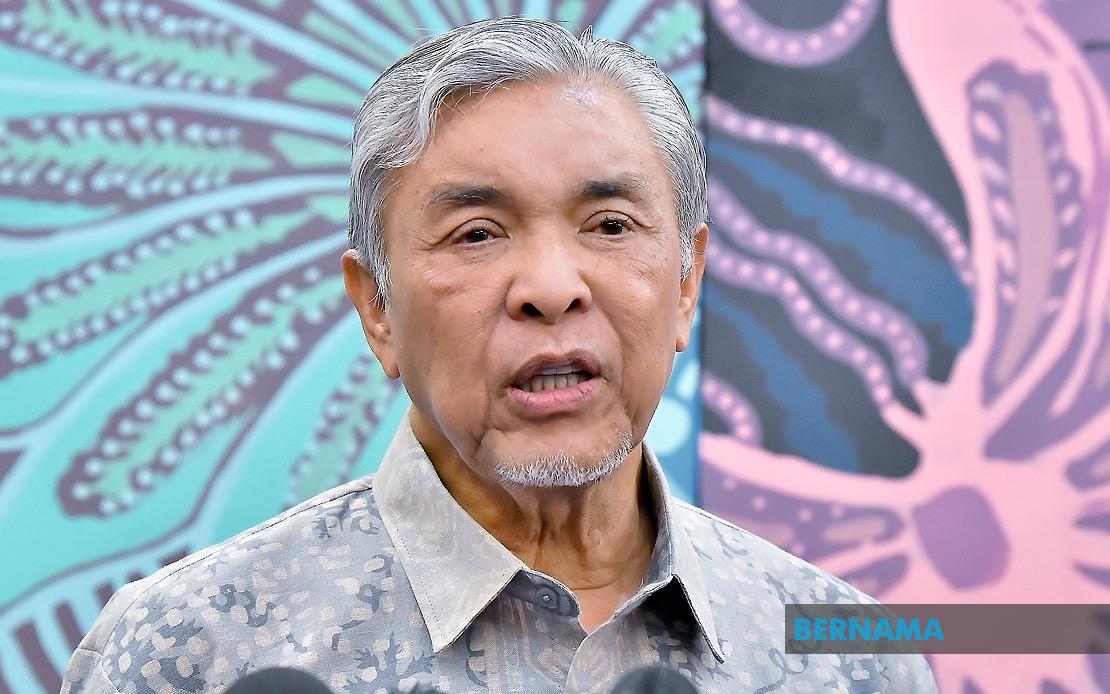
Deputy Prime Minister Datuk Seri Dr Ahmad Zahid Hamidi has moved to dispel growing public concern about the South East Johor Development Authority's expansion plans, emphasising that the initiative focuses on orchestrating coordinated development across the region rather than acquiring land from affected communities. Speaking at the KEJORA 2025 Excellent Service Awards and Appreciation Ceremony in Kota Tinggi on Tuesday, Ahmad Zahid, who also oversees the Rural and Regional Development Ministry, acknowledged that clarification was crucial to counter misconceptions about KEJORA's intentions in the proposed expansion areas.
The Deputy Prime Minister pointed to KEJORA's established track record as the primary justification for the expansion proposal. The authority has achieved a 98.3 per cent success rate across its implemented projects, a performance metric that Ahmad Zahid argued demonstrates the agency's capacity to manage larger territorial responsibilities. This success record, he suggested, has positioned KEJORA as a reliable instrument for accelerating development initiatives across south-eastern Johor, particularly in jurisdictions like Pengerang that are experiencing transformative economic growth driven by large-scale industrial projects and tourism infrastructure.
Supporting the expansion proposal is a public feedback study commissioned by KEJORA itself, which found that 96 per cent of surveyed respondents backed the initiative. This substantial endorsement, according to Ahmad Zahid, reflects community recognition of the authority's developmental contributions and confidence in its administrative capabilities. The high approval rating suggests that local stakeholders view KEJORA's involvement as beneficial to their districts' growth prospects, despite any initial apprehensions about what expanded authority might entail.
Nevertheless, Ahmad Zahid was careful to acknowledge that final implementation authority rests with the constitutional guardians of Johor. The expansion requires the explicit consent of His Majesty Sultan Ibrahim, the King of Malaysia, and the Regent of Johor, Tunku Mahkota Ismail. This constitutional safeguard reflects the complex interplay between federal development agencies and state-level authority that characterises Malaysia's federalist structure, ensuring that any expansion of KEJORA's mandate respects Johor's constitutional prerogatives.
The financial commitment underpinning KEJORA's operations has been substantial. The Rural and Regional Development Ministry has allocated approximately RM138 million to the authority for regional development initiatives. Within this budgetary framework, KEJORA has successfully implemented 107 distinct programmes, with an additional 350 smaller projects planned under the current allocation. This pipeline of projects demonstrates the scope and scale of KEJORA's operational engagement across the region.
Minister in the Prime Minister's Department (Law and Institutional Reform) Datuk Seri Azalina Othman Said, who represents Pengerang in Parliament, was present at the ceremony and has separately advocated for administrative restructuring of the district. Azalina has proposed upgrading Pengerang to full district status, a reclassification that would reflect its accelerating development trajectory and administrative complexity. Ahmad Zahid publicly endorsed this proposal, recognising that Pengerang's rapid expansion through mega-industrial projects and tourism development necessitates enhanced governance structures.
Azalina has also championed the construction of a new hospital facility in Pengerang, arguing that the district's growing population and economic dynamism require corresponding investments in healthcare infrastructure. The absence of adequate medical facilities could constrain further development and create quality-of-life challenges for residents and workers in the region. Ahmad Zahid's support for this health infrastructure initiative signals government commitment to ensuring that development expansion is accompanied by proportionate investments in essential services.
The KEJORA expansion proposal must be contextualised within broader Southeast Asian economic dynamics. The region has become increasingly attractive for foreign direct investment, particularly in petrochemicals, refining, and port operations. As these sectors expand, coordinated development planning becomes essential to prevent uncontrolled sprawl, infrastructure congestion, and environmental degradation. KEJORA's expansion represents an attempt to maintain strategic oversight of this development process through a single administrative entity rather than fragmenting responsibility across multiple jurisdictions.
For Malaysian policymakers, the expansion reflects confidence in institutional capacity to manage growth. Rather than creating new agencies, the government is leveraging KEJORA's existing expertise and networks to assume broader responsibility. This approach carries both advantages and risks—it builds on proven competence but potentially concentrates power, raising questions about accountability and responsiveness to local preferences outside formal consultation mechanisms.
The public support figure of 96 per cent deserves scrutiny in the Malaysian context. While reflecting positive sentiment, such consensus figures warrant questions about survey methodology and sampling. Whether surveyed communities fully understood the implications of KEJORA expansion, or whether responses reflect general satisfaction with development rather than specific endorsement of administrative restructuring, remains unclear from publicly available information.
For businesses operating in or considering investment in south-eastern Johor, KEJORA's expansion could simplify the regulatory environment by consolidating development approvals within one authority. However, entrepreneurs will likely seek clarity on whether expanded jurisdiction brings streamlined processes or bureaucratic layering. The distinction between coordinating development and acquiring administrative territory remains subtle but consequential for private sector operations.
Moving forward, Ahmad Zahid's emphasis on coordination rather than acquisition should be substantiated through specific policy documentation. Concerned residents and stakeholders will presumably require transparent frameworks explaining exactly how expanded KEJORA authority will affect land rights, development approvals, and local governance. The Deputy Prime Minister's assurances must be reinforced through legislative clarity and institutional accountability mechanisms that protect community interests while enabling the coordinated development that KEJORA's track record suggests it can deliver effectively.

