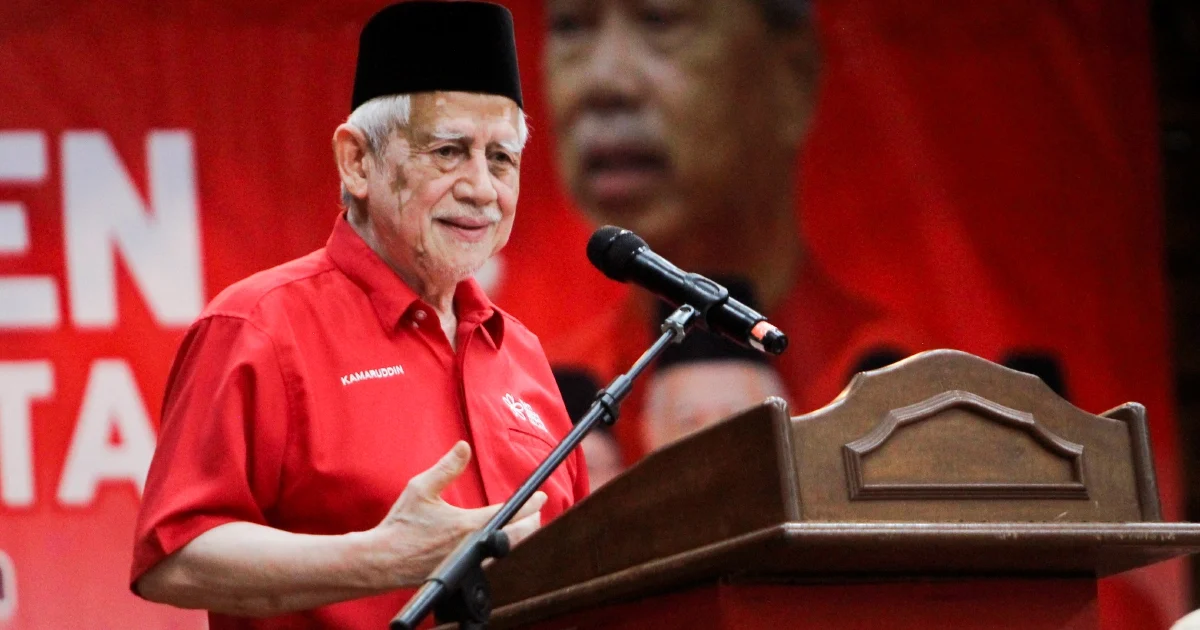
Kelantan's Bersatu faction has brushed aside Perikatan Nasional's removal of two senior figures from its leadership structure, signalling that the move carries limited political consequence for the state party machinery. The decision to exclude Datuk Seri Mohamed Azmin Ali and Datuk Dr Mohd Radzi Md Jidin came after an evening deliberation by the coalition's top officials, marking a significant reshuffle in the opposition alliance's command hierarchy.
The apparent equanimity displayed by Kelantan Bersatu towards this leadership shake-up reflects deeper realities about factional dynamics within Malaysia's complex political landscape. Rather than triggering internal upheaval or forcing awkward positioning, the move appears to have been anticipated by party operatives in the eastern state, who view such restructuring as part of ordinary coalition management rather than a crisis requiring defensive posturing.
Both Azmin Ali and Radzi hold substantial political profiles in their own right, having served in various ministerial and organizational capacities across different administrations. Their exclusion from the formal leadership line-up nonetheless suggests that Perikatan Nasional sought to recalibrate its public-facing architecture, potentially to address perceived weaknesses in messaging, internal cohesion, or electoral strategy heading into forthcoming electoral cycles or policy negotiations.
The timing of this removal, announced during evening proceedings, implies a deliberate attempt by coalition leadership to control the narrative and manage public perception around what could otherwise have been portrayed as a contentious internal dispute. By moving decisively and relatively quietly, Perikatan Nasional's steering committee likely aimed to minimize speculation about motivations while demonstrating firm governance capacity to both coalition partners and external observers.
Kelantan Bersatu's muted response carries significance for understanding the provincial layer of Malaysia's political architecture. The state party apparatus operates within constraints shaped by federal-level coalition politics, yet maintains sufficient autonomy to signal its own assessment of developments without immediately endorsing or opposing central directives. This measured approach suggests that Kelantan's contingent either anticipated this restructuring through prior consultations, or views it as insufficiently threatening to local power arrangements to warrant public commentary.
The broader coalition dynamics at play deserve careful consideration for Malaysian political observers. Perikatan Nasional assembled its initial configuration around specific figures and platforms, yet like any coalition navigating multiple elections, policy debates, and internal personality clashes, it must periodically adjust its organizational structure. These adjustments become particularly necessary when senior figures' liabilities or changed circumstances might otherwise handicap collective electoral prospects or policy implementation capacity.
Within Kelantan specifically, Bersatu has sought to establish itself as a consequential political force competing alongside PAS for influence over the state's governance and direction. The party's steady demeanour regarding Azmin and Radzi's removal from federal leadership suggests confidence that such changes at the national level need not disrupt its carefully cultivated state-level positioning. This confidence may stem from a sense that Kelantan's particular political ecology operates somewhat independently from fluctuations in federal coalition architecture.
For the national coalition, the removal carries implications for how Perikatan Nasional presents itself to voters and potential coalition partners. Leadership line-ups function as powerful signals about which figures the organization prioritizes, trusts with public representation, and positions for future responsibility. By restructuring its publicly visible leadership tier, Perikatan Nasional sends messages about organizational priorities that extend well beyond mere administrative convenience, potentially reshaping perceptions about the coalition's direction and values among both supporters and skeptical observers.
The incident also illuminates how Malaysian political coalitions operate across federal, state, and organizational levels simultaneously. Decisions made at the national leadership table filter down to state branches, yet state branches retain agency in interpreting and responding to such decisions. Kelantan Bersatu's relaxed posture demonstrates that state-level political operatives can assess federal developments without automatic subordination, evaluating whether changes at higher echelons genuinely threaten their local interests or simply represent expected periodic adjustments to power structures.
Looking forward, the consolidation of Perikatan Nasional's leadership presents an opportunity for the coalition to project enhanced unity and clearer messaging as it pursues both immediate political objectives and longer-term positioning. The removal of Azmin and Radzi, whatever its specific motivations, allows the coalition to potentially reduce internal friction or redirect attention toward figures deemed more strategically valuable for upcoming challenges. Whether this reshuffling ultimately strengthens or weakens the coalition's electoral appeal will become evident through subsequent electoral contests and policy performance.

