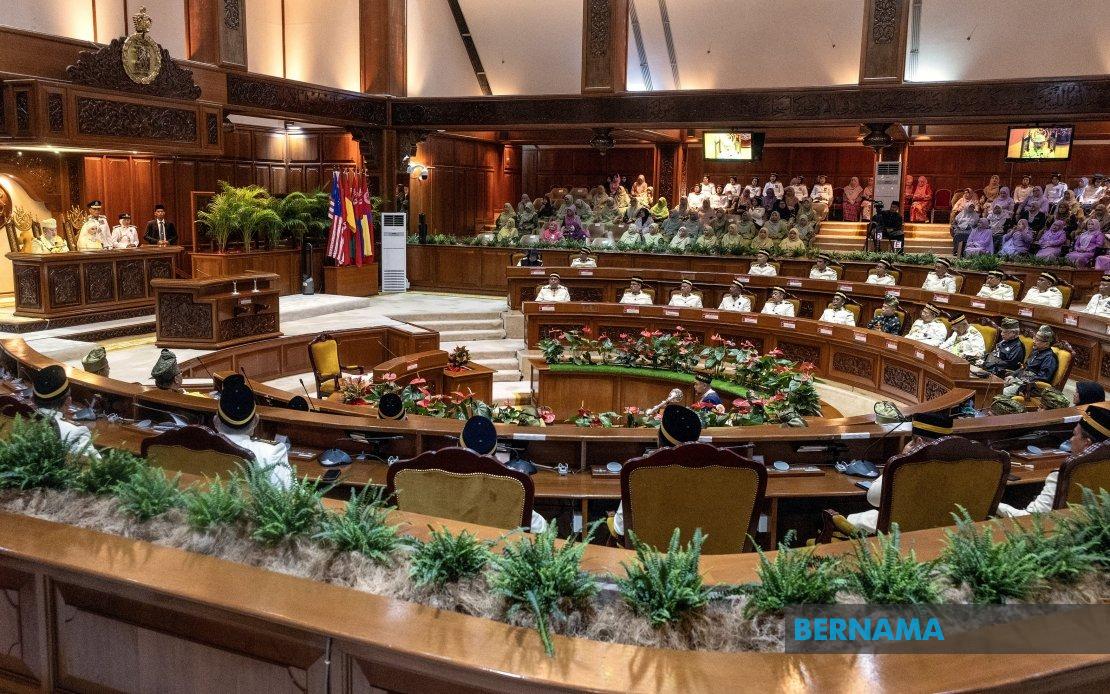
The Kelantan government is moving swiftly to restore its Syariah legal framework by introducing the Syariah Offences (Kelantan) Bill 2026 at the State Legislative Assembly sitting scheduled for next Tuesday. Deputy Menteri Besar Datuk Dr Mohamed Fadzli Hassan announced the tabling of the Bill, which represents the state's response to a significant constitutional intervention by Malaysia's highest court that fundamentally reshaped how Islamic criminal law operates at the state level.
The impetus for this legislative overhaul stems from the Federal Court's landmark judgment delivered on February 9, 2024, in the constitutional case brought by Kelantan lawyer Nik Elin Zurina Nik Abdul Rashid and another. In an 8-1 majority decision, the court determined that the Kelantan Syariah Criminal Code (I) Enactment 2019 had exceeded the state legislature's constitutional authority, striking down 16 of the 18 provisions that were challenged. The court ruled that the State Legislative Assembly had ventured into legislative territory reserved for Parliament, effectively invalidating a substantial portion of what was intended to be Kelantan's comprehensive Syariah criminal framework.
This Federal Court decision triggered considerable constitutional debate across Malaysia regarding the proper division of legislative powers between federal and state governments in matters concerning Syariah criminal law. The ruling exposed significant ambiguity about which level of government could legitimately enact certain categories of Islamic offences, creating a legal vacuum that affected the enforcement of Syariah law in the state. Kelantan's development of the new Bill addresses this uncertainty by carefully calibrating its provisions to align with the Federal Court's constitutional principles while still affording the state meaningful legislative scope in Islamic criminal matters.
The drafting process for the Syariah Offences (Kelantan) Bill 2026 commenced in mid-2024 and involved a collaborative approach designed to ensure constitutional compliance and legal sophistication. Kelantan established the Committee for the Amendment of the Kelantan Syariah Criminal Code (I) Enactment 2019, which brought together civil law practitioners, Islamic legal specialists, academic experts in constitutional law, and sitting Syariah judicial officers. This multidisciplinary composition reflects recognition that the legislation must satisfy both secular constitutional requirements and Islamic jurisprudential principles, a complex balancing act given the Federal Court's emphasis on the constitutional doctrine of "pith and substance" in its judgment.
Beyond technical drafting expertise, the state ensured that the proposed legislation underwent scholarly and religious review. The draft Bill was submitted to the Kelantan Council of Ulama operating under the umbrella of the Kelantan Islamic Religious and Malay Customs Council (MAIK) for examination and feedback. This consultation with religious authorities underscores the significance of the legislation within Kelantan's Islamic institutional framework and provides an additional layer of legitimacy rooted in religious scholarship alongside legal and constitutional considerations.
The new Bill's structure reflects substantial recalibration of Kelantan's approach to Syariah criminal law. The legislation comprises nine distinct parts organized across 62 substantive clauses plus an accompanying schedule, representing a more considered and granular approach than the earlier 2019 enactment. According to Deputy Menteri Besar Mohamed Fadzli, the drafting methodology explicitly incorporated the Federal Court's grounds of judgment, indicating that Kelantan has carefully studied the court's reasoning to ensure the new provisions remain within constitutional bounds while still establishing enforceable Syariah criminal offences.
A significant aspect of the new Bill is its integration of what state officials describe as "several new and reformative provisions." These additions suggest that Kelantan has not merely attempted to resurrect provisions invalidated by the Federal Court but has instead used this legislative opportunity to modernize and reform its Syariah criminal code. This approach acknowledges that the 2019 enactment, despite well-intentioned aims to establish comprehensive Islamic criminal law, contained constitutional deficiencies that required not just narrow corrections but more fundamental reconceptualization.
The constitutional principle of "pith and substance" has become central to how Kelantan drafted the Bill. This doctrine, emphasizing substantive reality over form, guided the committee to ensure that each provision genuinely addresses matters within state legislative competence rather than attempting to regulate matters that are constitutionally reserved to Parliament. The principle requires careful analysis of whether an offence, notwithstanding its Islamic criminal law label, actually intrudes into areas like federal crime or matters affecting the administration of federal law.
For Malaysian constitutional law observers, Kelantan's legislative response carries broader implications beyond the state's borders. The Bill demonstrates how state governments are attempting to work within post-February 2024 constitutional constraints, recalibrating their legislative ambitions to achieve substantive Islamic governance objectives while respecting federal-state boundaries as interpreted by the Federal Court. The coming weeks will show whether this carefully calibrated approach satisfies both constitutional scrutiny and the state's aspirations for comprehensive Syariah criminal law.
Deputy Menteri Besar Mohamed Fadzli's expression of hope that all assemblymen will support the Bill reflects confidence in the legislative consensus around Syariah matters in Kelantan, though it also suggests awareness that the constitutional complexities underlying this legislation could generate debate. The state government has invested considerable institutional effort into the drafting process, consulting legal and religious expertise across multiple months, indicating serious intent to produce legislation that will withstand potential future constitutional challenge. The coming assembly sitting will reveal whether Kelantan's thoughtful approach to constitutional constraint has produced a legislative framework capable of achieving both substantive Islamic law objectives and constitutional legitimacy.

