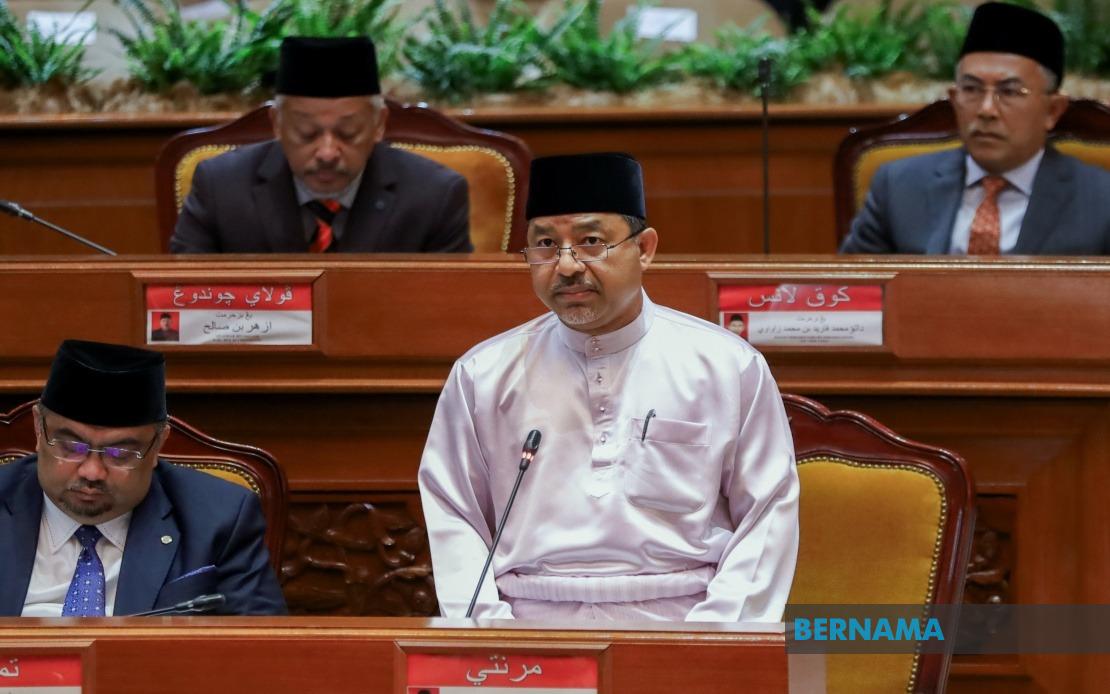
Kelantan continues to maintain the most extensive Malay reserve land portfolio among all Peninsular Malaysian states, with current holdings totalling 526,083 hectares representing 91.5 per cent of the state's entire land base as of June 2026. Menteri Besar Datuk Mohd Nassuruddin Daud disclosed these figures during a State Legislative Assembly sitting at the Kota Darulnaim Complex in Kota Bharu, responding to a question about the scope of Malay reserve protections in the state. The reserve categories encompass 816,020 individual titles, while non-Malay reserve land comprises a comparatively modest 48,344 hectares or 8.4 per cent, distributed across 43,255 separate holdings.
The state's total documented land ownership reaches 574,427 hectares divided among 859,275 titles, with the adjusted figures accounting for all 11 districts in Kelantan. This comprehensive territorial protection mechanism underscores the fundamental importance of safeguarding communal land interests across the northeast region. Mohd Nassuruddin emphasised the significance of this achievement, noting that Kelantan's dominance in Malay reserve acreage reflects the state's consistent commitment to preserving indigenous Malay landholding structures established through historical colonial-era provisions and sustained through contemporary legislation.
Geographically, the distribution of these reserves varies considerably across Kelantan's constituent districts. Gua Musang emerges as the district with the largest absolute reserve area at 122,735 hectares, substantially exceeding other regions. Pasir Mas follows with 56,656 hectares, while Tanah Merah contributes 56,246 hectares and Kuala Krai provides 53,473 hectares. These four districts collectively account for the preponderance of the state's reserve landmass, reflecting historical settlement patterns and administrative divisions established during the earlier periods of state development.
When measured by proportional concentration rather than absolute area, the landscape shifts somewhat. Tanah Merah district leads with virtually complete reserve coverage at 99.9 per cent of its total land classified under this protective designation. This near-total saturation demonstrates exceptional uniformity in communal land ownership patterns within that district. Tumpat, Pasir Puteh, Bachok, Pasir Mas, Kota Bharu and Jeli all record similarly elevated percentages, indicating that the Malay reserve system remains deeply embedded throughout the state's territorial structure and represents the normative landholding arrangement across most of Kelantan.
Mohd Nassuruddin explicitly confirmed that no reduction in Malay reserve land has occurred in Kelantan during the period under review, providing statutory assurance that the protected stock remains intact. This consistency represents a departure from historical patterns in some other states where reserve conversions and exemptions gradually eroded collective landholdings. The preservation of the full 526,083-hectare total signals effective administrative stewardship and community commitment to maintaining these foundational property protections.
The legal framework enabling this protection derives from Section 13A of the Kelantan Malay Reservations Enactment, which permits specific non-Malay property ownership within designated reserve areas subject to strict conditions. This provision introduces measured flexibility while maintaining the overarching protective regime. Simultaneously, the same enactment grants state authorities substantial regulatory authority over transactions occurring within reserve zones, permitting authorities to prohibit disposals or transfers deemed prejudicial to collective Malay interests. This dual mechanism balances commercial activity with communal land conservation objectives.
For Malaysian stakeholders and Southeast Asian observers, Kelantan's reserve system carries broader significance. The state's continued stewardship of this landmass reflects constitutional commitments enshrined in Article 153 of the Malaysian Constitution, which vests the Yang di-Pertuan Agong with trusteeship over Malay-Muslim interests, including land rights. Kelantan's model demonstrates practical implementation of these constitutional protections through sustained administrative effort and legislative refinement across successive administrations.
The reserve structure also addresses fundamental equity concerns underlying Malaysia's social contract. By preserving underprivileged communities' access to productive landed resources, the system theoretically enables wealth accumulation, agricultural livelihoods and generational property transmission among Malay-Muslim populations. However, scholars and policymakers continue debating whether current reserve arrangements optimally leverage these assets for developmental purposes or whether contemporary economic structures require modernisation to enhance productivity and market responsiveness.
Kelantan's experience becomes particularly instructive when compared against other states. Several Peninsular jurisdictions have experienced measurable reductions in reserve acreage through various exemption categories, conversion processes and administrative adjustments. Kelantan's zero-reduction record suggests either deliberate policy prioritisation, comparatively lower development pressures favouring conversion, or effective enforcement preventing unauthorised transactions. Understanding these factors would illuminate optimal reserve administration practices applicable elsewhere.
The implications for Kelantan's development trajectory warrant consideration. The concentration of 91.5 per cent of landholding within reserve categories necessarily constrains private non-communal investment, potentially affecting industrial development and commercial real estate expansion. Balancing land protection with economic dynamism remains an ongoing policy challenge. The state's future prosperity may depend upon leveraging reserve lands more innovatively whilst preserving communal protections—a tension evident across all states maintaining similar reserve systems.
Looking forward, Kelantan's reserve administrators face emerging questions regarding digital land administration, climate adaptation, sustainable agricultural transitions and intergenerational wealth accumulation within protected frameworks. The 816,020 reserve titles represent substantial human populations whose livelihood security depends upon effective stewardship. Modernising administrative systems, improving land productivity and ensuring equitable benefit distribution among title-holders will shape whether Kelantan's reserve model remains a protective mechanism or becomes a developmental constraint requiring evolution.

