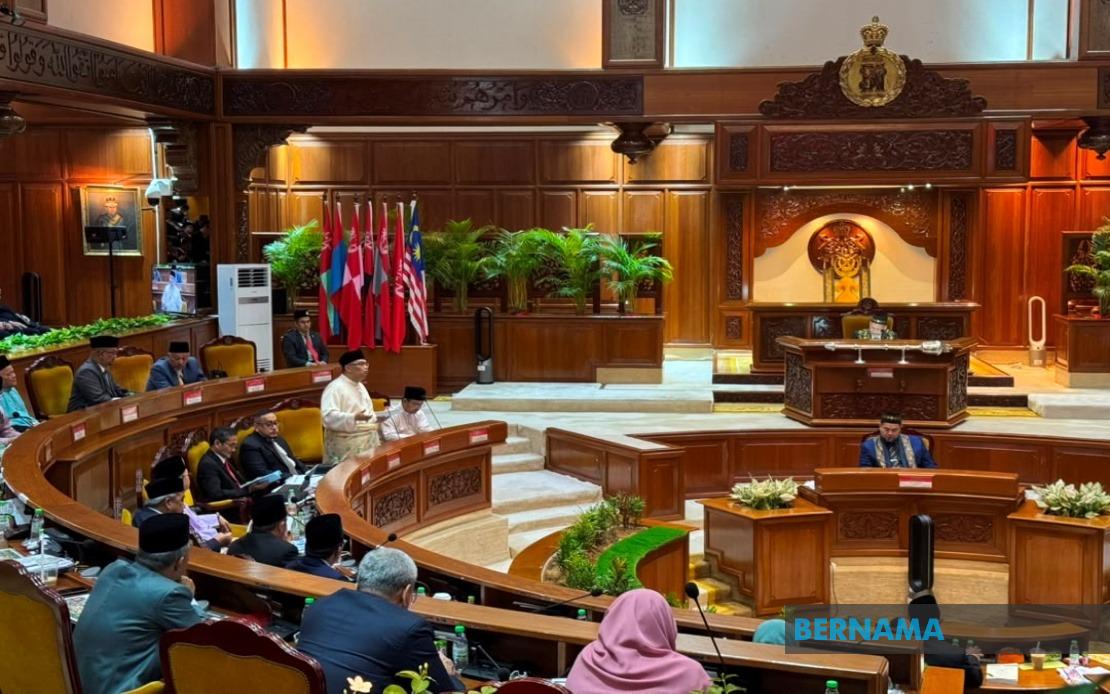
The Kelantan state legislative assembly has unanimously approved the Syariah Criminal Offences (Kelantan) Bill 2026, marking a significant legislative development in the state's approach to Islamic criminal jurisprudence. Tabled by Deputy Menteri Besar Datuk Dr Mohamed Fadzli Hassan, the legislation aims to create a more coherent, transparent and authoritative framework for Syariah criminal offences within Kelantan's jurisdiction. The unanimous passage, witnessed by Kelantan state assembly Speaker Datuk Mohd Amar Nik Abdullah, reflects broad support among the state's representatives for the restructured provisions.
The fresh legislation arrives in response to a landmark Federal Court decision that substantially undermined the state's previous framework. In February 2024, the nation's apex court ruled in an 8-1 majority verdict that 16 of 18 provisions contained in the Kelantan Syariah Criminal Code (I) Enactment 2019 were constitutionally invalid. The court determined that the state assembly had exceeded its jurisdictional authority by legislating on offences falling squarely within Federal legislative competence, triggering widespread discussion about the proper delineation of powers between the two tiers of government in matters of Islamic criminal law.
Menteri Besar Datuk Mohd Nassuruddin Daud emphasised during the assembly sitting that the Bill represents not a hastily constructed response but rather the product of meticulous planning and enhancement across multiple developmental stages. He described the legislation as a deliberate revitalisation grounded in constitutional principles already embedded within Kelantan's prior Syariah criminal framework. This incremental approach signals that state policymakers view the 2026 Bill as an evolution of existing jurisprudential foundations rather than a radical departure, seeking to preserve institutional continuity while accommodating the Federal Court's constitutional constraints.
Structurally, the Bill comprises nine distinct parts encompassing 62 clauses alongside one schedule, reflecting considerable technical refinement. Among its central reforms are provisions addressing obligatory prayer performance, bodily integrity protections, intellectual safeguards, and the application of restorative punishment mechanisms. The legislation notably privileges whipping as a disciplinary sanction and establishes fresh compound procedures, suggesting an attempt to harmonise punishment frameworks with contemporary sentencing approaches while remaining rooted in Islamic jurisprudential principles.
The debate in the assembly involved substantive contributions from six state representatives representing constituencies including Pasir Tumboh, Melor, Galas, Jelawat, Kota Lama and Chempaka. This geographical distribution of participation indicates engagement from different regions within Kelantan, though the published record provides limited detail regarding the specific concerns or reservations raised during deliberations. The concluding remarks from both Mohd Fadzli and Menteri Besar Mohd Nassuruddin preceded the second and third readings, after which the assembly recorded its unanimous endorsement.
The passage of this Bill carries implications extending well beyond Kelantan's borders. The 2024 Federal Court judgment sparked considerable constitutional discourse throughout Malaysia regarding the appropriate division of legislative authority in religious matters. Other states with aspirations to strengthen their Syariah criminal provisions must now navigate the narrow constitutional space defined by the court's decision. Kelantan's approach—essentially working within the constraints imposed by the judiciary—may serve as a template for other jurisdictions attempting to modernise their Islamic law frameworks whilst respecting the Federal-state power hierarchy.
For Malaysian legal practitioners and Islamic scholars, the Bill's emphasis on clarifying and systematising existing provisions rather than expanding state jurisdiction demonstrates pragmatic acceptance of constitutional limits. The focus on refinement of punishment methodologies, particularly the prioritisation of whipping, reflects ongoing discussions within Islamic jurisprudential circles about appropriate contemporary application of classical principles. This measured approach contrasts with the more expansive legislative ambitions that prompted the Federal Court's intervention in 2024.
The petition that triggered the Federal Court's review originated from a Kelantan lawyer, indicating that civil society engagement with religious law matters continues to shape Malaysia's Islamic legal development. This vigilance from the legal profession suggests ongoing scrutiny of the boundaries between state and federal competence in Syariah affairs. As Kelantan implements the 2026 Bill, further judicial review remains possible should particular provisions again venture into disputed jurisdictional territory.
From a Southeast Asian perspective, Kelantan's legislative refinement demonstrates the complex navigation required by jurisdictions seeking to maintain distinctive Islamic legal systems whilst remaining bound by secular constitutional frameworks. Malaysia's federal structure creates particular tension in this regard, as states retain certain Islamic law competencies yet remain subordinate to federal constitutional supremacy. The 2026 Bill represents institutional adaptation to these structural realities.
The unanimous passage suggests that despite the Federal Court's rebuke, political consensus within Kelantan's assembly remains solid regarding the principle of state-level Syariah criminal legislation. The fresh Bill likely enjoys support from across the political spectrum precisely because it respects constitutional boundaries while endeavouring to strengthen internal coherence and clarity. This consensual approach contrasts with more confrontational federal-state dynamics that occasionally characterise Malaysia's intergovernmental relations.
Going forward, the effectiveness of the 2026 Bill will depend partly on judicial interpretation should disputes arise regarding specific provisions. The Federal Court's February 2024 decision established a high bar for state Syariah criminal legislation, requiring that provisions remain within unambiguous state jurisdiction. Kelantan's drafting appears to reflect awareness of these constraints, suggesting that legal advisors carefully calibrated the Bill to withstand potential constitutional challenge.
The passage of this legislation marks a stabilisation point in Kelantan's Syariah criminal law governance following the dramatic 2024 court decision. Rather than retreating from Islamic criminal law, the state has chosen carefully calibrated advancement within constitutional boundaries. As Malaysia continues grappling with federalism questions in religious matters, Kelantan's experience offers a case study in institutional resilience and constitutional adaptation.

