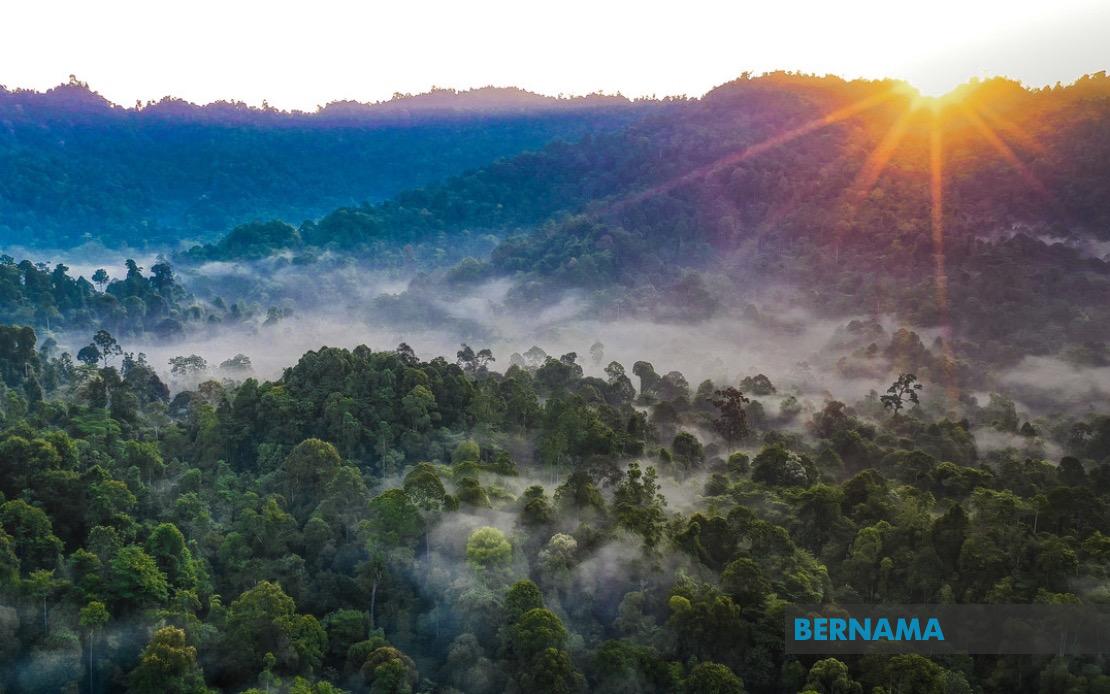
The Kelantan state government has committed to replacing every forest reserve area that is degazetted for development or resource extraction purposes, a reassurance aimed at maintaining the state's overall forest coverage despite pressures from mining and commercial expansion. Deputy Menteri Besar Datuk Dr Mohamed Fadzli Hassan delivered the undertaking following a state executive council meeting at Kota Darulnaim Complex in Kota Bharu, signalling the government's attempt to balance environmental stewardship with economic opportunity—a tension that has become increasingly visible in Kelantan's land-use policies.
The commitment is particularly significant given the controversy surrounding the Temangan Forest Reserve in Machang, which was recently degazetted to permit granite mining operations. According to Datuk Dr Mohamed Fadzli, the degazetted area is directly connected to a mining approval initially granted in 2009, more than a decade before the formal removal of its forest reserve status. This prolonged interval between approval and implementation raises questions about administrative timelines and how long mineral extraction licenses can remain dormant before activation.
The grandfathering of mining approvals from 2009 illustrates a wider challenge across Malaysia's resource-rich states: legacy permissions that precede current environmental awareness and conservation standards. When such authorizations were first issued, compliance requirements and environmental impact assessments operated under different regulatory frameworks than those in place today. The Temangan case thus serves as a practical example of how older commercial rights can suddenly materialize and conflict with contemporary conservation sentiment.
The Deputy Menteri Besar explained that the recent degazetting was necessary to operationalize the approval that had been granted to the mining company over a decade ago. In other words, the forest reserve designation itself had become an administrative barrier to implementing an already-authorized project. This distinction—between granting permission and removing legal obstacles to its implementation—is crucial to understanding why the degazetting occurred when it did, even if the timing appeared sudden to environmental observers.
To address public concern, Datuk Dr Mohamed Fadzli stated that he had formally approached the Kelantan State Forestry Department to verify and clarify the status of replacement forest areas. The Forestry Department, he said, has provided assurances that any degazetted reserve must be replaced under state regulations. This assertion, however, shifts attention to the mechanics of replacement: what criteria define an acceptable substitute, how long is the replacement process, and are replacement areas identified and secured before degazetting occurs or afterward?
Kelantan's reliance on a replacement policy rather than an outright moratorium on degazetting reflects a pragmatic rather than preservationist stance toward its natural heritage. The approach acknowledges that some development is inevitable and seeks to maintain forest coverage through offset mechanisms rather than prevention. Yet such policies are only as robust as their enforcement, and questions naturally arise about whether replacement forests match the ecological value, biodiversity, or strategic location of degazetted areas.
The broader context is that Kelantan, like other peninsular states, faces competing pressures: the need for revenue from extractive industries, the demands of rural communities for economic development, and growing environmental consciousness both domestically and internationally. Granite and other mineral resources represent significant contributors to state revenue, and mining companies operating under older licenses will increasingly seek to activate their rights as regulatory clarification improves and infrastructure develops.
The commitment to replacement also has implications for Kelantan's forest statistics and its standing in national environmental rankings. If replacement forests are consistently established, the state can claim maintained or stable forest coverage despite degazetting activities. However, the credibility of this approach depends on whether replacement areas are genuinely equivalent in size, quality, and conservation value—or whether they become token gestures that obscure a gradual erosion of the state's forest base.
For policymakers across Southeast Asia grappling with similar tensions between conservation and development, the Kelantan model offers both a framework and a cautionary tale. Replacement policies can provide a middle path that neither freezes all development nor permits unlimited resource extraction. Yet they require transparent criteria, independent verification, and consistent implementation to prevent replacement from becoming a rubber-stamp process that legitimizes environmental degradation.
The Temangan Forest Reserve case will likely serve as a test of whether Kelantan's assurances translate into meaningful action. Environmental groups and local communities will be watching to see whether replacement forests materialize promptly, whether they are properly protected from future degazetting, and whether their ecological credentials withstand scrutiny. The outcome will signal whether the state's commitment to forest preservation is substantive or merely rhetorical.

