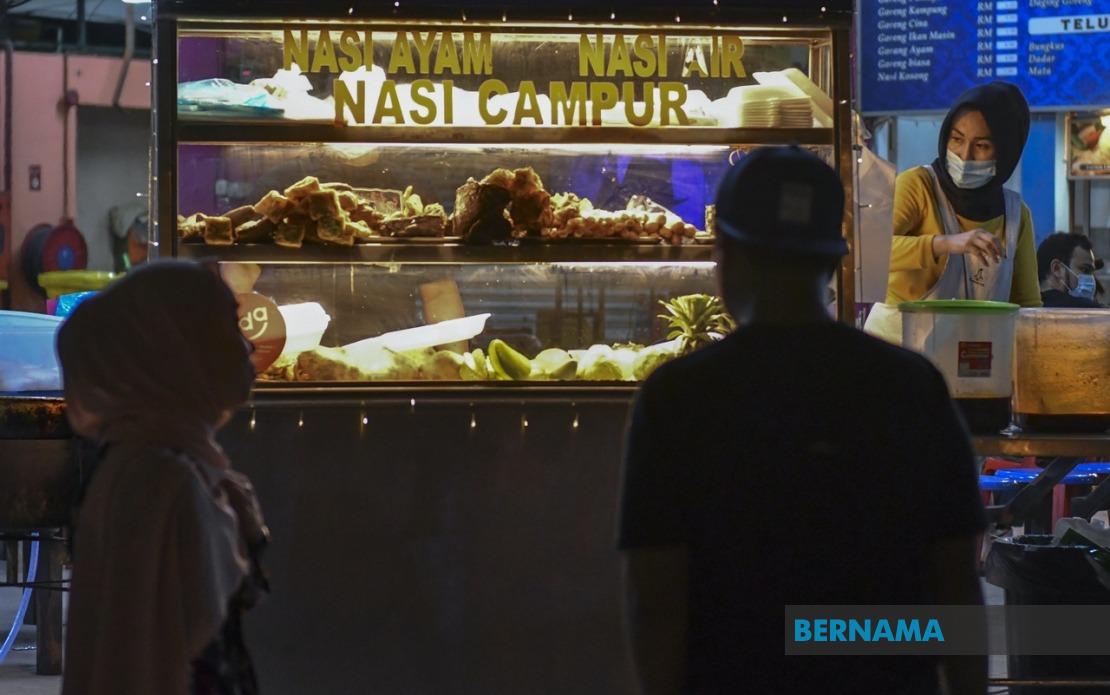
The Kelantan state government is committing to more rigorous oversight of food businesses across the state in response to mounting concerns about halal compliance, officials announced in Kota Bharu on July 15. The decision follows widespread social media allegations questioning the halal status of several food premises operated by non-Muslim proprietors that serve predominantly Muslim customers. Authorities have pledged to conduct more frequent and thorough checks at any establishments where doubts about adherence to Islamic dietary requirements have surfaced, signalling a determined response to protect consumer confidence in the halal certification system.
Mohd Asri Mat Daud, chairman of the State Islamic Development, Dakwah, Information and Regional Relations Committee, confirmed that the state government is already undertaking preliminary fact-finding efforts to gather additional details about the allegations before proceeding with formal enforcement action. He underscored that the regulatory authority for food premises inspection rests with the Kelantan Islamic Religious Affairs Department, and his office will work closely with that body to coordinate the investigation. This collaborative approach reflects the state's intent to deploy existing institutional mechanisms effectively rather than create new enforcement structures.
The timing of the announcement comes as a Facebook user's post detailing the halal certification status of multiple food establishments sparked considerable public discussion and diverse reactions across social platforms. The disclosure thrust the issue into the spotlight, prompting the government to address consumer worries about the integrity of halal compliance in the food sector. Such viral incidents have become increasingly consequential for policymakers in Muslim-majority Malaysia, where halal certification carries both religious and commercial significance.
Mohd Asri noted that the Kelantan administration has not yet formally received any official complaints about the allegations, though his office indicated that any such reports will be processed according to established protocols. This measured approach suggests authorities are distinguishing between unverified social media claims and documented cases requiring immediate intervention. Nevertheless, the state government is clearly taking the underlying concerns seriously enough to preempt further issues through enhanced monitoring.
A significant portion of Mohd Asri's remarks focused on the responsibilities of food business proprietors themselves. He cautioned operators against compromising religious compliance in their pursuit of commercial profit, warning that such lapses could erode Muslim consumers' trust in the broader halal certification ecosystem. This messaging targets a critical behavioural challenge: ensuring that profit motives do not override shariah obligations among business owners of all faiths operating in the food industry.
The state government is also leveraging this moment to promote Malaysia's formal Halal Certification programme as a protective mechanism. Mohd Asri encouraged all food premise operators to pursue official halal certification, noting that the government is targeting a 30-day turnaround for application processing contingent on the establishment's preparedness and demonstrated compliance with stipulated criteria. This streamlined approach removes procedural obstacles that might otherwise deter operators from formalising their certification status.
For Malaysian and broader Southeast Asian readers, the Kelantan situation illustrates the ongoing tension between economic liberalisation and religious governance in Muslim-majority nations. The presence of non-Muslim food operators serving Muslim customers is economically rational and socially normalised across Malaysia, yet it creates regulatory complexities around halal verification. The state's response reflects a pragmatic strategy: rather than restricting market participation, authorities are tightening oversight mechanisms to maintain consumer assurance.
The broader implications extend beyond Kelantan. As e-commerce and social media enable rapid information dissemination about food safety and halal status, state religious authorities across Malaysia face intensifying scrutiny over certification standards. Viral allegations, even if unverified, can trigger swift policy responses and reputational damage. This dynamic incentivises governments to stay ahead of consumer concerns through proactive inspection regimes and transparent certification processes.
Mohd Asri's public appeal to consumers to exercise greater vigilance about the halal status of premises they patronise signals a shared-responsibility framework. Rather than positioning the state as the sole guarantor of halal compliance, the statement encourages Muslim consumers to actively verify certification status before making purchasing decisions. This approach distributes enforcement burden across multiple stakeholders—government agencies, business operators, and consumers themselves.
The 30-day certification processing timeline is noteworthy for competitive reasons within Southeast Asia's food industry. Malaysia's Halal Certification is recognised regionally and internationally, conferring market advantages on compliant operators. By accelerating approval timelines, Kelantan aims to incentivise formalisation while signalling bureaucratic efficiency. This matters for Malaysian food exporters and regional supply chains, where halal credentials increasingly determine market access.
Looking forward, the Kelantan government's intensified inspection regime may serve as a model for other states grappling with similar concerns. The combination of enhanced monitoring, streamlined certification pathways, and public messaging appears designed to restore confidence without disrupting existing market structures. How effectively these measures address underlying compliance gaps will likely influence consumer behaviour and influence whether similar social media campaigns emerge in other states.
Ultimately, the episode underscores how religious governance intersects with food security and consumer protection in Malaysia. While halal compliance is fundamentally a religious obligation, its enforcement operates within a regulatory framework increasingly shaped by public expectations, commercial considerations, and digital-age information dynamics. Kelantan's response, though reactive to social media allegations, represents an attempt to maintain both religious integrity and market functionality.

