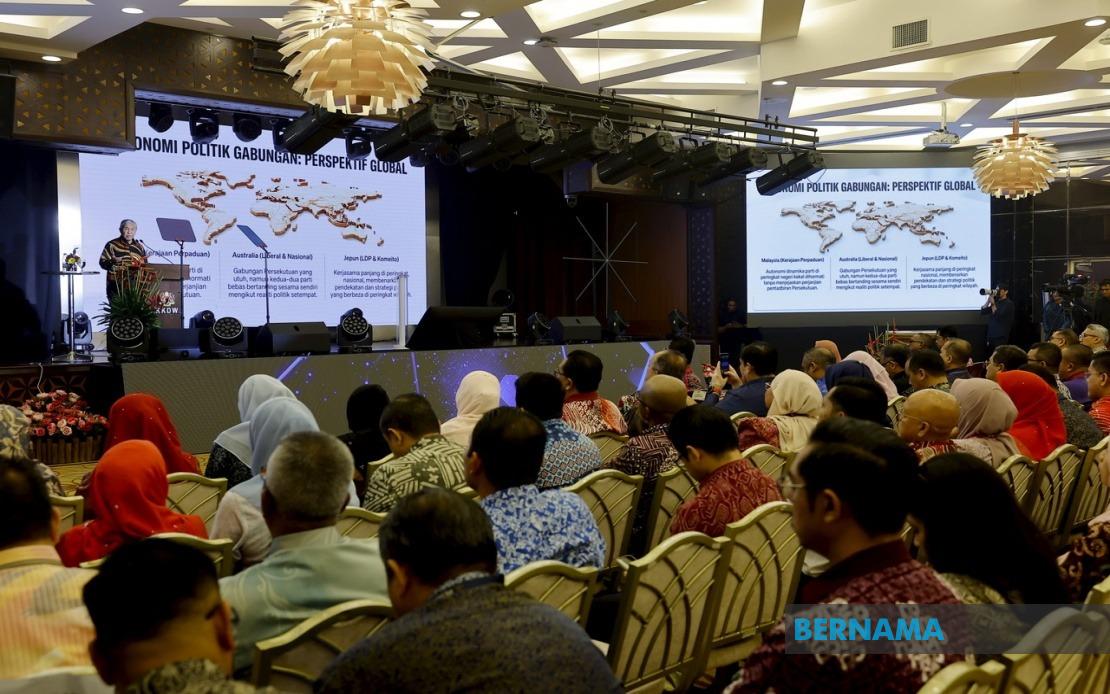
The Malaysian government has committed to a significant expansion of early childhood education services for children with special needs, with Deputy Prime Minister Datuk Seri Dr Ahmad Zahid Hamidi announcing that the Community Development Department (KEMAS) will establish at least one Tabika Tunas Istimewa facility in every district nationwide by 2027. This nationwide rollout represents a substantial scaling up of the programme, which currently operates just 19 classes across the country. The initiative underscores growing recognition within government circles that quality early intervention and inclusive education remain critical gaps in Malaysia's social safety net, particularly for rural and disadvantaged communities where such services remain scarce or entirely unavailable.
The expansion plan involves adding approximately 132 new classes to the existing infrastructure, a sevenfold increase that will require significant resource allocation across multiple states and federal territories. KEMAS intends to achieve this growth through a combination of strategies: opening entirely new facilities specifically designed for special needs education, upgrading existing kindergarten premises to accommodate disabled children, and potentially partnering with local organisations to deliver services in underserved areas. The phased approach suggests a measured expansion rather than rushed deployment, allowing time for proper staff training, curriculum development, and integration with existing community structures. This methodical scaling is particularly important given that special needs education demands specialised expertise and appropriate physical environments that cannot be hastily improvised.
A cornerstone of the programme's design is its commitment to affordability, with monthly fees capped at RM100 per child. This pricing strategy addresses a major barrier facing families in Malaysia who struggle to access specialised educational services, which typically command premiums far exceeding this amount in private settings. By maintaining such accessible pricing, KEMAS effectively democratises early intervention opportunities and ensures that socioeconomic status does not determine whether a child with developmental disabilities receives vital foundational support. The fee structure reflects deliberate policy choices to prioritise equity over cost recovery, positioning special needs education as a public good deserving subsidisation rather than a premium service accessible only to affluent families.
Ahmad Zahid, who concurrently serves as Minister of Rural and Regional Development, framed the initiative within his broader vision of rural transformation and community-centred governance. He articulated a philosophy that government performance should be measured not through abstract metrics but through tangible improvements in citizens' daily lives and measurable impacts on vulnerable populations. This perspective suggests a departure from purely economic development metrics towards more holistic assessments encompassing social welfare, educational access, and inclusive development. For rural Malaysia particularly, where families with disabled children often face compounded challenges including geographic isolation and limited service availability, such programmes represent meaningful attempts to bridge persistent inequalities between urban and rural regions.
The Deputy Prime Minister explicitly invoked the concept of identifying "game changers"—transformative interventions capable of creating fresh opportunities, boosting household incomes, and catalysing sustainable community development. Applied to special needs education, this framing acknowledges that early intervention and quality schooling for disabled children generates ripple effects throughout families and communities. When children receive proper support during critical developmental windows, they achieve better educational and employment outcomes later in life, reducing long-term dependency on social welfare and enabling parents—particularly mothers—to participate more actively in economic activities. This developmental economics perspective complements conventional social welfare arguments, appealing to policymakers concerned about economic productivity and fiscal sustainability alongside humanitarian considerations.
Beyond the Tabika Tunas Istimewa expansion, Ahmad Zahid outlined parallel initiatives reflecting a comprehensive approach to rural development and asset management. He announced that all Regional Development Authorities (LKWs) have been tasked with achieving optimal Returns on Assets of four to six per cent, with each authority required to develop Asset Activation Plans within 100 days. This performance metric incentivises more efficient utilisation of government-held resources and property, ensuring that public assets generate tangible returns benefiting communities. The compressed timeframe for developing these plans signals administrative urgency and ministerial determination to accelerate implementation across the country's development authorities, which oversee diverse portfolios spanning agricultural land, infrastructure, and commercial properties.
Complementing these initiatives, the Rural Economic Council Executive Committee (MEXCLUB) has endorsed strengthening the Sustainable Village Programme through establishment of a dedicated task force focused on cooperative development. This task force will target critical gaps in cooperative governance, brand development, market access expansion, and strategic network building. Cooperatives remain vital institutions for rural economic resilience, particularly in Malaysia where smallholder farmers and rural micro-entrepreneurs depend heavily on collective action for competitive positioning. By addressing governance deficiencies and market linkages, the government aims to enhance cooperative sustainability and member incomes, directly supporting the rural livelihoods that form the foundation of many communities.
The interconnection between these various initiatives reveals a coherent policy framework viewing rural development holistically. Special needs education, asset management, and cooperative strengthening address different but complementary dimensions of rural welfare and economic opportunity. Accessible special needs services reduce household burden and enable broader community participation; improved asset returns generate resources for public service delivery; and strengthened cooperatives create income opportunities. Together, these initiatives constitute an integrated approach recognising that sustainable rural development requires attention to multiple challenges simultaneously rather than isolated interventions.
For Malaysian parents of children with special needs, particularly those in rural districts currently lacking dedicated services, the announced expansion represents concrete acknowledgment of longstanding advocacy for inclusive education and equitable resource distribution. Implementation success will depend critically on KEMAS's capacity to recruit and train qualified special educators, secure appropriate facilities, and ensure programmes reflect diverse special needs ranging from physical disabilities to learning difficulties and developmental disorders. The RM100 monthly fee, while affordable, also requires examination of whether accompanying government funding will be sufficient for quality service delivery or whether parents will face hidden costs.
The 2027 deadline provides approximately three years for nationwide rollout across Malaysia's 150-plus districts, a considerable undertaking requiring sustained political commitment and budget allocation. Regional variations in population density, infrastructure development, and existing service provision will create uneven implementation challenges, with densely populated areas likely achieving targets more readily than sparsely settled regions where economies of scale prove more difficult. Success metrics should extend beyond facility numbers to include service quality, actual enrolment rates among eligible children, and measurable developmental outcomes, ensuring that expansion does not sacrifice educational effectiveness for sheer coverage.

